Blogs Where Nature Meets Science & Coatings
"If All the Greedy People that Pollute can get Together & Show Strength in Unity – then Honest, Environmentalists Must Do the Same. You See – It’s as Simple As That.” George C. Keefe - ENCASEMENT Guy
Blogs Where Nature Meets Science & Coatings
"If All the Greedy People that Pollute can get Together & Show Strength in Unity – then Honest, Environmentalists Must Do the Same. You See – It’s as Simple As That.” George C. Keefe - ENCASEMENT Guy
Tuesday, November 17, 2026
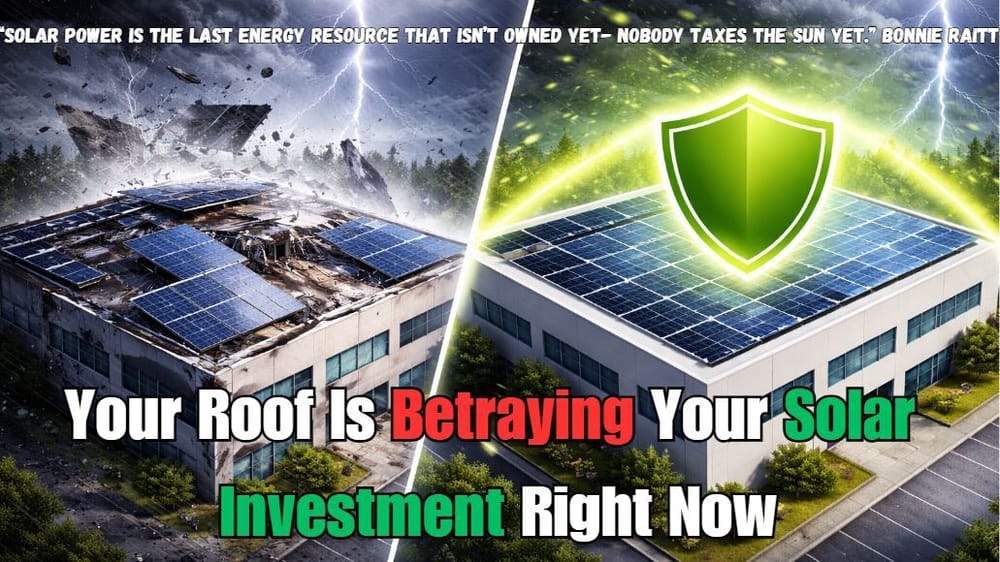
Solar can reduce dependence on volatile energy markets and turn rooftops into productive assets. But a rooftop solar system and the roof beneath it must be planned as one long-term system — because a clean-energy investment can become a costly maintenance problem if the roof, attachment points, and water-control details are not ready for decades of service.
By: George C. Keefe — Founder & CEO, Global Encasement, Inc. | The ENCASEMENT Guy
Technical Reference Article | Open Access | CC BY 4.0
"If all the greedy polluters can band together to protect their interests, then honest environmentalists must do the same. It's as simple as that.
Listen and Learn: Dive into the Audio Version of Our Blog
The Problem: Solar Can Outlive the Roof Beneath It
The world is changing fast.
Energy bills keep climbing. Power reliability is under pressure in many regions. Homeowners, businesses, schools, governments, and facility managers are looking to solar for greater energy independence and more predictable long-term operating costs.
That momentum is real. Rooftops are becoming power plants, and many existing buildings can add photovoltaic systems without a complete structural overhaul.
But the solar conversation often begins with panels, inverters, production, and payback — and ends before it asks the question that should come first: What condition is the roof in, and can it support the solar asset for the life of the system?
The U.S. Department of Energy advises consumers to evaluate roof condition before installation and notes that coordinating solar with needed roof work can save money.
DOE guidance also emphasizes that a roof must be able to support the system safely. In other words, the roof is not just the place where solar happens. It is part of the solar investment.
That is where the hidden risk begins.
Many rack-mounted rooftop PV systems use mechanical attachment points tied into the roof structure.
Those attachments are engineered and flashed when installed correctly — but every interface still has to remain weather-tight through years of rain, wind, heat, movement, maintenance, and roof aging.
Other systems, such as some standing-seam or ballasted installations, may use different attachment strategies, but the principle is the same: the roofing assembly and the solar mounting system have to work together.
A solar system can be producing exactly as promised while the roof beneath it is quietly moving toward failure.
What Solar-Roof Guidance Already Tells Us
• DOE: roof condition should be checked before solar installation, and needed roof repairs should be coordinated with the solar project.
• DOE Building Science: roof penetrations are among the most vulnerable areas for water intrusion and require proper flashing and water management.
• NREL: for attached rooftop PV, leaks around stanchion flashings are a recognized operations-and-maintenance consideration.
• DOE: rooftop PV mounting structures must be durable enough to withstand wind, rain, hail, and corrosion over decades.
The Escalation: A Small Roof Weak Point Can Undermine a Long-Term Energy Asset
The original promise of solar is simple: invest once, produce power for years, and protect yourself from rising energy costs.
But that long-term financial logic falls apart if the building owner has to remove panels, open the roof, repair water damage, replace insulation, correct flashing failures, or rebuild deteriorated roofing years before the solar system reaches the end of its useful life.
Water infiltration is especially dangerous because it can begin invisibly. Moisture can move beneath roofing layers long before a stain appears on a ceiling. By the time the symptom becomes obvious, insulation, decking, fasteners, interior finishes, or adjacent materials may already be affected.
The roof does not fail because solar is inherently bad for buildings. It fails when the roof, mounting details, flashing, sealants, drainage, aging substrate, and maintenance plan are treated as separate issues instead of one integrated system.
That is the planning gap behind the solar boom: we are putting decades-long energy equipment on roofs that may still be managed with short-cycle maintenance thinking.
“Your solar array may be designed for decades of production. The roof beneath it has to be protected with the same time horizon.”
The Problem Gets Worse: Heat, Movement, Maintenance, and Access
Traditional roofing patches and sealants can perform well when they are selected, detailed, and maintained correctly.
But every roof assembly moves. Materials expand and contract. Fasteners, flashings, membranes, coatings, sealants, and substrates age at different rates.
Solar equipment also changes how roof areas are accessed, shaded, inspected, and repaired.
That means a detail that looked secure on installation day must still remain secure after thousands of daily temperature cycles, wind events, service visits, and years of exposure.
NREL’s current operations-and-maintenance guidance specifically calls out roof condition, leaks around stanchion flashings, roof complexity, and the cost of repairs beneath rooftop PV.
DOE guidance likewise recommends thinking about the roof’s expected remaining life before solar is installed.
The financial risk is straightforward: if the roof has to be repaired or replaced prematurely, the solar system can become part of the repair scope.
Panels may have to be removed and reinstalled. Electrical and mounting components may need coordination. Access becomes more difficult. Downtime and labor increase.
A solar investment should not create a second, avoidable investment just to keep the roof beneath it alive.
The Solution: Green ENCASEMENT Coatings — Make the Roof Part of the Solar Strategy
This is where Green ENCASEMENT Coatings change the planning conversation.
Instead of treating the roof as a disposable platform that will eventually be torn off beneath a long-life solar system, ENCASEMENT starts with the idea that the existing roof surface should be protected, strengthened, renewed, and kept in service whenever conditions allow.
The goal is not to replace proper PV flashing, structural attachments, electrical detailing, drainage design, or manufacturer requirements.
Those remain essential.
The goal is to create a long-lasting protective roof membrane around the system — before installation where possible, and through carefully coordinated restoration after installation where appropriate.
That approach fits the same three-dimensional methodology used throughout Green ENCASEMENT building protection: Green, ENCASEMENT, and Coatings.
Dimension 1 — GREEN: Protect the Roof Without Undermining the Energy Goal
A solar project is supposed to reduce long-term environmental and operating burdens. It makes little sense to install a clean-energy system on a roof that will soon require a major tear-off, disposal event, new material manufacturing, transportation, and reinstallation.
Green ENCASEMENT Coatings are water-based protective systems designed around long service life and renewal rather than repeated removal.
In the broader Green ENCASEMENT methodology, light-colored solar-reflective formulations can also reduce roof surface temperatures and building cooling demand, helping the roof and the energy strategy work toward the same goal instead of against each other.
The greenest solar-roof strategy is not just generating electricity. It is keeping a serviceable roof in service and avoiding unnecessary replacement when the existing substrate can be responsibly protected.
Reference Guide: Solar Smart — https://doi.org/10.5281/zenodo.20534333
Dimension 2 — ENCASEMENT: A Continuous Protective Membrane Around the Roof System
The core ENCASEMENT advantage is continuity.
Green ENCASEMENT Coatings are liquid-applied and designed to cure into a seamless, fully adhered monolithic membrane that conforms to irregular roof geometry.
Rather than relying on a collection of isolated patches as the primary protective strategy, the membrane is intended to protect the larger roof surface as one continuous system.
That matters around solar because the roof is no longer an open, easy-to-access field. Racking, attachment points, conduits, curbs, penetrations, drains, seams, transitions, and shaded areas create a more complicated maintenance environment.
Where the system design and manufacturer requirements permit, a continuous protective membrane can help reduce the number of exposed transitions and vulnerable surface areas surrounding the solar installation. Before solar goes on the roof, ENCASEMENT can be coordinated as part of the roof-preparation strategy.
On an existing array, restoration may require access planning, temporary panel removal, or coordination with the original PV installer so that electrical, mounting, flashing, and warranty requirements are respected.
The result is a roof strategy built around long-term renewal instead of waiting for visible failure.
Dimension 3 — COATINGS: Practical Application, Planned Around the Solar System
The sophistication is in the protective system, not in forcing a building owner into an exotic maintenance process.
Green ENCASEMENT Coatings can be applied with standard brush, roller, or airless spray equipment by trained applicators. That makes them practical for large roof areas, complex geometry, and phased restoration work.
But rooftop solar changes the work sequence, so planning matters. Coatings should never be used to cover electrical components, block drainage, interfere with PV grounding, substitute for required flashing, or conceal a structural defect. The roofer, solar installer, building owner, and coating professional should agree on access, masking, attachment details, warranty interfaces, and inspection requirements before work begins.
That coordination is not a limitation. It is what makes the roof and the solar array behave like one managed asset instead of two contractors’ scopes sitting on top of each other.
Reference Guide: Green ENCASEMENT Coatings — Three-Dimensional Methodology — https://doi.org/10.5281/zenodo.20417601
What a Solar-Ready Roof Protection Plan Should Deliver
• A roof-condition assessment before installation — so a long-life PV system is not mounted over a short-life roofing problem.
• Weather-tight attachment and penetration details — properly flashed and coordinated with the roof assembly and manufacturer requirements.
• A continuous roof-protection strategy — not just isolated patching after leaks appear.
• Renewability — a plan for maintaining and extending the roof without automatically defaulting to tear-off beneath the solar array.
• Coordinated access — a documented process for inspection, maintenance, coating, electrical work, and any future panel removal or reinstallation.
The Results: Protect the Energy Investment by Protecting the Roof First
The original article makes the central point clearly: your solar investment finally rests on a foundation it can trust only when the roof is treated as part of the investment.
Before solar installation: a qualified roof evaluation can identify aging materials, weak transitions, drainage problems, existing leaks, deteriorated membranes, or surfaces that should be restored before the array limits access. DOE guidance specifically recommends addressing roof condition before installation.
During solar installation: the mounting method, flashing details, roof membrane, penetrations, conduits, and drainage paths can be coordinated as one water-management system instead of being handled as disconnected trades.
After installation: the owner has a clearer maintenance plan. Accessible roof areas can be inspected and renewed, while work around attachment points can be coordinated with the PV installer and roofer rather than improvised after a leak appears.
Over the long term: the roof is managed on the same time horizon as the solar investment. That can reduce the likelihood that a premature roof replacement forces expensive panel removal and reinstallation before the energy system has delivered its expected value.
For sustainability: preserving a serviceable roof avoids unnecessary tear-off and the material, transportation, disposal, and embodied-carbon consequences that come with replacing a roof that could have been restored.
Solar Should Not Be the Reason Your Roof Becomes Harder to Protect
The solar revolution is here, and it should be.
But energy independence is not achieved by solving one building problem while quietly creating another.
The better strategy is to treat the roof and the PV system as one long-term asset: assess the roof first, correct existing problems, coordinate attachment and flashing details, protect the field of the roof, document maintenance access, and use a renewable protection strategy where the substrate is suitable.
That is how solar becomes what building owners intended it to be: clean power, more predictable returns, and a roof system prepared to support that investment for years to come.
“Solar power is the last energy resource that isn’t owned yet — nobody taxes the sun yet.”
— Bonnie Raitt
Protect the Roof Before You Protect the Payback.
Planning solar now — or already have panels on the roof? Make the roof part of the energy strategy before a hidden leak turns clean-energy savings into a repair project.
Visit ENCASEMENTguy.com →
Cited Sources
1. U.S. Department of Energy — Walk Me Through It: A Step-By-Step Guide for Consumers Going Solar — https://www.energy.gov/cmei/systems/articles/walk-me-through-it-step-step-guide-consumers-going-solar
2. National Renewable Energy Laboratory (NREL) — Best Practices for Operation and Maintenance of Photovoltaic and Energy Storage Systems; Version 3 / Installation, Operations, and Maintenance — https://docs.nrel.gov/docs/fy24osti/89249.pdf
3. U.S. Department of Energy, Building Science Education — Sealing Penetrations — https://bsesc.energy.gov/energy-basics/sealing-penetrations
4. U.S. Department of Energy — Solar Photovoltaic System Design Basics — https://www.energy.gov/cmei/systems/solar-photovoltaic-system-design-basics
5. U.S. Department of Energy — Permitting and Inspection for Rooftop Solar — https://www.energy.gov/cmei/systems/permitting-and-inspection-rooftop-solar
6. Global ENCASEMENT, Inc. — Solar Smart Reference Guide — https://doi.org/10.5281/zenodo.20534333
7. Global ENCASEMENT, Inc. — Green ENCASEMENT Coatings: Three-Dimensional Methodology — https://doi.org/10.5281/zenodo.20417601
Source: Global ENCASEMENT, Inc. | Est. Reading Time: 8 min
© 2026 Global ENCASEMENT, Inc. / ENCASEMENT.com | Educational/SEO resource. Third-party references are provided for general roof/PV planning guidance.
DISCLAIMER: This article is educational and reflects Global ENCASEMENT, Inc.’s building-protection perspective. Rooftop PV mounting methods vary; some systems use roof penetrations while others may use clamps, standing-seam attachments, ballast, or other designs.
Green ENCASEMENT Coatings are not a substitute for required structural engineering, PV design, electrical work, manufacturer-approved flashing, roof repairs, or code compliance. Never coat over electrical components, drainage paths, required labels, grounding/bonding components, or PV hardware unless specifically approved.
Roof and coating compatibility, existing warranties, substrate condition, access requirements, and the need to remove or temporarily relocate panels must be evaluated for each project. Consult qualified roofing, solar, structural, and environmental professionals for site-specific decisions.
© 2026 Global ENCASEMENT, Inc. | ENCASEMENTguy.com | encasement.com
675 E. Santa Clara St., #4, Ventura, CA 93002 | 800-266-3982 | service@encasement.com
See other posts like this one:

Friday, September 01, 2023
Climate change has emerged as one of the most pressing challenges of our time, significantly impacting the planet's ecosystems, weather patterns, and overall well-being of both human and non-human inhabitants.

Thursday, August 31, 2023
In a world increasingly focused on sustainability, industries across the board are seeking ways to align their practices with environmentally conscious initiatives.

Wednesday, August 30, 2023
Wildfires, with their fierce intensity and destructive force, leave behind a scarred landscape that extends beyond the immediate flames.
Tuesday, August 29, 2023
The aftermath of a wildfire is a haunting reminder of nature's destructive power.
Monday, August 28, 2023
In recent years, the world has witnessed an alarming increase in the frequency and intensity of wildfires.
Monday, August 21, 2023
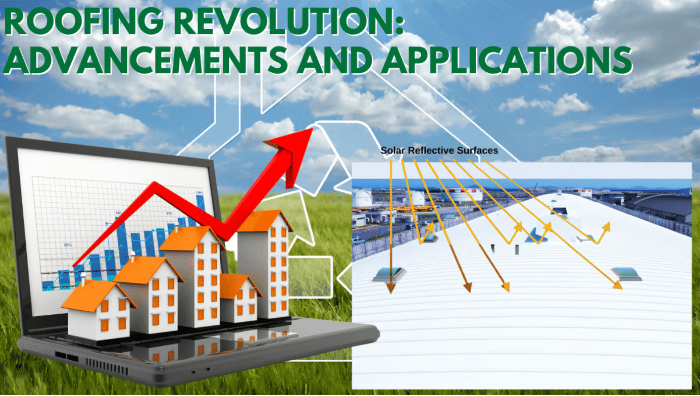
The Importance of the Roofing Revolution: Advancements and Applications
Friday, August 18, 2023
With a guiding light decision this was a huge week for the environment and environmentalists alike.

Wednesday, August 16, 2023
In times of crisis, the power of innovation and collaboration becomes most evident. A remarkable illustration of this lies in the journey of myself and GEI (Global Encasement, Inc.), a 30 year, trailblazing manufacturer of high-performance, popular coatings that lock down and seal hazardous materials.

Monday, August 14, 2023
The aftermath of the recent wildfires in Lahaina, Hawaii, has left behind not only charred landscapes but also a potential environmental hazard that may need containment and control.

Monday, August 07, 2023
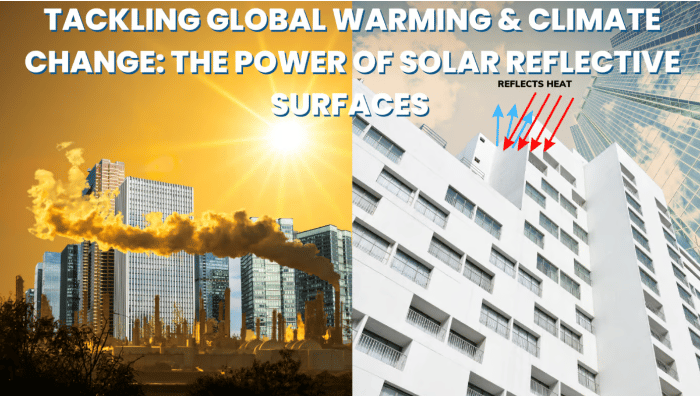
Integrating Solar Reflective Surfaces and Environmental Coatings: Driving Sustainable Surfaces for the Future
Wednesday, July 19, 2023
The Importance of the Health Connection of Solar Reflective Surfaces on People, Buildings, and the Planet
Monday, July 17, 2023
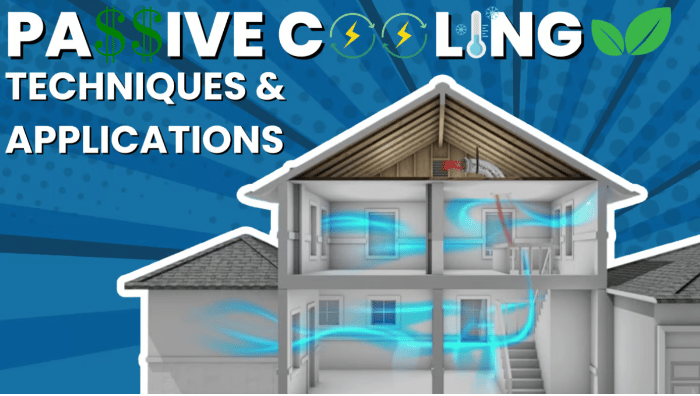
As the global demand for energy continues to rise, the need for sustainable and energy-efficient cooling solutions becomes increasingly important.
Monday, July 10, 2023
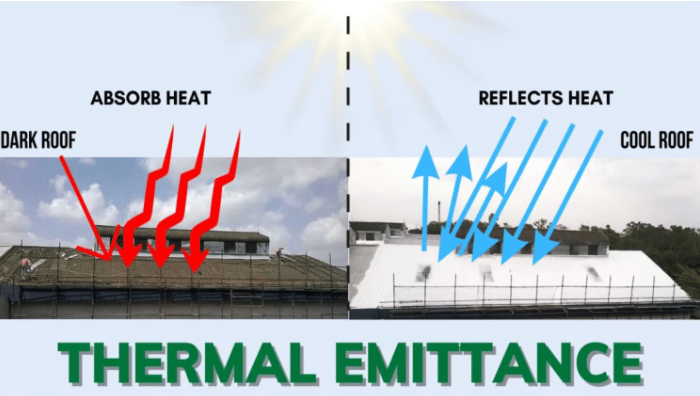
Unleashing the Power of Thermal Emittance
Monday, July 03, 2023
The Importance of Understanding the Heat Island Effect (HI)
Monday, June 26, 2023
In an era where climate change and its detrimental effects are becoming increasingly evident, finding sustainable solutions is crucial.