Blogs Where Nature Meets Science & Coatings
"If All the Greedy People that Pollute can get Together & Show Strength in Unity – then Honest, Environmentalists Must Do the Same. You See – It’s as Simple As That.” George C. Keefe - ENCASEMENT Guy
Blogs Where Nature Meets Science & Coatings
"If All the Greedy People that Pollute can get Together & Show Strength in Unity – then Honest, Environmentalists Must Do the Same. You See – It’s as Simple As That.” George C. Keefe - ENCASEMENT Guy
Wednesday, April 17, 2024

Listen and Learn: Dive into the Audio Version of Our Blog
When we think about climate change and global warming, our minds often jump to obvious culprits like industrial emissions, automotive pollutants, and deforestation.
However, a less visible but equally formidable foe lurks within the very walls around us.
In this episode I share how building materials that make up our buildings, homes, offices, and institutions carry a hefty environmental toll from cradle to grave.
This is where Life Cycle Assessment (LCA) becomes an essential tool, providing a comprehensive method for evaluating the total environmental impact of building materials from extraction and manufacturing, right through to their end-of-life disposal or recycling.
LCA examines everything: the energy consumed during the creation of a material, the pollution emitted during its manufacture, the efficacy of its use, and the ramifications of its disposal.
Each stage has hidden environmental costs that, when added up, can be staggering.
For instance, the production of conventional building materials like concrete, steel, and glass involves high energy inputs and significant CO2 emissions.
Furthermore, the demolition of buildings results in massive amounts of waste.
In the United States alone, building demolition and renovation waste contributes to a significant portion of the total waste in landfills.
This is a grim picture, but not one without hope.
As the world leans into a more sustainable future, the focus is shifting from merely constructing new buildings to maintaining and optimizing existing structures.
This is where innovative solutions like Green coating encasement technologies come into play.
These products are designed not only to protect buildings and extend their life but also to do so in an environmentally friendly way.
Green coatings, or eco-friendly protective encasement, are at the forefront of sustainable building practices.
These coatings are specifically engineered to have minimal environmental impact, being non-toxic, biodegradable, containing low or zero volatile organic compounds (VOCs), being long-term renewable resources, and being highly durable.
The longevity of these coatings is a key component of their environmental friendliness.
With life cycles minumums up to 20 years, these materials significantly reduce the frequency of reapplications and renovations, thereby decreasing the overall environmental footprint of maintaining a building.
The relationship between long-term protective measures like Green coating encasement and LCA is profound.
By extending the life of buildings, we minimize the demand for new raw materials, reduce waste, and lower the energy costs associated with manufacturing and construction processes.
Additionally, these protective coatings can enhance a building's energy efficiency by improving thermal insulation, which in turn reduces the energy consumption needed for heating and cooling—another direct benefit in the battle against global warming.
Consider the broader implications.
If buildings worldwide adopt long-term, renewable protective solutions, the cumulative effect on global warming and climate change could be monumental.
This strategy would not only reduce the strain on our raw material reserves and decrease pollution but also significantly curb our global carbon footprint.
Life Cycle Assessments, therefore, are not just academic exercises; they are crucial tools for decision-making in sustainable construction and maintenance.
They allow us to see the full picture of our environmental impact and guide us toward choices that align with our ecological priorities.
As the understanding and use of LCA grow, it becomes evident that strategies like the deployment of Green coatings are not just beneficial but essential for a sustainable future.
To Sum It Up:
The way we construct, maintain, and restore our buildings can significantly influence our environmental trajectory.
By integrating LCA into our building practices and opting for sustainable solutions like Green coating encasement, we defend against ongoing environmental degradation and take a proactive stance in the fight against climate change.
This not only ensures a safer planet for future generations but also a more economically sustainable environment for the global community.
“Good planets are hard to find. Let's take care of this one” - Greenpeace
What are your questions?
We are always here to help and excited to answer them.
Contact us at +1 (800) 266-3982 , or send us an email at service@encasement.com and leave a comment below.
See other posts like this one:
Tuesday, November 24, 2026
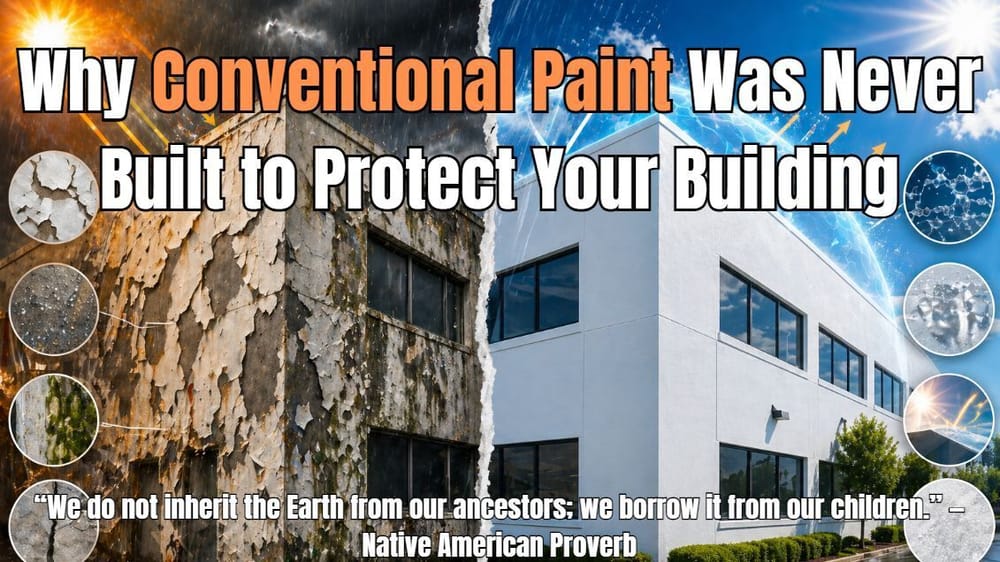
Face Mask vs. Body Armor The paint industry has spent decades selling you cosmetics while calling it protection. Here’s the truth they don’t want you to know — and what real building defense actually looks like.
Tuesday, November 17, 2026
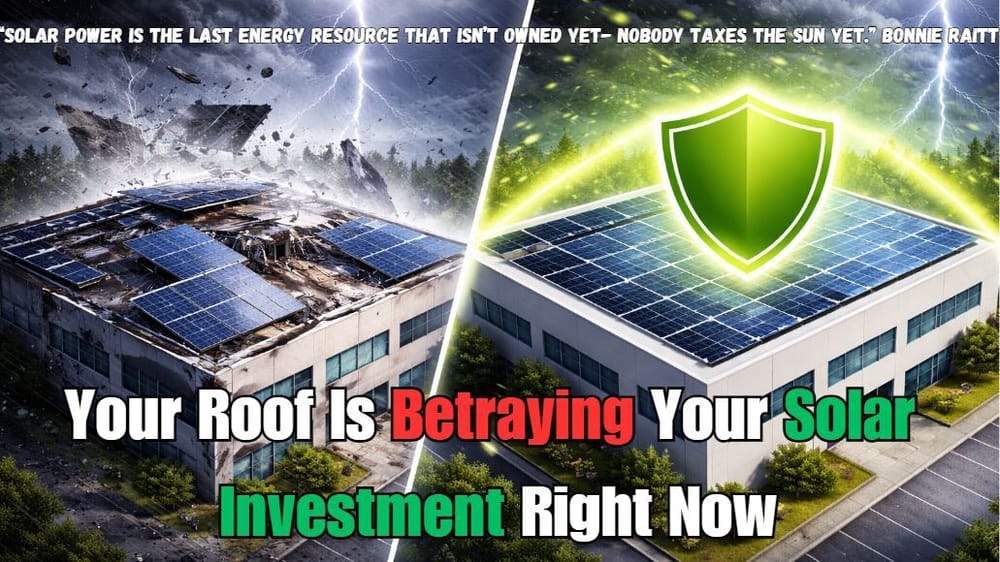
Solar can reduce dependence on volatile energy markets and turn rooftops into productive assets. But a rooftop solar system and the roof beneath it must be planned as one long-term system — because a clean-energy investment can become a costly maintenance problem if the roof, attachment points, and water-control details are not ready for decades of service.

Tuesday, November 10, 2026
The word "abatement" doesn't mean "rip it out." Understanding the real definition can save building owners tens of thousands of dollars -- and spare them years of unnecessary disruption. In my 50+ years in the field, I've watched this single misconception drive some of the most wasteful decisions in building management. It's time to set the record straight.
Tuesday, November 03, 2026
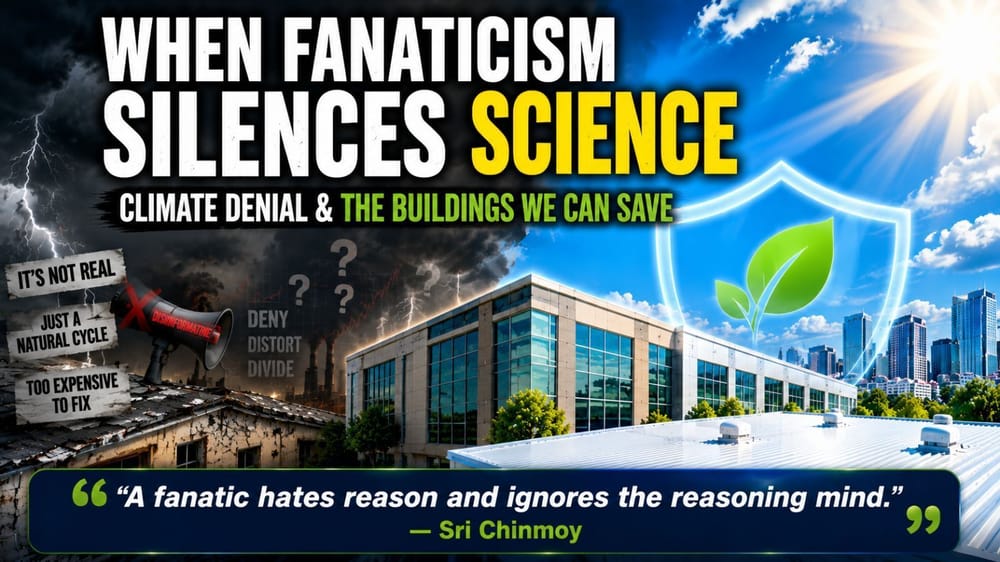
A quote, a warning, and a practical response — because when reason is under attack, doing the right thing becomes both a moral act and a market advantage.

Tuesday, October 27, 2026
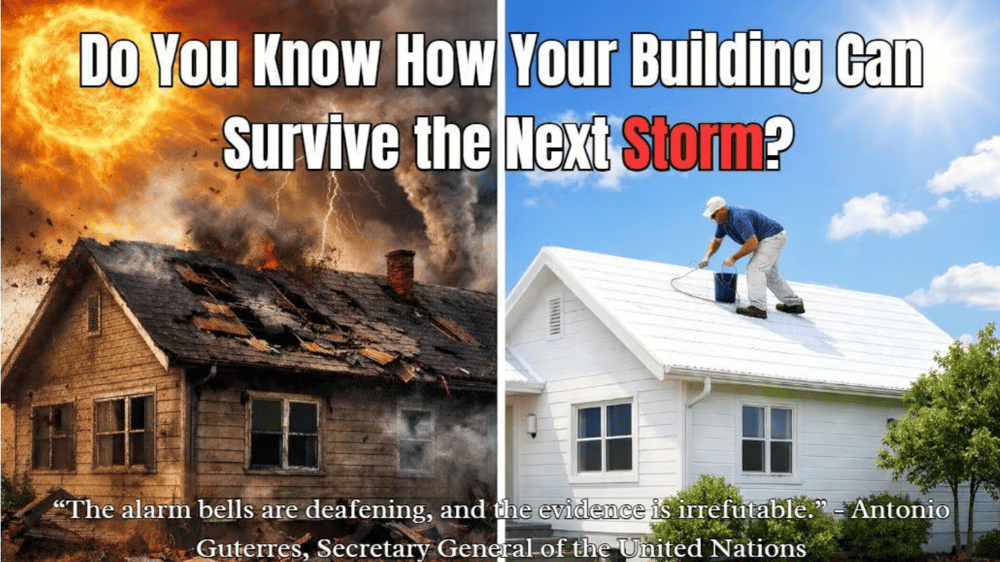
The storms are not coming. They are already here. Climate science has spent decades warning us about intensifying heat, heavier rainfall, rising seas, stronger coastal hazards, and weather extremes that place aging buildings under stresses many of them were never designed to endure.

Tuesday, October 20, 2026
Less than 9% of the people applying protective coatings to buildings and structures in America are women — in a trade that requires no special strength, no tools a woman doesn't already know how to use, and no barriers that have anything to do with capability. That statistic isn't just surprising. From my experience, it represents one of the largest untapped professional opportunities in the country — and it's about to get even bigger.

Tuesday, October 13, 2026
The maintenance-treadmill coating industry has a dirty secret: your building's repeated failures aren't bad luck. They're the business model. Here's what 40+ years in the field taught me, and what Green ENCASEMENT Coatings do about it.

Tuesday, October 06, 2026
Ordinary paint can make a building look protected while heat, moisture, UV, wind, and seasonal movement keep attacking beneath the surface. Green ENCASEMENT Coatings change the protection strategy.
Tuesday, September 29, 2026
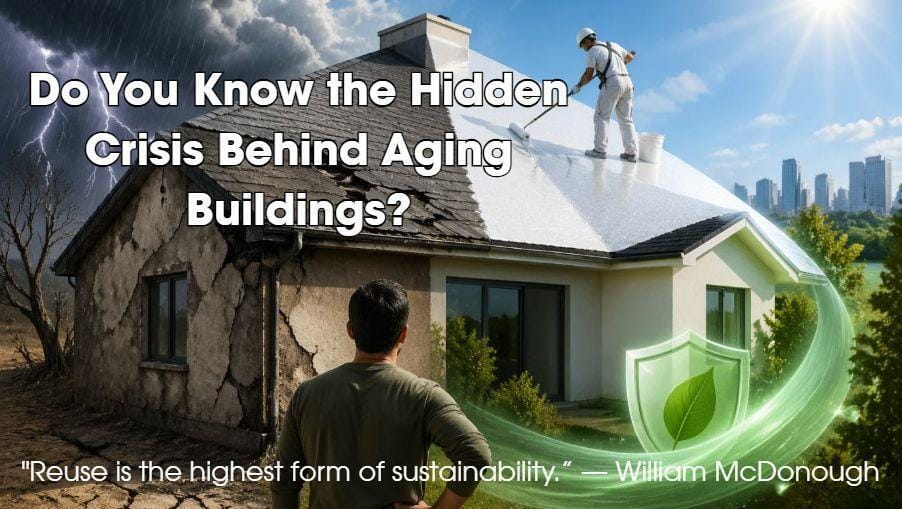
The Renewable Revolution: How Green ENCASEMENT Coatings Are Redefining Building Surfaces

Tuesday, September 22, 2026
History has already shown where buildings fail. The smarter strategy is to study those failures, strengthen the envelope before the next event, and preserve what can still be protected.
Tuesday, September 15, 2026
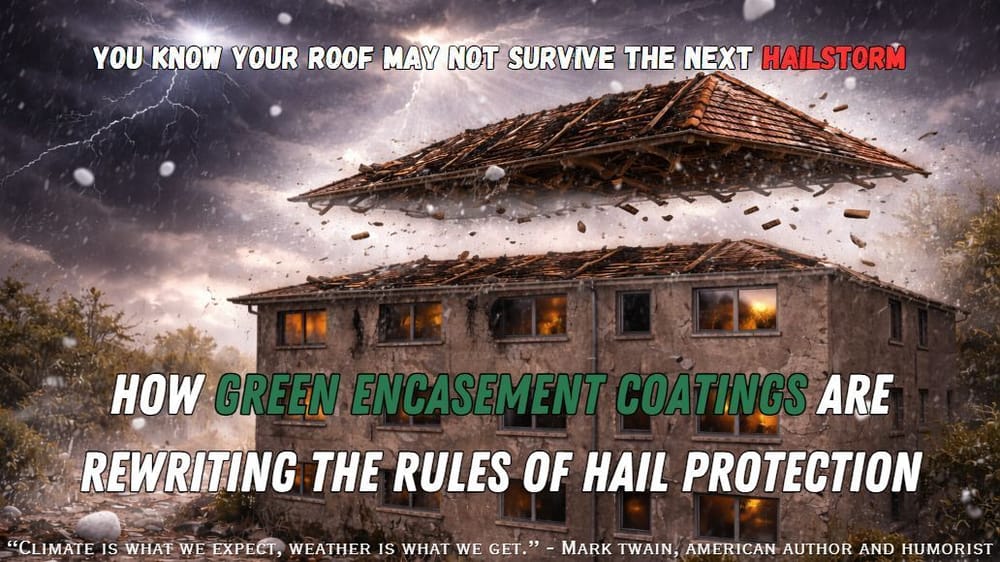
How Green ENCASEMENT Coatings are rewriting the rules of hail protection — before impact damage becomes a roof replacement problem.

Tuesday, September 08, 2026
Why Green ENCASEMENT Coatings can cost more at the beginning — and still cost far less over the life of your building.