Blogs Where Nature Meets Science & Coatings
"If All the Greedy People that Pollute can get Together & Show Strength in Unity – then Honest, Environmentalists Must Do the Same. You See – It’s as Simple As That.” George C. Keefe - ENCASEMENT Guy
Blogs Where Nature Meets Science & Coatings
"If All the Greedy People that Pollute can get Together & Show Strength in Unity – then Honest, Environmentalists Must Do the Same. You See – It’s as Simple As That.” George C. Keefe - ENCASEMENT Guy
Tuesday, February 17, 2026
By: George Keefe
"If all the greedy polluters can band together to protect their interests, then honest environmentalists must do the same. It's as simple as that.
Listen and Learn: Dive into the Audio Version of Our Blog
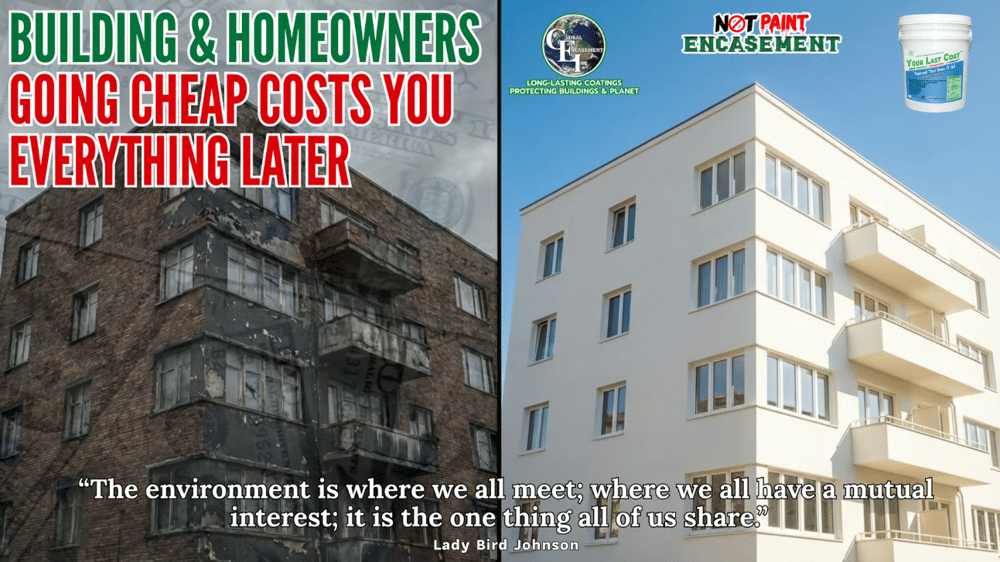
Every day, building owners make a choice that haunts them for decades: save money now with weak cosmetic paint and minimal insulation, or invest wisely in protection that actually lasts.
But here's the painful truth: when you go cheap on building protection, you don't just lose money.
You lose peace of mind, energy efficiency, and years of your building's life to preventable deterioration.
The Hidden Cost of "Saving Money"
Conventional paint might cost less today, but it's designed for one thing: cosmetics.
It makes your building look good for a few years, then it fails.
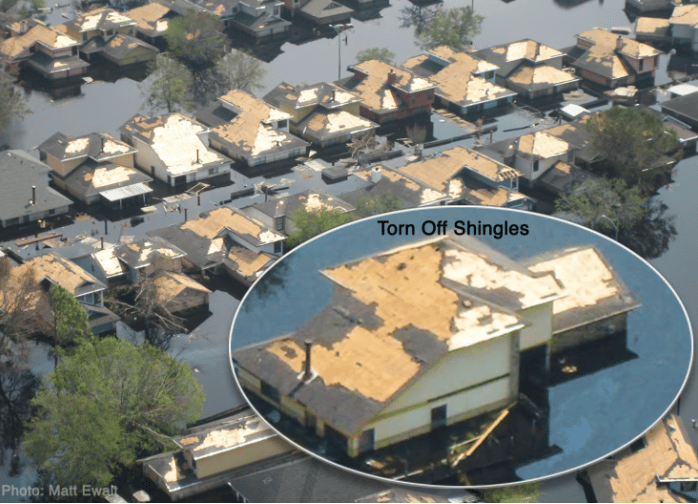
And when it fails, wind finds its way through cracks, water seeps into walls, and each storm chips away at your investment until you're facing expensive repairs that dwarf what you "saved" on that cheap paint job.
The same pattern repeats with inadequate insulation.
You skip proper thermal protection to hit a budget target, then spend the next 20 years bleeding energy costs as your HVAC system struggles to compensate.
Now add climate change to the equation.
Storms are getting more intense and frequent.
That weak paint that might have lasted five years?
It's failing in two or three now, battered by weather that older buildings were never designed to face.
The cheap approach isn't just more expensive anymore—it's becoming unsustainable.
Nobody invests in a building planning for it to last "a little while."
Every building owner wants their investment to endure.
Yet choosing cheap protection contradicts that desire at the most fundamental level.
You can't protect long-term value with short-term solutions.
There's a Better Way
What if you could invest once and receive long-lasting rewards?
What if the solution was stronger, better for the environment, and easier to apply than weak conventional coatings?
This is exactly what Green Encasement Coatings deliver.
Unlike conventional paint that sits on surfaces like a temporary mask, Green Encasement Coatings create a three-dimensional protective system that completely envelops and reinforces your building's exterior.
Through advanced cross-link bonding technology, these coatings integrate at the molecular level, creating a seamless membrane that becomes one with your building's structure.
No seams for wind to exploit.
No pierce points where water can penetrate.
Just complete protection that moves with your building through temperature changes and weather events, maintaining its defensive barrier year after year.
The warranty backs this up: 20 years of guaranteed protection, renewable indefinitely.
Not 3-5 years of cosmetics like conventional paint.
At least two decades of proven protection.
Protection That Works With Nature
Green Encasement Coatings don't force you to choose between performance and responsibility.
Zero VOC content, water-based formulation, biodegradable and non-toxic chemistry protect both applicators and the ecosystem.
These coatings achieve Class A fire ratings while delivering solar reflectivity that reduces surface temperatures by 50-80°F in light colors—turning your building from a heat absorber into a cooling asset that cuts energy costs by 15-40%.
The most remarkable aspect?
You can apply them with simple painting tools that local workers already possess.
Brushes, rollers, and standard airless spray equipment—that's all you need.
No specialized crews, no expensive equipment, no complex training.
This makes it accessible to everyone: advanced building protection for communities everywhere.
The Math That Matters
Let's be clear about economics.
Green Encasement Coatings cost more upfront than cheap paint.
But compare the true costs:
Conventional paint: Reapply every 3-5 years × 20 years = 4-6 complete repainting cycles, plus escalating damage repairs.
Green Encasement: One application with 20-year renewable warranty = one investment decision, predictable costs, no surprise failures.
You're not spending more.
You're investing wisely instead of wastefully.
This principle extends beyond buildings.
In every domain, taking the easy, cheap way out proves more expensive in the long run.
Learning to do it right—investing in quality, choosing proven solutions, prioritizing long-term value—is always cheaper than repeatedly overcoming the consequences of cutting corners.
Buildings deserve special attention because they represent our largest investments, our homes, our businesses, our communities.
They shelter what matters most to us.
They deserve protection that actually protects.
Green Encasement Coatings offer that protection: environmentally responsible, comprehensively defensive, practically accessible, and guaranteed for the long term.
The question isn't whether you can afford to invest in proper protection.
The question is whether you can afford to keep losing so much by going cheap.
Choose wisely.
Choose protection that lasts.
Choose Green Encasement Coatings.
“The environment is where we all meet; where we all have a mutual interest; it is the one thing all of us share.” — Lady Bird Johnson
See other posts like this one:

Friday, November 16, 2018
November is Lung Cancer Awareness Month including asbestos education, so this is a good time to raise awareness about preventing unnecessary exposure to asbestos that can cause lung cancer as well as contribute to other possible health concerns.

Wednesday, October 10, 2018
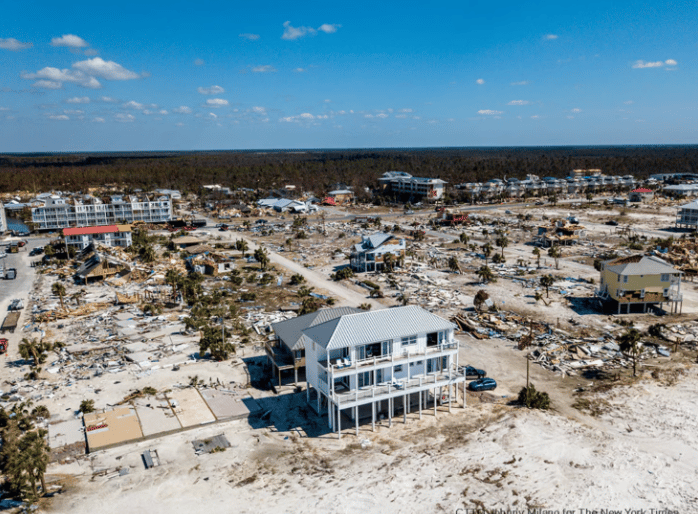
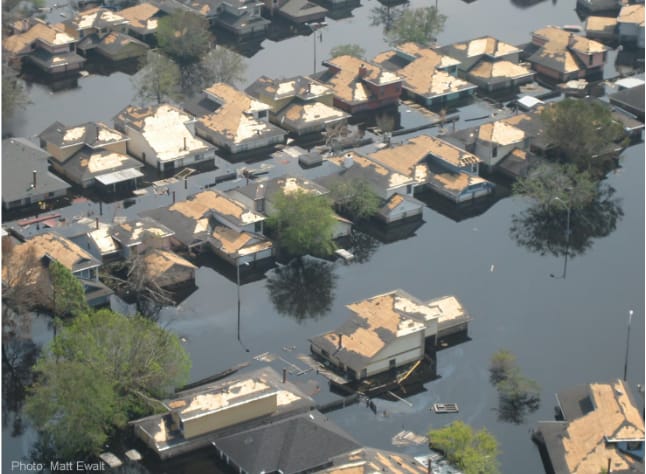
Short of moving your building or raising it up above flooding, the best approach to take to reduce storm, flooding and natural disaster losses is to simply use a proven coating to wind and waterproofthe surfaces in the path of destruction.

Tuesday, September 18, 2018
We recently passed the anniversary of 9-11-2001 tragedy of the attack on the Twin Towers in New York. I wanted to remind everyone that the effects of that fateful day are still being felt and especially by some of the heroes that were affected by the initial exposure and then the secondary exposure that took place during the cleanup. Some of those exposed were firefighters, police officers, EMTs (Emergency Medical Technician), construction workers, transit workers, cleanup workers, debris removal crews, truck drivers, nearby office workers, and Lower Manhattan residents.
Tuesday, August 21, 2018
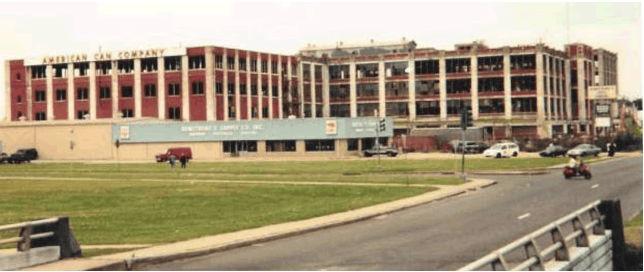
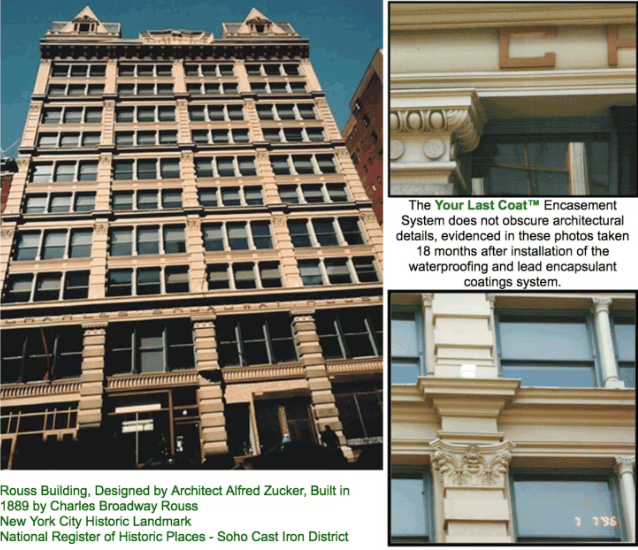
I discussed in a recent blog the importance of keeping the aesthetics of a historic building intact. Making sure that the look and overall presentation on a structure is preserved is very significant. This is especially true with landmark properties that have prominent and distinct features. Preservation can become very difficult when it entails obsolete building materials that contain hazardous materials that are typically removed and replaced. Three of the most common of hazardous materials is lead-based paint, asbestos and PCBs. In the USA, lead was used in paints up until 1978. It then was banned for its negative health effects, especially with children in their developing stages. PCBs, or polychlorinated biphenyls, were banned from paints, caulking and surface coatings in 1979 and asbestos was banned in 1974. All these bans were due to the negative health and environmental effects of these products.
Tuesday, July 17, 2018
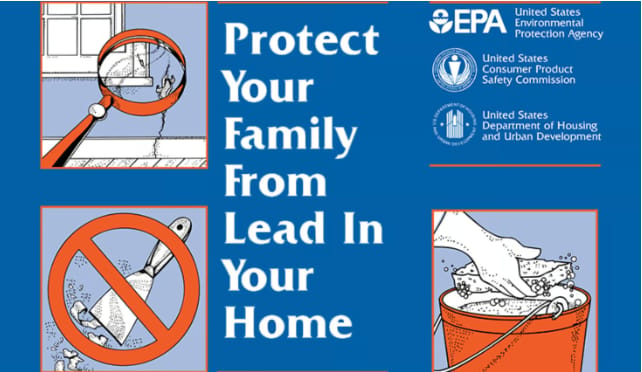
Lead Paint Poisoning is Preventable Through Education and Action