
Blogs Where Nature Meets Science & Coatings
"If All the Greedy People that Pollute can get Together & Show Strength in Unity – then Honest, Environmentalists Must Do the Same. You See – It’s as Simple As That.” George C. Keefe - ENCASEMENT Guy
Blogs Where Nature Meets Science & Coatings
"If All the Greedy People that Pollute can get Together & Show Strength in Unity – then Honest, Environmentalists Must Do the Same. You See – It’s as Simple As That.” George C. Keefe - ENCASEMENT Guy
Thursday, May 23, 2024
Listen and Learn: Dive into the Audio Version of Our Blog
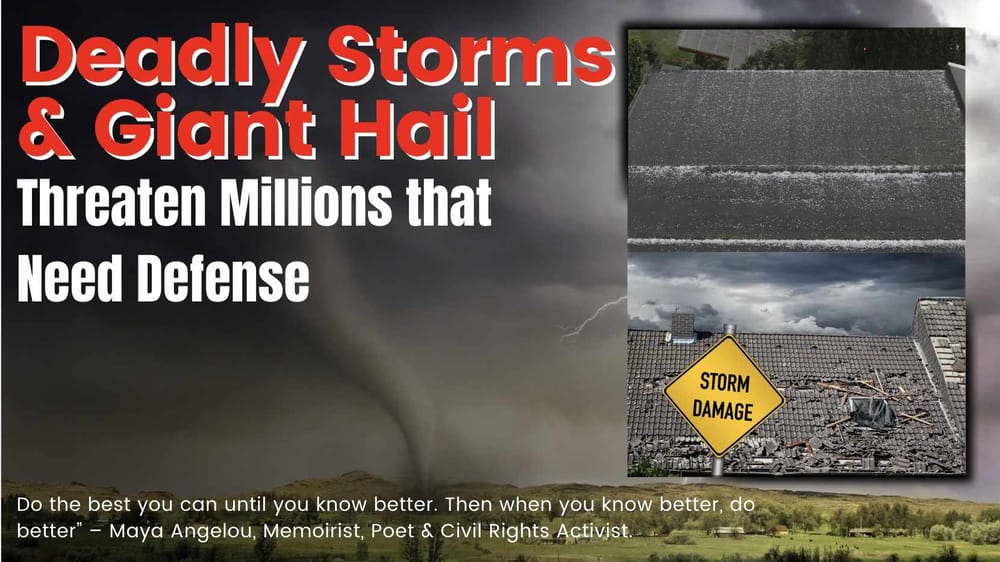
An exceptionally active tornado season is gripping the United States, bringing with it a severe threat of powerful storms that could prove disastrous for millions.
As spring reaches its peak, the frequency and intensity of these storms are expected to escalate, leading to significant concerns about safety and property damage.
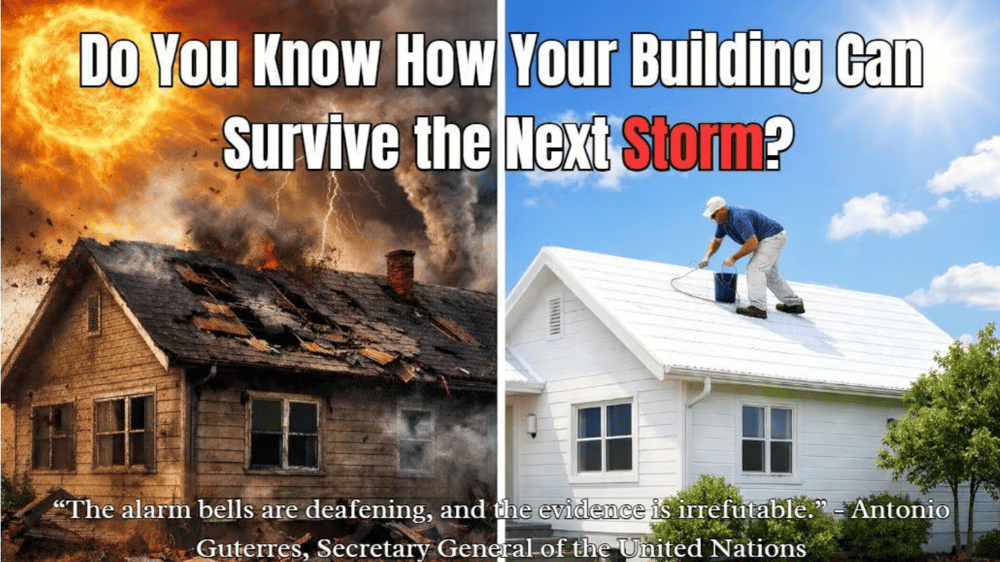
The destructive power of tornadoes and giant hail poses a formidable challenge, not just to lives, but to buildings and infrastructure.
In this episode I explore the impact of these violent weather events and discuss how innovative green coatings can offer protection, tying into broader themes of environmental sustainability and climate change resilience.
The Rising Threat of Tornadoes and Giant Hail
Tornadoes, with their unpredictable paths and intense wind speeds, can obliterate entire neighborhoods within minutes.
The United States, particularly the Tornado Alley region, is no stranger to these natural disasters.
Recent data indicates that the number of severe tornadoes has been increasing, partly driven by climate change which has altered weather patterns, making tornado seasons longer and more volatile.
Giant hail, often accompanying these storms, adds another layer of destruction.
Hailstones can grow to the size of baseballs or even larger, causing extensive damage to buildings, roofs, windows, vehicles, and crops.
The economic cost of these weather events is staggering, running into billions of dollars annually.
Buildings and homes in the path of these storms often suffer severe structural damage, leading to lengthy and expensive repairs.
The Impact on Buildings and Infrastructure
When tornadoes and giant hail strike, they don't just leave physical scars on the landscape; they also compromise the integrity of buildings and infrastructure.
The immediate aftermath typically reveals battered buildings, shattered windows, torn roofs, and damaged walls.
But the damage goes deeper than what is visible.
The structural integrity of buildings is often compromised, necessitating comprehensive inspections and repairs.
Furthermore, the economic impact on communities can be devastating.
Businesses are disrupted, homes are rendered uninhabitable, and public infrastructure such as roads, power lines, and water systems are often damaged.
The cumulative effect is a prolonged recovery period that strains both local economies and emergency services.
Protecting Buildings with the Right Defensive Green Coatings
In the face of such formidable threats, proactive measures are essential.
One promising solution lies in the use of advanced green coatings encasement for buildings.
These innovative materials can provide a protective barrier that could significantly enhance the resilience of structures against severe weather.
The right green coatings, made from environmentally friendly materials, offer multiple benefits. They provide a durable, weather-resistant layer that can withstand high winds, heavy rainfall, and even hail impact.
Additionally, these coatings improve energy efficiency by reflecting sunlight and reducing heat absorption, which is particularly beneficial during hot summers.
The right, long-term, green coatings involve reinforcing the building’s exterior with sturdy materials that can absorb and dissipate the energy from hail impacts and high winds.
These environmental encasement systems not only protect against immediate damage but also are non-toxic, biodegradable, with zero to low VOC’s (volatile organic compounds) and no ODS (ozone depleting substances) while helping maintain the structural integrity of the building over time.
The Environmental Connection: Sustainability and Climate Change
Beyond their protective qualities, the right green coatings encasement also contribute to broader environmental goals.
By improving energy efficiency, they reduce the carbon footprint of buildings, aligning with efforts to combat climate change.
As extreme weather events become more frequent and intense due to global warming, adopting sustainable building practices is crucial.
Moreover, using eco-friendly materials reduces the reliance on traditional, often non-renewable, construction materials.
This shift not only lessens environmental impact but also promotes the use of innovative technologies that can adapt to changing climate conditions.
To Sum IT Up:
Building a Resilient Future
The threat of tornadoes and giant hailstorms is a stark reminder of nature’s power and unpredictability.
However, by embracing advanced protective measures such as the right defensive, green coatings encasement, we can safeguard our buildings and homes,reduce economic losses, and promote environmental sustainability.
These solutions represent a proactive approach to building resilience against severe weather, ensuring that communities are better prepared to withstand and recover from these devastating events.
As we continue to grapple with the realities of climate change, integrating sustainable practices in building construction and maintenance is not just an option but a necessity.
Protecting people, buildings, and the planet requires innovative thinking and a commitment to sustainable development, ensuring a safer, more resilient future for all.
"Do the best you can until you know better. Then when you know better, do better" – Maya Angelou, Memoirist, Poet & Civil Rights Activist.
What are your questions?
We are always here to help and excited to answer them.
Contact us at +1 (800) 266-3982 , or send us an email at service@encasement.com and leave a comment below.
See other posts like this one:

Tuesday, November 10, 2026
The word "abatement" doesn't mean "rip it out." Understanding the real definition can save building owners tens of thousands of dollars -- and spare them years of unnecessary disruption. In my 50+ years in the field, I've watched this single misconception drive some of the most wasteful decisions in building management. It's time to set the record straight.
Tuesday, November 03, 2026
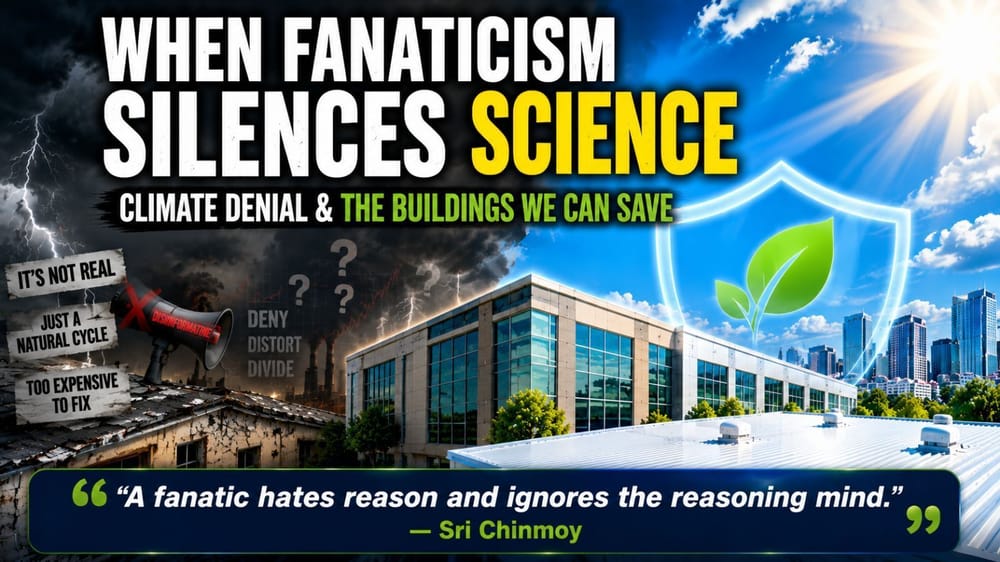
A quote, a warning, and a practical response — because when reason is under attack, doing the right thing becomes both a moral act and a market advantage.

Tuesday, October 27, 2026
The storms are not coming. They are already here. Climate science has spent decades warning us about intensifying heat, heavier rainfall, rising seas, stronger coastal hazards, and weather extremes that place aging buildings under stresses many of them were never designed to endure.

Tuesday, October 20, 2026
Less than 9% of the people applying protective coatings to buildings and structures in America are women — in a trade that requires no special strength, no tools a woman doesn't already know how to use, and no barriers that have anything to do with capability. That statistic isn't just surprising. From my experience, it represents one of the largest untapped professional opportunities in the country — and it's about to get even bigger.

Tuesday, October 13, 2026
The maintenance-treadmill coating industry has a dirty secret: your building's repeated failures aren't bad luck. They're the business model. Here's what 40+ years in the field taught me, and what Green ENCASEMENT Coatings do about it.

Tuesday, October 06, 2026
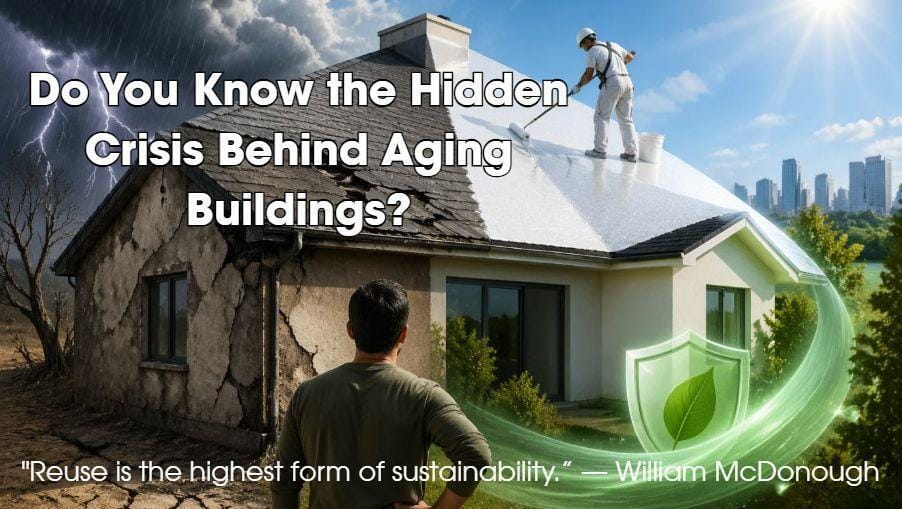
Ordinary paint can make a building look protected while heat, moisture, UV, wind, and seasonal movement keep attacking beneath the surface. Green ENCASEMENT Coatings change the protection strategy.
Tuesday, September 29, 2026
The Renewable Revolution: How Green ENCASEMENT Coatings Are Redefining Building Surfaces

Tuesday, September 22, 2026
History has already shown where buildings fail. The smarter strategy is to study those failures, strengthen the envelope before the next event, and preserve what can still be protected.
Tuesday, September 15, 2026
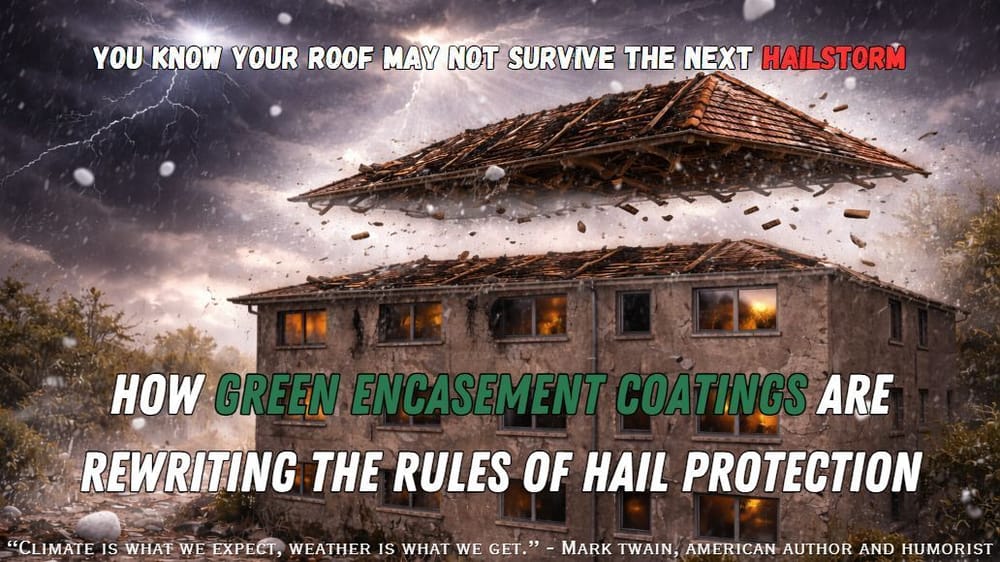
How Green ENCASEMENT Coatings are rewriting the rules of hail protection — before impact damage becomes a roof replacement problem.

Tuesday, September 08, 2026
Why Green ENCASEMENT Coatings can cost more at the beginning — and still cost far less over the life of your building.




Tuesday, August 04, 2026
