Blogs Where Nature Meets Science & Coatings
"If All the Greedy People that Pollute can get Together & Show Strength in Unity – then Honest, Environmentalists Must Do the Same. You See – It’s as Simple As That.” George C. Keefe - ENCASEMENT Guy
Blogs Where Nature Meets Science & Coatings
"If All the Greedy People that Pollute can get Together & Show Strength in Unity – then Honest, Environmentalists Must Do the Same. You See – It’s as Simple As That.” George C. Keefe - ENCASEMENT Guy
Monday, January 15, 2024
Listen and Learn: Dive into the Audio Version of Our Blog
As we celebrate the enduring legacy of Martin Luther King Jr., it's crucial to recognize the multifaceted nature of his activism.
Beyond the realms of civil rights, King's vision extended to encompass a broader understanding of justice—one that transcended the boundaries of human rights.
An often-overlooked aspect of his legacy is his role as an environmentalist.
In this episode, I'll look at how that is true and that I believe if he was still alive, he would be passionately speaking out to protect the environment and all living creatures in it.
In his profound words and actions, we find evidence that suggests King would likely have stood up to defend the rights of nature, just as passionately as he did for the rights of others.
Connecting Justice Everywhere:
In his renowned "Letter from Birmingham Jail," written on April 16, 1963, Martin Luther King Jr. articulated a powerful idea that resonates beyond its original context: "Injustice anywhere is a threat to justice everywhere."
These words echo the universality of King's commitment to justice.
He recognized that the struggle for equality and fairness extends far beyond racial and social boundaries—it includes the environment we inhabit.
Highlighting Environmental Injustice:
King's acknowledgment of environmental injustices is evident in his penetrating observation that "cities are gasping in polluted air and enduring contaminated water."
This recognition of the degraded environment as a form of injustice shows his concern for the well-being of communities affected by environmental decay.
King understood that pollution and environmental harm unfairly impacted marginalized communities, focusing in on the connection of social and environmental issues.
A Vision Beyond Human Rights:
King's advocacy for justice extended beyond the human realm, inviting us to consider the rights of our natural resources and fellow living creatures when he stated:
“Never, never be afraid to do what’s right, especially if the well-being of a person or animal is at stake. Society’s punishments are small compared to the wounds we inflict on our soul when we look the other way.”
His eloquent words challenge us to broaden our definition of justice, urging us to recognize the inherent value of the environment and the interconnectedness of all living beings.
King as an Environmentalist:
Had Martin Luther King Jr. lived in a time when environmental concerns were at the forefront, it's reasonable to assume that he would have championed the cause of environmental justice.
His principles of equality, fairness, and the interconnectedness of humanity align seamlessly with the morality of the environmental movement.
As we commemorate Martin Luther King Jr.'s legacy, let us heed his call for justice by extending our advocacy to the environment.
Just as he fought against racial inequality, King's principles guide us to address environmental injustices and safeguard the rights of nature.
By recognizing that injustice anywhere threatens justice everywhere, we honor his memory and contribute to a more equitable and sustainable world.
Summing it up:
Martin Luther King Jr.'s profound insights into justice were not confined to human rights alone.
His acknowledgment of environmental injustice signifies a vision that transcends narrow boundaries.
By reflecting on his words, we find inspiration to advocate for the rights of our natural world.
In honoring King's legacy, let us embrace a holistic understanding of justice—one that encompasses both the struggles of humanity and the well-being of the planet we call home.
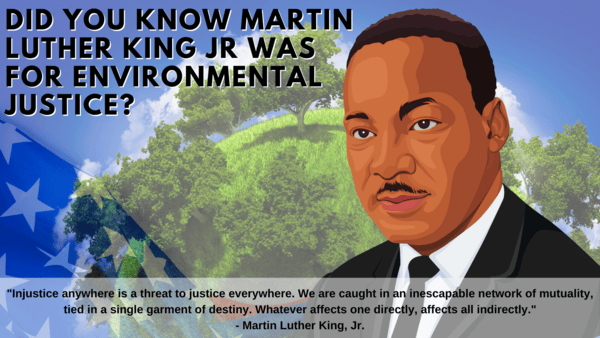
"Injustice anywhere is a threat to justice everywhere. We are caught in an inescapable network of mutuality, tied in a single garment of destiny. Whatever affects one directly, affects all indirectly." - Martin Luther King, Jr.
What are your questions?
We are always here to help and excited to answer them.
Contact us at +1 (800) 266-3982 , or send us an email at service@encasement.com and leave a comment below.
See other posts like this one:



Friday, November 16, 2018
November is Lung Cancer Awareness Month including asbestos education, so this is a good time to raise awareness about preventing unnecessary exposure to asbestos that can cause lung cancer as well as contribute to other possible health concerns.
Wednesday, October 10, 2018
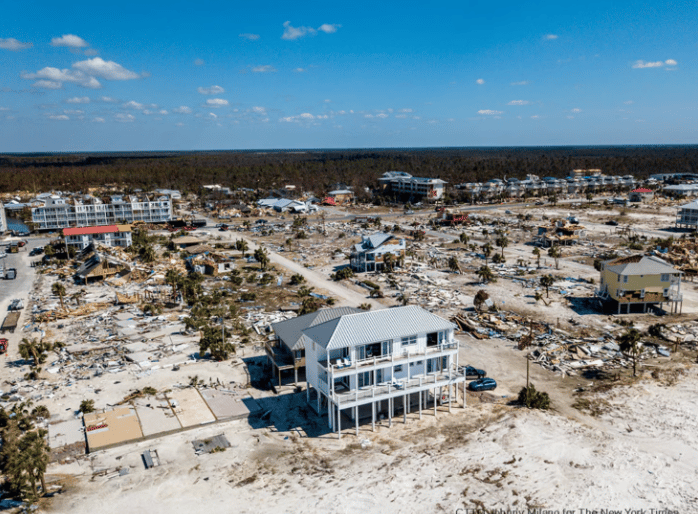
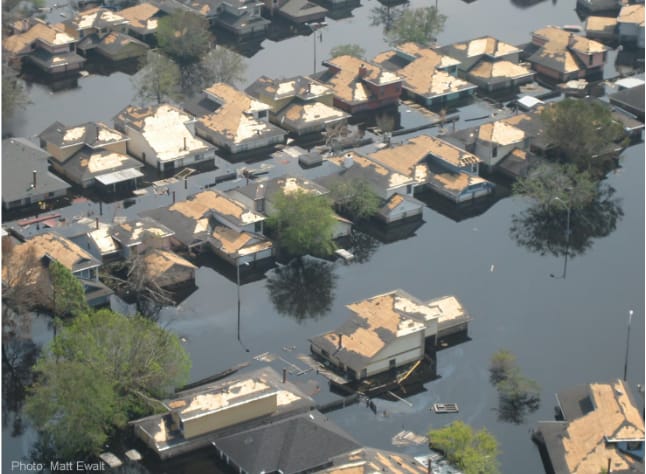
Short of moving your building or raising it up above flooding, the best approach to take to reduce storm, flooding and natural disaster losses is to simply use a proven coating to wind and waterproofthe surfaces in the path of destruction.

Tuesday, September 18, 2018
We recently passed the anniversary of 9-11-2001 tragedy of the attack on the Twin Towers in New York. I wanted to remind everyone that the effects of that fateful day are still being felt and especially by some of the heroes that were affected by the initial exposure and then the secondary exposure that took place during the cleanup. Some of those exposed were firefighters, police officers, EMTs (Emergency Medical Technician), construction workers, transit workers, cleanup workers, debris removal crews, truck drivers, nearby office workers, and Lower Manhattan residents.
Tuesday, August 21, 2018
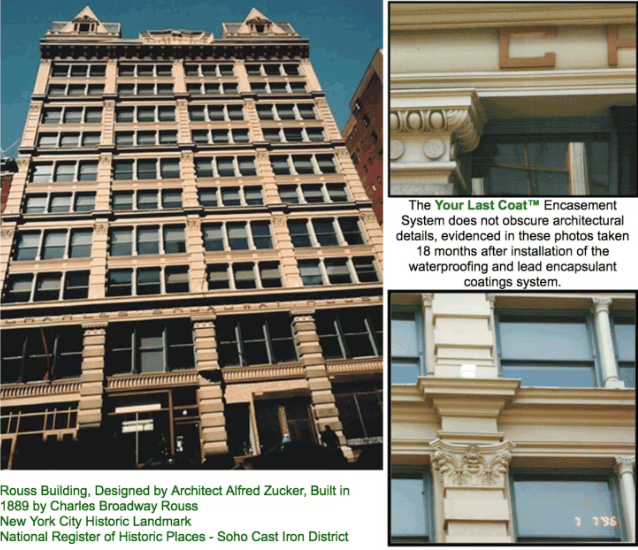
I discussed in a recent blog the importance of keeping the aesthetics of a historic building intact. Making sure that the look and overall presentation on a structure is preserved is very significant. This is especially true with landmark properties that have prominent and distinct features. Preservation can become very difficult when it entails obsolete building materials that contain hazardous materials that are typically removed and replaced. Three of the most common of hazardous materials is lead-based paint, asbestos and PCBs. In the USA, lead was used in paints up until 1978. It then was banned for its negative health effects, especially with children in their developing stages. PCBs, or polychlorinated biphenyls, were banned from paints, caulking and surface coatings in 1979 and asbestos was banned in 1974. All these bans were due to the negative health and environmental effects of these products.
Tuesday, July 17, 2018
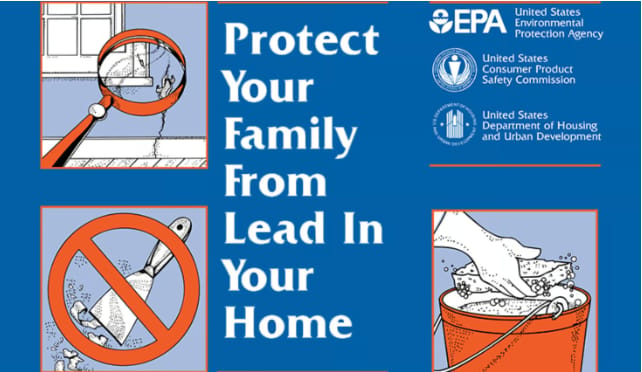
Lead Paint Poisoning is Preventable Through Education and Action