Blogs Where Nature Meets Science & Coatings
"If All the Greedy People that Pollute can get Together & Show Strength in Unity – then Honest, Environmentalists Must Do the Same. You See – It’s as Simple As That.” George C. Keefe - ENCASEMENT Guy
Blogs Where Nature Meets Science & Coatings
"If All the Greedy People that Pollute can get Together & Show Strength in Unity – then Honest, Environmentalists Must Do the Same. You See – It’s as Simple As That.” George C. Keefe - ENCASEMENT Guy
Monday, October 23, 2023
In a world where disaster strikes more frequently and intensely, the survival and prosperity of communities depend on the resilience of their buildings.
Listen and Learn: Dive into the Audio Version of Our Blog
These seemingly unassuming structures form the very backbone of our economies, serving as homes, schools, warehouses, and factories.
But how can we ensure that our buildings can withstand the fiercest storms and economic challenges?
By September 2023, the United States had already shattered records, with annual disasters causing more than a billion dollars in damages.
The social and economic well-being of our communities hangs in the balance, and the solution might just lie in a transformative concept – long-term tough green coatings.
These green coatings our not week paints or bargan encapsulants.
You see, most of the buildings that will weather the storm, quite literally, in the foreseeable future are existing structures that require reinforcement.
It's not just about any green coating; it's about selecting coatings that are strong, resilient, flexible, and breathable, boasting a remarkable service life of at least two decades.
These coatings can endure even the harshest conditions, be it on a rooftop or any other surface, fortifying our buildings in the face of adversity.
But the benefits don't stop at resilience.
Imagine this: the ability to not only safeguard your community but also embrace sustainability.
It's all possible with a well-executed retrofit initiative.
Many states are extending their property assessed capital expenditure (PACE) programs to cover resilience investments.
This unique financing approach allows property owners to fund sustainability and resilience projects upfront, with repayment linked to the property rather than the owner.
The result? Positive cash flow and lasting capital improvements.
The government and utility sectors are also getting in on the action, offering a plethora of incentives, especially following the Bipartisan Infrastructure Law and Inflation Reduction Act of 2022.
While navigating these incentives may seem daunting, the Database of State Incentives for Renewables and Efficiency (DSIRE) is a treasure trove of information, helping you uncover the available programs in your area.
Furthermore, the wave of progress is gaining momentum as 46 states and localities commit to establishing building performance standards (BPS) by April 2024.
BPS requirements push existing buildings to meet minimum climate performance levels, compelling retrofits to achieve these targets.
These upgrades, whenever possible, should also integrate resilience measures.
This is where the magic of green coating encasement comes into play, providing an essential step towards greener and fortified properties.
Again these coatings are not short term, weak paint or feeble encapsulants.
The best part?
You don't need to be an expert to make this happen.
These green coatings encasement can be simply applied by contractors or even enthusiastic do-it-yourselfers, making the path to fortifying our communities and the economy more accessible than ever before.
So, join us as we delve into this groundbreaking shift in building resilience, where tough green coatings are not just protecting our structures, but also creating job opportunities and paving the way for a more sustainable, secure future.
“Climate change is destroying our path to sustainability. Ours is a world of looming challenges and increasingly limited resources. Sustainable development offers the best chance to adjust our course.” Ban Ki-moon
See other posts like this one:


Friday, November 16, 2018
November is Lung Cancer Awareness Month including asbestos education, so this is a good time to raise awareness about preventing unnecessary exposure to asbestos that can cause lung cancer as well as contribute to other possible health concerns.

Wednesday, October 10, 2018
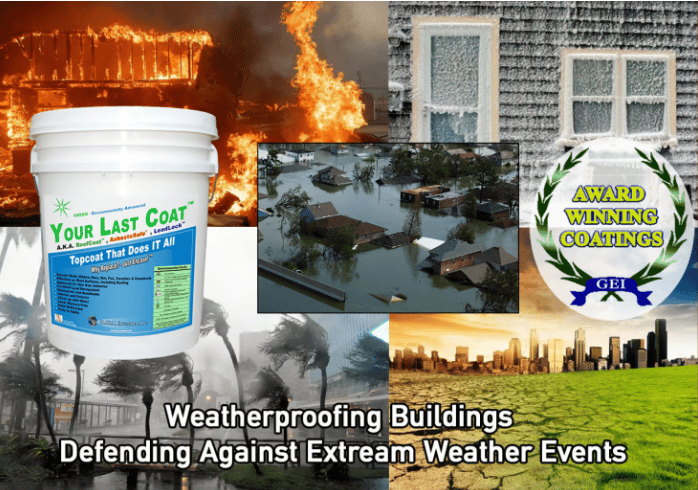
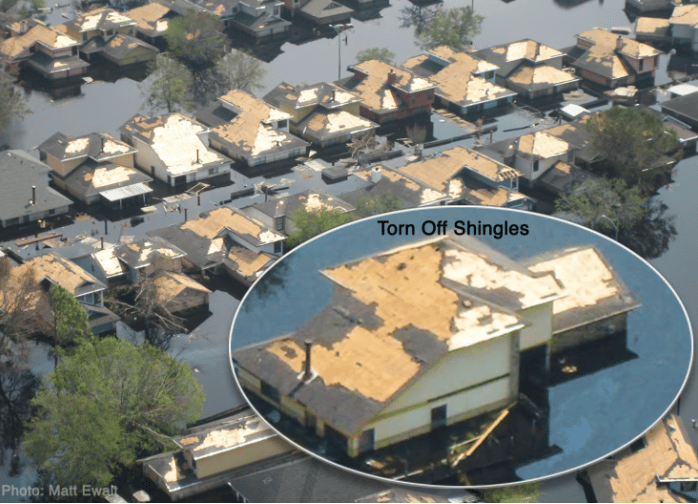
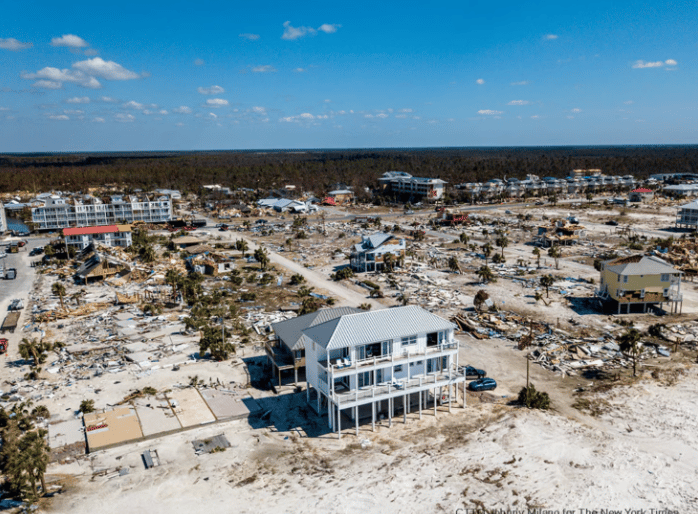
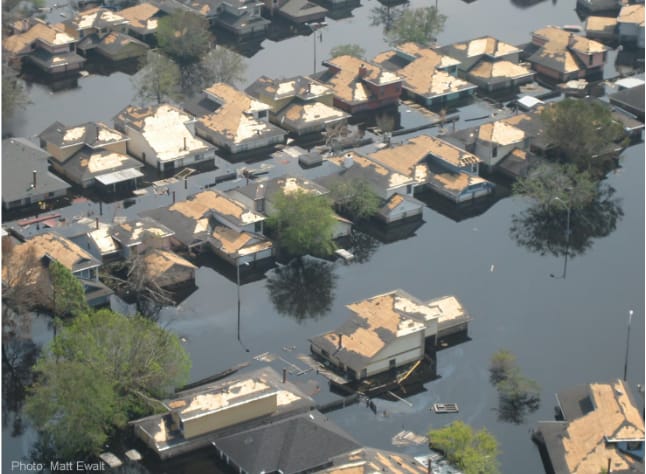
Short of moving your building or raising it up above flooding, the best approach to take to reduce storm, flooding and natural disaster losses is to simply use a proven coating to wind and waterproofthe surfaces in the path of destruction.

Tuesday, September 18, 2018
We recently passed the anniversary of 9-11-2001 tragedy of the attack on the Twin Towers in New York. I wanted to remind everyone that the effects of that fateful day are still being felt and especially by some of the heroes that were affected by the initial exposure and then the secondary exposure that took place during the cleanup. Some of those exposed were firefighters, police officers, EMTs (Emergency Medical Technician), construction workers, transit workers, cleanup workers, debris removal crews, truck drivers, nearby office workers, and Lower Manhattan residents.
Tuesday, August 21, 2018
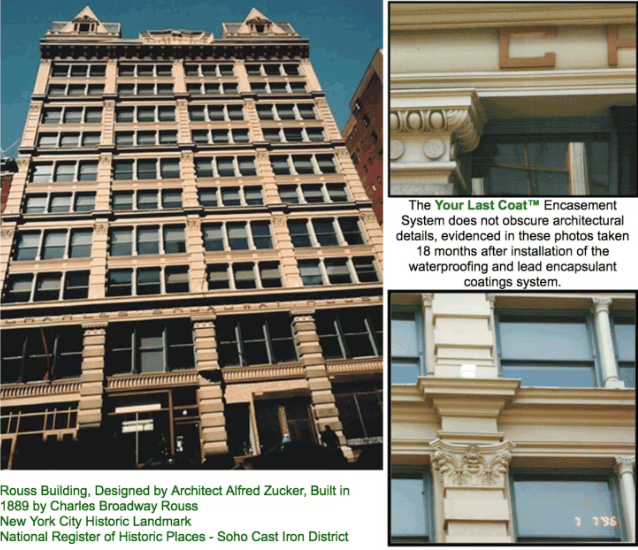
I discussed in a recent blog the importance of keeping the aesthetics of a historic building intact. Making sure that the look and overall presentation on a structure is preserved is very significant. This is especially true with landmark properties that have prominent and distinct features. Preservation can become very difficult when it entails obsolete building materials that contain hazardous materials that are typically removed and replaced. Three of the most common of hazardous materials is lead-based paint, asbestos and PCBs. In the USA, lead was used in paints up until 1978. It then was banned for its negative health effects, especially with children in their developing stages. PCBs, or polychlorinated biphenyls, were banned from paints, caulking and surface coatings in 1979 and asbestos was banned in 1974. All these bans were due to the negative health and environmental effects of these products.
Tuesday, July 17, 2018
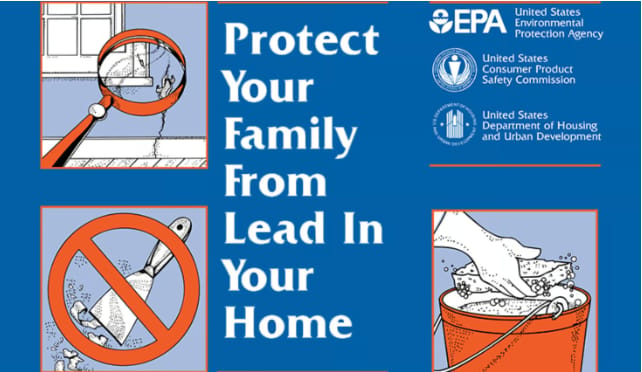
Lead Paint Poisoning is Preventable Through Education and Action