
Blogs Where Nature Meets Science & Coatings
"If All the Greedy People that Pollute can get Together & Show Strength in Unity – then Honest, Environmentalists Must Do the Same. You See – It’s as Simple As That.” George C. Keefe - ENCASEMENT Guy
Blogs Where Nature Meets Science & Coatings
"If All the Greedy People that Pollute can get Together & Show Strength in Unity – then Honest, Environmentalists Must Do the Same. You See – It’s as Simple As That.” George C. Keefe - ENCASEMENT Guy
Thursday, September 05, 2024
By: George C. Keefe
Note: The Author is an Environmentalist, Green Coatings Enthusiast, Contractor, Consultant, Vegan, Blogger, Podcaster. Protecting the Health of People & Planet. CEO & Founder at Global ENCASEMENT, Inc., Restoration & Management vs Removal & Replacement. Why Replace – Just Encase!
Listen and Learn: Dive into the Audio Version of Our Blog
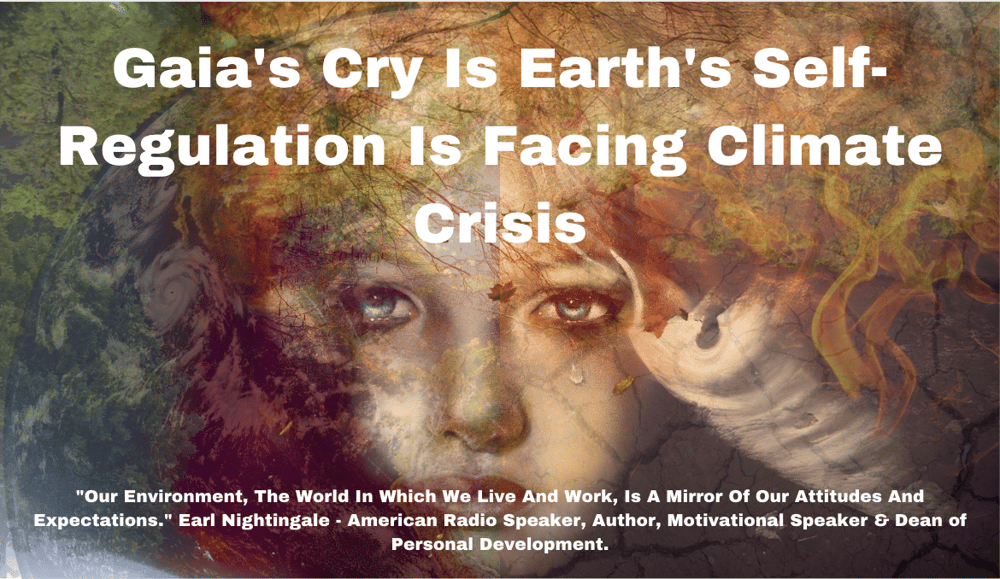
Our planet, a living, breathing entity, is struggling to maintain balance in the face of unprecedented climate change.
The Gaia Principle, a revolutionary concept introduced by James Lovelock and Lynn Margulis in the 1970s, suggests that Earth functions as a single, self-regulating organism.
In this episode I shed light on this intricate system, named after the Greek goddess of Earth, and how it proposes that all living organisms interact with their inorganic surroundings to create a synergistic, self-regulating environment that sustains life.
As we grapple with the escalating climate crisis, the Gaia Principle takes on new significance.
It compels us to view our planet not as a passive backdrop for human activity, but as a complex, responsive system that reacts to our actions.
The principle argues that Earth has maintained conditions suitable for life for billions of years through a delicate balance of physical, chemical, and biological processes.
However, human-induced climate change is now pushing this system to its limits.
The rapid increase in greenhouse gas emissions, deforestation, and pollution are disrupting the planet's natural regulatory mechanisms.
Rising global temperatures, extreme weather events, and shifting ecosystems are all signs that Gaia's equilibrium is faltering.
The climate crisis we face today is not just an environmental issue; it's a threat to the very systems that have sustained life on Earth for eons.
Understanding the Gaia Principle in the context of the climate crisis highlights the urgent need for a holistic approach to environmental protection.
It emphasizes that our actions have far-reaching consequences beyond immediate, visible impacts.
Every choice we make, from the products we use to the energy we consume, ripples through Earth's interconnected systems.
This realization brings us to the crucial role of eco-friendly products and green technologies in mitigating the climate crisis.
As stewards of this planet, we have the responsibility to align our choices with Earth's natural processes.
One significant area where we can make a difference is in the use of eco-friendly products like the right green coatings.
The right green coatings represent a paradigm shift in how we protect our built environment while safeguarding the natural world.
These innovative products being water-based, non-toxic, biodegradable, are designed to minimize environmental impact throughout their lifecycle – from production to application and eventual disposal.
Unlike traditional coatings that often contain harmful volatile organic compounds (VOCs), the right green coatings are formulated with low or zero VOCs, reducing air pollution and health risks.
The application of the right green coatings extends beyond mere aesthetics.
Being long-lasting, guaranteed, with 20 year, renewable service cycles they play a vital role in protecting buildings and infrastructure from the increasingly harsh conditions brought on by climate change and extreme weather.
The right green coatings are solar/heat-reflective and can reduce urban heat island effects, while water-resistant formulations protect against intensifying storms and flooding.
With 20 year, renewable service cycles they extend the lifespan of structures and reduce the need for frequent replacements, conserving resources and energy.
Moreover, the right green coatings contribute to improved indoor air quality, creating healthier living and working environments.
This aligns perfectly with the Gaia Principle's emphasis on the interconnectedness of all Earth's systems – what benefits our immediate surroundings ultimately benefits the planet as a whole.
To Sum IT Up:
As we face the daunting challenge of the climate crisis, embracing the wisdom of the Gaia Principle and implementing solutions like green coatings becomes not just an option, but a necessity.
By choosing products and practices that work in harmony with Earth's natural processes, we can play our part in restoring balance to our planet's self-regulating systems.
The path forward requires a fundamental shift in how we perceive our relationship with the Earth.
By recognizing our planet as a living, responsive entity – as the Gaia Principle suggests – we can make more informed, compassionate choices.
From the products we use to the policies we support, every action counts in our collective effort to address the climate crisis and ensure a sustainable future for all life on Earth.
"Our Environment, The World In Which We Live And Work, Is A Mirror Of Our Attitudes And Expectations." - Earl Nightingale - American Radio Speaker, Author, Motivational Speaker & Dean of Personal Development.
What are your questions?
We are always here to help and excited to answer them.
Contact us at +1 (800) 266-3982 , or send us an email at service@encasement.com and leave a comment below.
See other posts like this one:
Tuesday, November 17, 2026
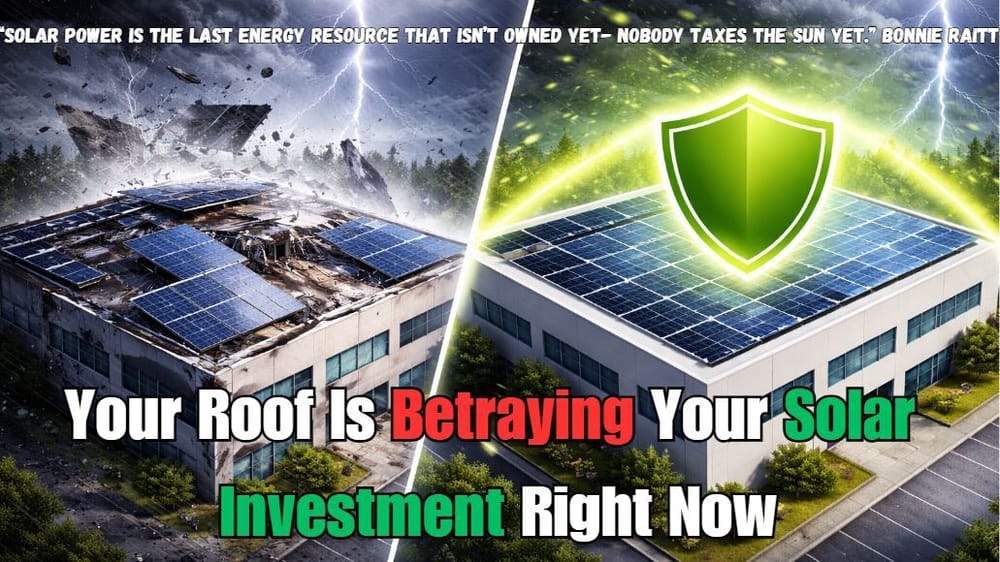
Solar can reduce dependence on volatile energy markets and turn rooftops into productive assets. But a rooftop solar system and the roof beneath it must be planned as one long-term system — because a clean-energy investment can become a costly maintenance problem if the roof, attachment points, and water-control details are not ready for decades of service.

Tuesday, November 10, 2026
The word "abatement" doesn't mean "rip it out." Understanding the real definition can save building owners tens of thousands of dollars -- and spare them years of unnecessary disruption. In my 50+ years in the field, I've watched this single misconception drive some of the most wasteful decisions in building management. It's time to set the record straight.
Tuesday, November 03, 2026
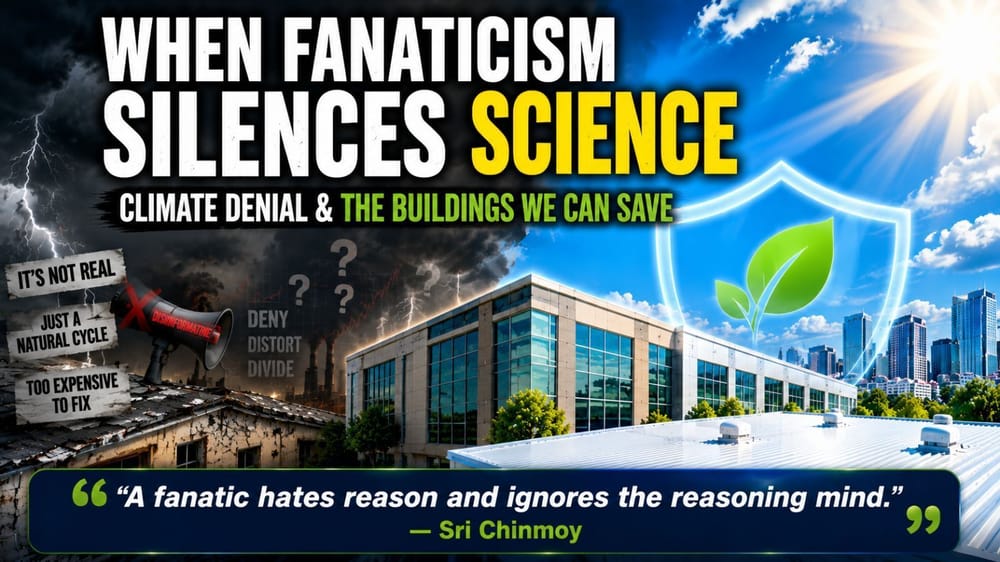
A quote, a warning, and a practical response — because when reason is under attack, doing the right thing becomes both a moral act and a market advantage.

Tuesday, October 27, 2026
The storms are not coming. They are already here. Climate science has spent decades warning us about intensifying heat, heavier rainfall, rising seas, stronger coastal hazards, and weather extremes that place aging buildings under stresses many of them were never designed to endure.

Tuesday, October 20, 2026
Less than 9% of the people applying protective coatings to buildings and structures in America are women — in a trade that requires no special strength, no tools a woman doesn't already know how to use, and no barriers that have anything to do with capability. That statistic isn't just surprising. From my experience, it represents one of the largest untapped professional opportunities in the country — and it's about to get even bigger.

Tuesday, October 13, 2026
The maintenance-treadmill coating industry has a dirty secret: your building's repeated failures aren't bad luck. They're the business model. Here's what 40+ years in the field taught me, and what Green ENCASEMENT Coatings do about it.

Tuesday, October 06, 2026
Ordinary paint can make a building look protected while heat, moisture, UV, wind, and seasonal movement keep attacking beneath the surface. Green ENCASEMENT Coatings change the protection strategy.
Tuesday, September 29, 2026
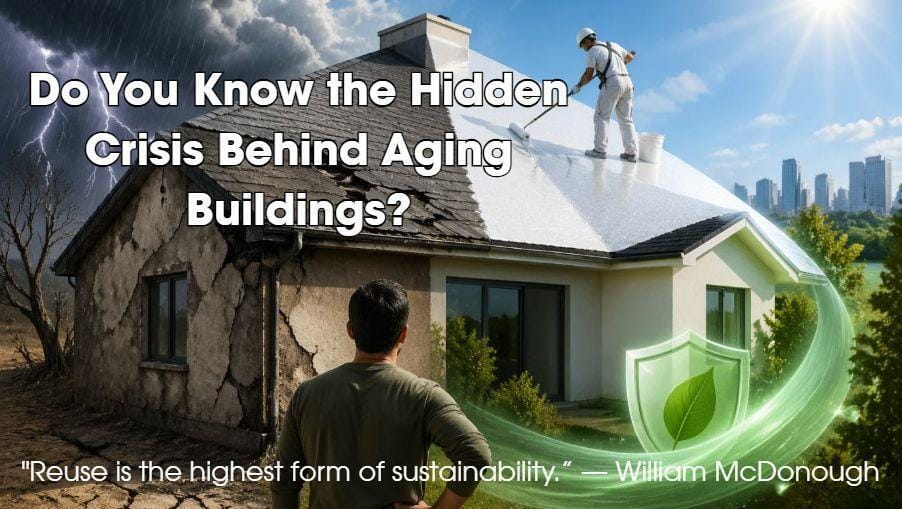
The Renewable Revolution: How Green ENCASEMENT Coatings Are Redefining Building Surfaces

Tuesday, September 22, 2026
History has already shown where buildings fail. The smarter strategy is to study those failures, strengthen the envelope before the next event, and preserve what can still be protected.
Tuesday, September 15, 2026
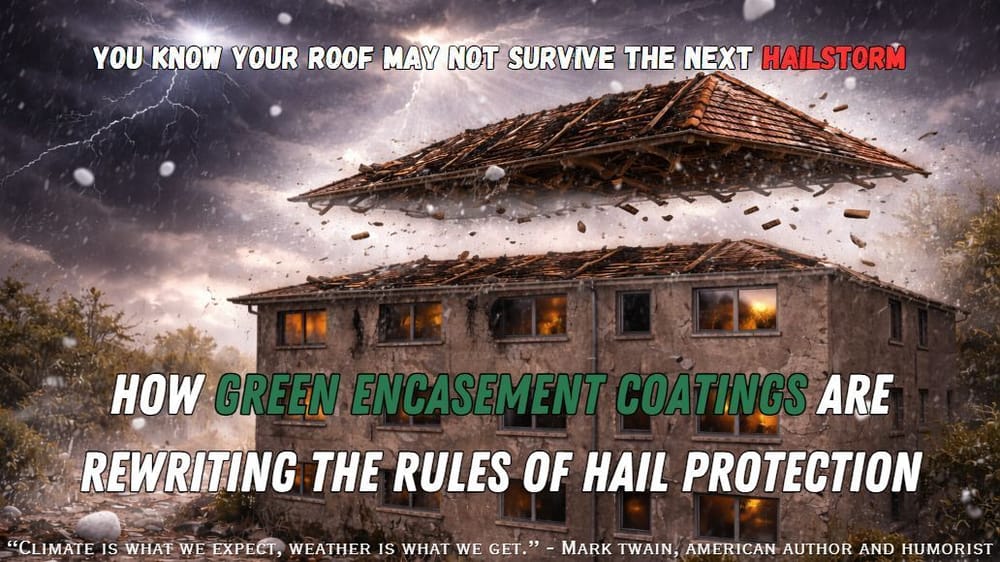
How Green ENCASEMENT Coatings are rewriting the rules of hail protection — before impact damage becomes a roof replacement problem.

Tuesday, September 08, 2026
Why Green ENCASEMENT Coatings can cost more at the beginning — and still cost far less over the life of your building.




Tuesday, August 04, 2026