Blogs Where Nature Meets Science & Coatings
"If All the Greedy People that Pollute can get Together & Show Strength in Unity – then Honest, Environmentalists Must Do the Same. You See – It’s as Simple As That.” George C. Keefe - ENCASEMENT Guy
Blogs Where Nature Meets Science & Coatings
"If All the Greedy People that Pollute can get Together & Show Strength in Unity – then Honest, Environmentalists Must Do the Same. You See – It’s as Simple As That.” George C. Keefe - ENCASEMENT Guy
Tuesday, March 13, 2018
Listen and Learn: Dive into the Audio Version of Our Blog
7 years ago, on March 11, 2011, an earthquake struck northern Japan triggering a monstrous tsunami.
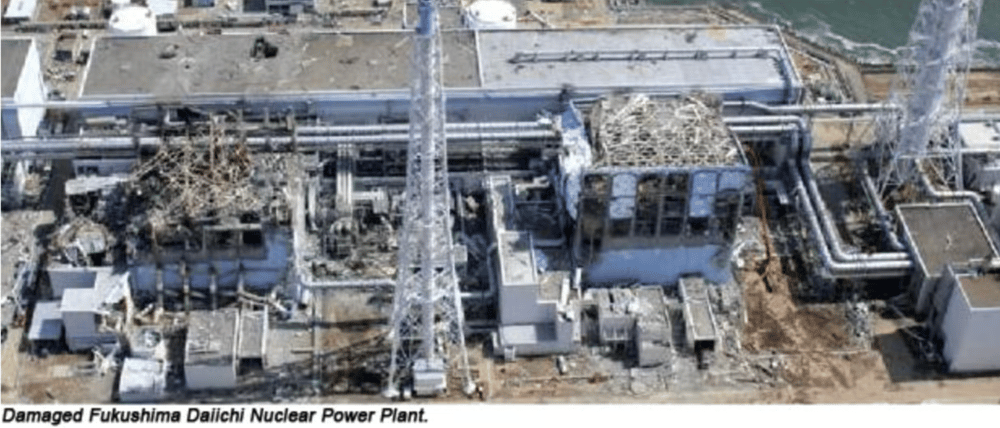
That powerful wave smashed into the Fukushima Daiichi Nuclear Power Plant causing a meltdown and massive release of radioactivity.
The radioactive release added to all the contamination that was left behind after the destructive floodwaters receded and further complicated the cleanup.
I’ve handled and discussed many situations where toxic hazardous debris is left over from a disaster.
This was by far the biggest and worst combination of toxic, hazardous material that I ever encountered. Literally mountains of it.
I happened to be in Japan when that disaster struck, although far south and safe from any direct effects.
After the initial shock, I flew to Manila. Just after I arrived, I received a phone call saying my expertise was needed back in Japan.
It was requested that I immediately return to make recommendations on how to lock down and contain the debris that was generated, much of which was hazardous.
I knew that the initial containment of the debris was just the first step.
Another thing they needed to consider were the options on the overall cleanup.
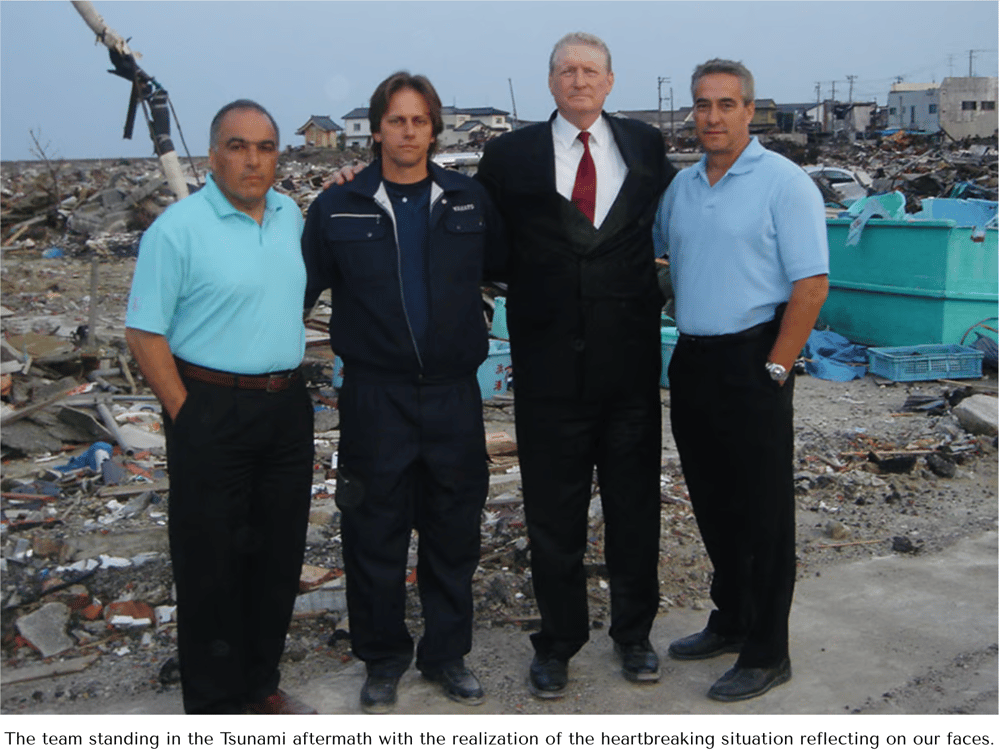
So I assembled a team of specialists - all experts in their field.
I contacted the three persons with the skill set needed and I trusted most.
Each of them immediately and unselfishly dropped what they were doing and made plans to board flights to Tokyo.
I had to admit, they all showed incredible moxie and a charitable spirit.
When most were evacuating and trying to get as far away as possible, these guys were willing to go in, share their expertise and assist any way they could.
Once in Tokyo, we climbed into a van for the two and a half hour drive north up the coast to Fukushima, just outside the evacuation/disaster zone.
I decided the best way to illustrate my plan of attack on containing the debris was to do an actual onsite demonstration with our green coatings showing how quickly and safely all the rubble could be locked down and contained until and during the cleanup.
We met with the Japanese Government and TEPCO’s (Tokyo Electric Power Company) upper management and discussed my plan of action to contain the debris until it could be removed and disposed.
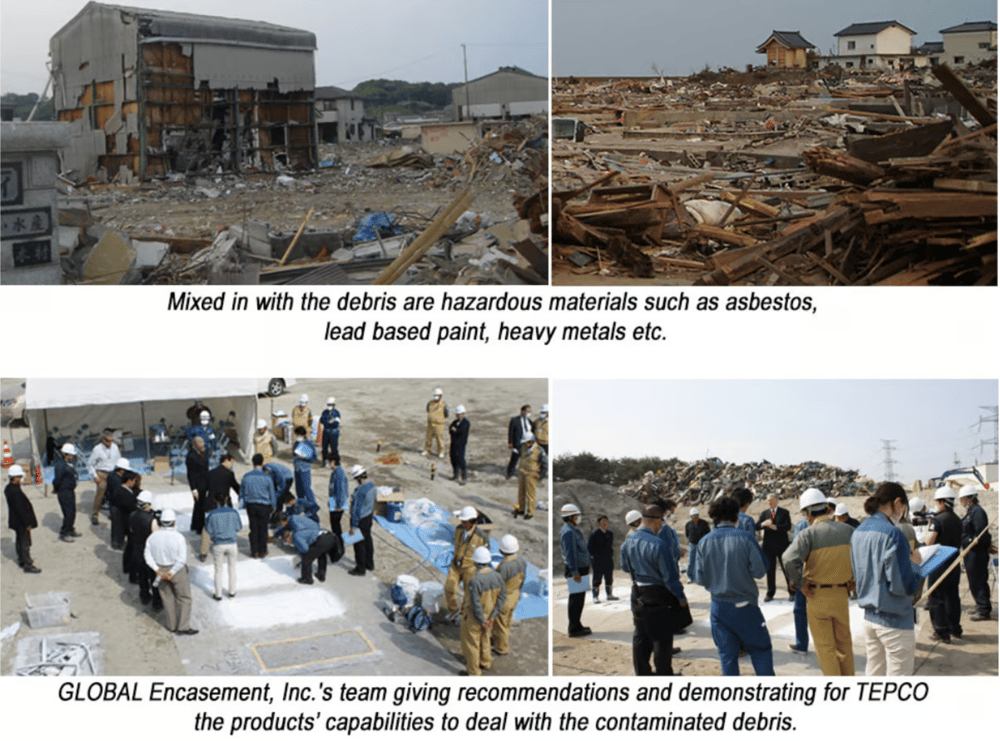
We proceeded to demonstrate GEI’s (GLOBAL Encasement, Inc.) coatings being applied in different combinations and thicknesses over the debris and soil to judge what would work best keeping in mind that both the soil and debris would eventually be removed and transported to different locations for disposal.
During this real world demonstration, there were plenty of questions raised. Although all my answers satisfied the concerns, the actual application of the coatings onto the debris and witnessing first hand how effective this method worked was the best answer to all concerns.
After the convincing demonstration was completed, two container loads of GEI green coatings - almost 7,000 gallons was shipped in.
The first was air freighted for expediency, while the other shipped by sea.
Next week, I’ll discuss the concerns around the choice of green coatings and how they were addressed.
See other posts like this one:

Tuesday, November 17, 2026
Solar can reduce dependence on volatile energy markets and turn rooftops into productive assets. But a rooftop solar system and the roof beneath it must be planned as one long-term system — because a clean-energy investment can become a costly maintenance problem if the roof, attachment points, and water-control details are not ready for decades of service.

Tuesday, November 10, 2026
The word "abatement" doesn't mean "rip it out." Understanding the real definition can save building owners tens of thousands of dollars -- and spare them years of unnecessary disruption. In my 50+ years in the field, I've watched this single misconception drive some of the most wasteful decisions in building management. It's time to set the record straight.
Tuesday, November 03, 2026
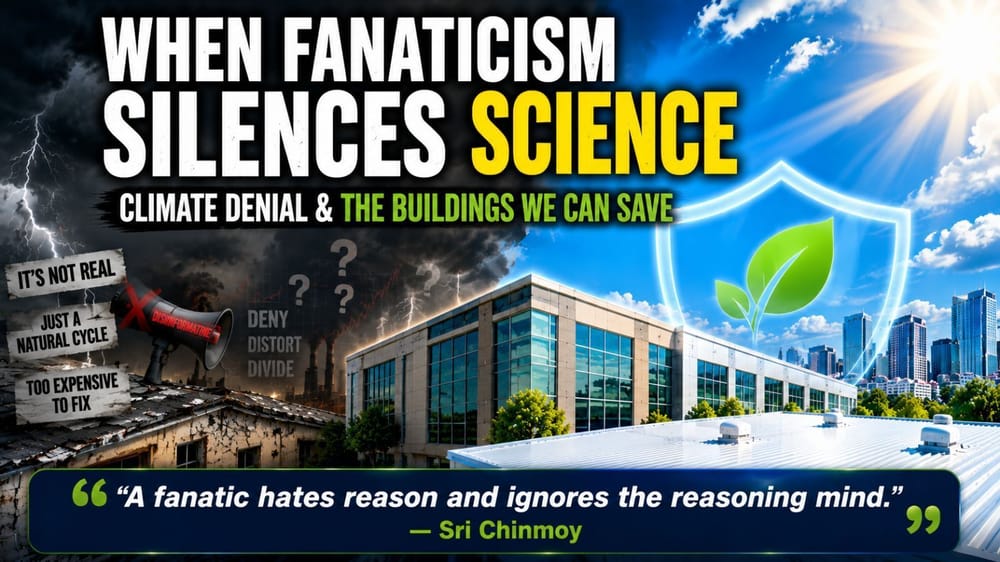
A quote, a warning, and a practical response — because when reason is under attack, doing the right thing becomes both a moral act and a market advantage.

Tuesday, October 27, 2026
The storms are not coming. They are already here. Climate science has spent decades warning us about intensifying heat, heavier rainfall, rising seas, stronger coastal hazards, and weather extremes that place aging buildings under stresses many of them were never designed to endure.

Tuesday, October 20, 2026
Less than 9% of the people applying protective coatings to buildings and structures in America are women — in a trade that requires no special strength, no tools a woman doesn't already know how to use, and no barriers that have anything to do with capability. That statistic isn't just surprising. From my experience, it represents one of the largest untapped professional opportunities in the country — and it's about to get even bigger.

Tuesday, October 13, 2026
The maintenance-treadmill coating industry has a dirty secret: your building's repeated failures aren't bad luck. They're the business model. Here's what 40+ years in the field taught me, and what Green ENCASEMENT Coatings do about it.

Tuesday, October 06, 2026
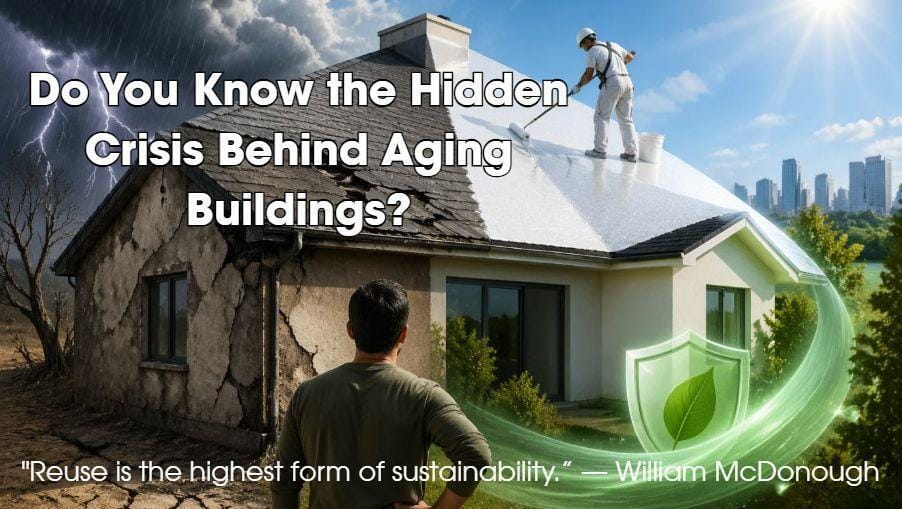
Ordinary paint can make a building look protected while heat, moisture, UV, wind, and seasonal movement keep attacking beneath the surface. Green ENCASEMENT Coatings change the protection strategy.
Tuesday, September 29, 2026
The Renewable Revolution: How Green ENCASEMENT Coatings Are Redefining Building Surfaces

Tuesday, September 22, 2026
History has already shown where buildings fail. The smarter strategy is to study those failures, strengthen the envelope before the next event, and preserve what can still be protected.
Tuesday, September 15, 2026
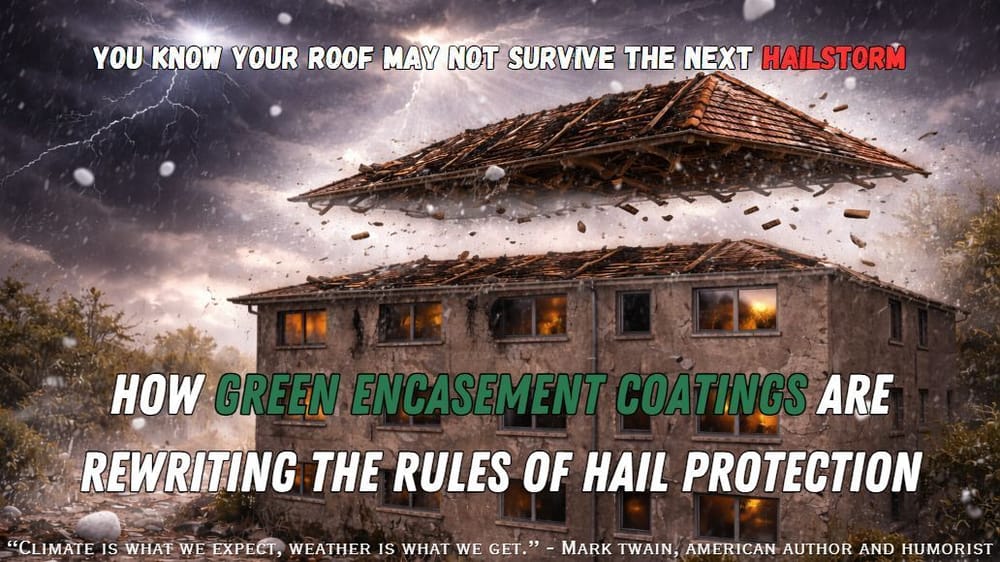
How Green ENCASEMENT Coatings are rewriting the rules of hail protection — before impact damage becomes a roof replacement problem.

Tuesday, September 08, 2026
Why Green ENCASEMENT Coatings can cost more at the beginning — and still cost far less over the life of your building.





Tuesday, August 04, 2026