Blogs Where Nature Meets Science & Coatings
"If All the Greedy People that Pollute can get Together & Show Strength in Unity – then Honest, Environmentalists Must Do the Same. You See – It’s as Simple As That.” George C. Keefe - ENCASEMENT Guy
Blogs Where Nature Meets Science & Coatings
"If All the Greedy People that Pollute can get Together & Show Strength in Unity – then Honest, Environmentalists Must Do the Same. You See – It’s as Simple As That.” George C. Keefe - ENCASEMENT Guy
Tuesday, November 07, 2023
As the ominous rumble of the storm train draws near, the key to protecting your buildings lies in fortification.
Listen and Learn: Dive into the Audio Version of Our Blog
The relentless meteorological barrage can pose a significant threat to your structures, but by sealing up potential points of entry for wind and damaging moisture, you can create a formidable Encasement defense.
Let's explore how you can encase your property from the impending storm train.
Identifying Vulnerable Points
Before you start the fortification process, it's essential to identify the vulnerable areas where wind and moisture can invade your building.
These penetration points, often referred to as "pierce points," are the Achilles' heel of your structure. Common pierce points include:
1. Windows and Doors: These are the most obvious culprits. Gaps and cracks around windows and doors can allow wind and rain to breach your building's defenses.
2. Roof and Eaves: Loose or damaged shingles, seams and gaps in the roof, and compromised eaves can lead to water seepage and structural damage.
3. Vents and Chimneys: Unsealed vents and chimneys can become entryways for water and wind. Proper sealing is crucial to prevent penetration.
4. Cracks in Walls: Over time, cracks can develop in your building's walls. These openings can provide an entry point for moisture and drafts. Typical, weak paint is not the protection you need.
Sealing the Breaches
Once you've pinpointed these weak spots, it's time to take action.
Here are effective ways to seal up your building and fortify it against the storm train's onslaught:
1. Weatherstripping: Install weatherstripping around windows and doors to create a tight seal. This prevents drafts and water from seeping in. Be sure to check and replace weatherstripping as needed.
2. Caulking: Seal any gaps and cracks around windows, doors, and other potential pierce points with high-quality GEI (Global ENCASEMENT, Inc.) Globe Caulk. This will act as a barrier against wind and moisture.
3. Roof Inspection and Repair: Regularly inspect your roof for missing or damaged shingles. Repair any issues promptly to prevent water infiltration. Consider reinforcing your eaves and overhangs to resist strong winds and encasing the entire roof with a 20 year, renewable GEI system.
4. Seal Vents and Chimneys: Use appropriate sealants or flashing to seal vents, chimneys, and other roof penetrations. These are prime locations for leaks during storms.
5. Wall Repairs: Patch and repair any cracks or gaps in your building's walls. Encase all the walls. A well-maintained exterior can better withstand the forces of the storm train.
6. Invest in Storm Windows and Shutters: If you live in an area prone to severe weather, consider installing storm windows and shutters for an extra layer of protection.
7. Gutter and Drainage Maintenance: Ensure your gutters and drainage systems are clear and functioning correctly. Proper drainage is essential to prevent water from pooling near your foundation.
By sealing up these vulnerable points, you are creating a resilient barrier against the storm train's fury.
Remember that prevention is the best defense, and proactive maintenance can save you from costly repairs and potential safety hazards.
Prepare your buildings like a fortress before the storm train arrives, and you'll be better equipped to weather the relentless succession of storms.
Protect and defend your buildings which often are your largest investments and assets.
This defense could consist of the ultimate building fortification with GEI’s (Global ENCASEMENT Inc.) Green Coatings ENCASEMENT.
In my next blog I'll be discussing how this quick and easy building fortification can be simply accomplished.
Instantly protecting so much with little effort, saving time and money.
So, stay tuned.
“The more time you spend contemplating what you should have done…you lose valuable time planning what you can and will do.” – Lil Wayne
See other posts like this one:


Friday, November 16, 2018
November is Lung Cancer Awareness Month including asbestos education, so this is a good time to raise awareness about preventing unnecessary exposure to asbestos that can cause lung cancer as well as contribute to other possible health concerns.

Wednesday, October 10, 2018
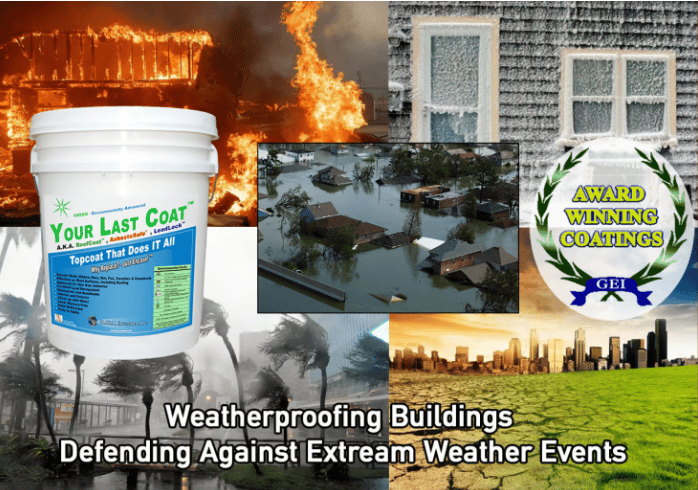
Short of moving your building or raising it up above flooding, the best approach to take to reduce storm, flooding and natural disaster losses is to simply use a proven coating to wind and waterproofthe surfaces in the path of destruction.

Tuesday, September 18, 2018
We recently passed the anniversary of 9-11-2001 tragedy of the attack on the Twin Towers in New York. I wanted to remind everyone that the effects of that fateful day are still being felt and especially by some of the heroes that were affected by the initial exposure and then the secondary exposure that took place during the cleanup. Some of those exposed were firefighters, police officers, EMTs (Emergency Medical Technician), construction workers, transit workers, cleanup workers, debris removal crews, truck drivers, nearby office workers, and Lower Manhattan residents.
Tuesday, August 21, 2018
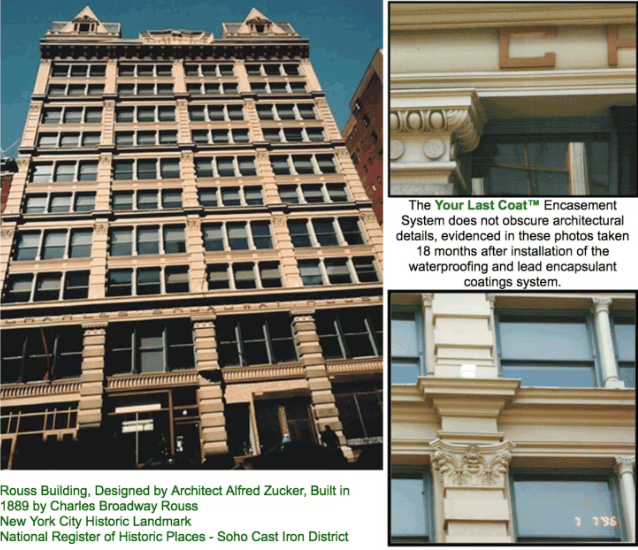
I discussed in a recent blog the importance of keeping the aesthetics of a historic building intact. Making sure that the look and overall presentation on a structure is preserved is very significant. This is especially true with landmark properties that have prominent and distinct features. Preservation can become very difficult when it entails obsolete building materials that contain hazardous materials that are typically removed and replaced. Three of the most common of hazardous materials is lead-based paint, asbestos and PCBs. In the USA, lead was used in paints up until 1978. It then was banned for its negative health effects, especially with children in their developing stages. PCBs, or polychlorinated biphenyls, were banned from paints, caulking and surface coatings in 1979 and asbestos was banned in 1974. All these bans were due to the negative health and environmental effects of these products.
Tuesday, July 17, 2018
Lead Paint Poisoning is Preventable Through Education and Action