Blogs Where Nature Meets Science & Coatings
"If All the Greedy People that Pollute can get Together & Show Strength in Unity – then Honest, Environmentalists Must Do the Same. You See – It’s as Simple As That.” George C. Keefe - ENCASEMENT Guy
Blogs Where Nature Meets Science & Coatings
"If All the Greedy People that Pollute can get Together & Show Strength in Unity – then Honest, Environmentalists Must Do the Same. You See – It’s as Simple As That.” George C. Keefe - ENCASEMENT Guy
Wednesday, October 16, 2024

By: George C. Keefe
“If all the greedy polluters can band together to protect their interests, then honest environmentalists must do the same. It's as simple as that.”
Listen and Learn: Dive into the Audio Version of Our Blog
In the face of an ever-changing climate, our cities stand vulnerable.
The very foundations of our society - our buildings, roads, and bridges - are silently suffering under the weight of extreme weather events.
In this episode I bring to light the reality that as heat waves scorch our landscapes and storms ravage our coasts, we're forced to confront an uncomfortable truth: our infrastructure wasn't built for today's climate.
Imagine a world where the structures we rely on daily are aging at an alarming rate and there is an incredible toll on them from climate change.
This isn't a dystopian future; it's our present reality.
Heat waves are causing concrete to expand and crack, while frequent flooding is eroding foundations faster than ever before.
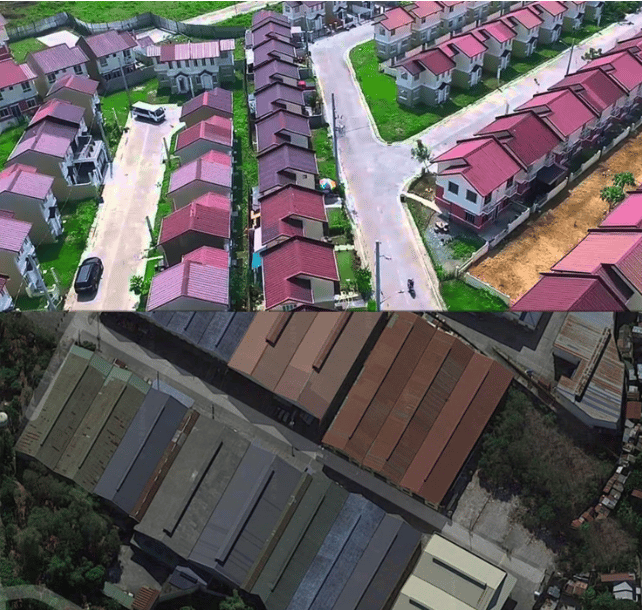
Our roofs, once reliable shelters, are buckling under the pressure of increasingly severe storms.
The consequences of this accelerated aging are dire.
Bridges that were meant to stand for decades are showing signs of wear in just years.
Roads are crumbling, creating hazardous conditions for drivers.
Buildings that should be safe havens are becoming potential dangers to their occupants.
While many regions have recognized this crisis and are investing in repairs, it's a drop in the ocean compared to what's needed as we face a race against time.
As climate impacts intensify, we're caught in this race against time.
The repair and maintenance costs are skyrocketing, putting immense pressure on local and national budgets.
But it's not just about money.
It's about the safety and well-being of our communities.
Every compromised structure is a potential disaster waiting to happen.
We need to act now, not just to preserve our infrastructure, but to protect lives.
Amidst this gloomy scenario, there's hope with the green solution: eco-friendly products and the right, long-lasting green coatings.
These aren't just band-aid solutions; they're a fundamental shift in how we approach infrastructure protection.
Traditional paints and coatings are designed with obsolescence in mind.
They're decorative at best, offering little in terms of long-term defensive protection.
They fail early, requiring frequent reapplication, which is not only costly but also environmentally unsustainable.
Enter green coatings encasement - the unsung hero in our fight against climate-induced infrastructure decay.
These innovative solutions are designed to be defensive shields, not just cosmetic layers.
They offer superior long-lasting protection, defending against the elements, significantly slowing down the aging process of our buildings and structures.
But the benefits of the right green coatings go beyond mere protection.
They're a crucial part of our strategy to combat climate change itself.
By reducing the need for frequent repairs and replacements, we're cutting down on resource consumption and carbon emissions associated with construction activities.
In addition helping minimize the generation, transportation and storage of unwanted waste which also helps reduce the carbon footprint
.
Moreover, the right green coatings are designed to reflect heat, reducing the urban heat island effect and lowering energy consumption for cooling.
To Sum It Up:
As we face the climate crisis, it's clear that our approach to infrastructure needs a radical overhaul.
Green coatings encasement offers us a way to protect and defend our buildings, our people, and our planet simultaneously.
By investing in these solutions, we're not just applying a coat of cheap paint.
We're creating a protective, defensive barrier against the ravages of climate change.
We're extending the life of our infrastructure, ensuring the safety of our communities, and taking a stand for environmental sustainability.
The time for half-measures is over.
As extreme weather events become the new normal, we need solutions that are as resilient and adaptive as we aspire to be.
Green coatings encasement is more than a product - it's a commitment to a sustainable future, a declaration that we will not let our world crumble in the face of climate change.
Let's embrace this technology, advocate for its widespread adoption, and take a significant step towards climate-resilient infrastructure.
Our buildings, our cities, and our planet depend on it.
"Architecture should speak of its time and place, but yearn for timelessness." - Frank Gehry - Canadian-American Architect
What are your questions?
We are always here to help and excited to answer them.
Contact us at +1 (800) 266-3982 , or send us an email at service@encasement.com and leave a comment below.
See other posts like this one:
Friday, November 16, 2018
November is Lung Cancer Awareness Month including asbestos education, so this is a good time to raise awareness about preventing unnecessary exposure to asbestos that can cause lung cancer as well as contribute to other possible health concerns.
Wednesday, October 10, 2018
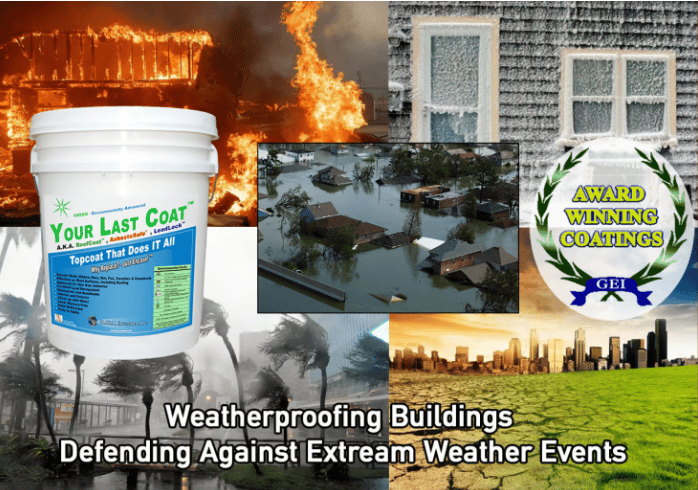
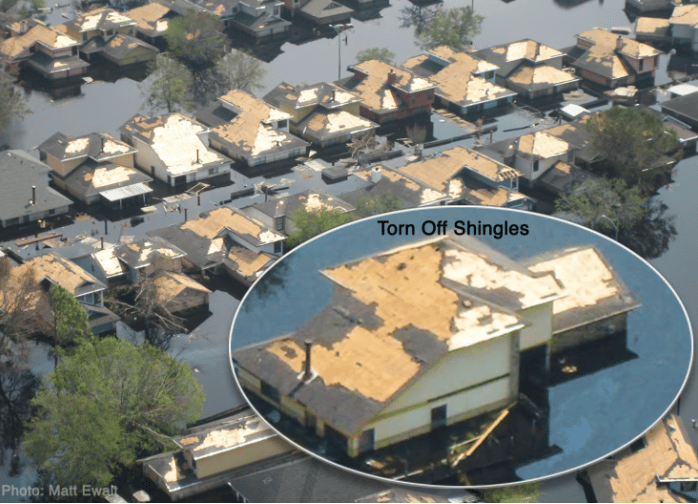
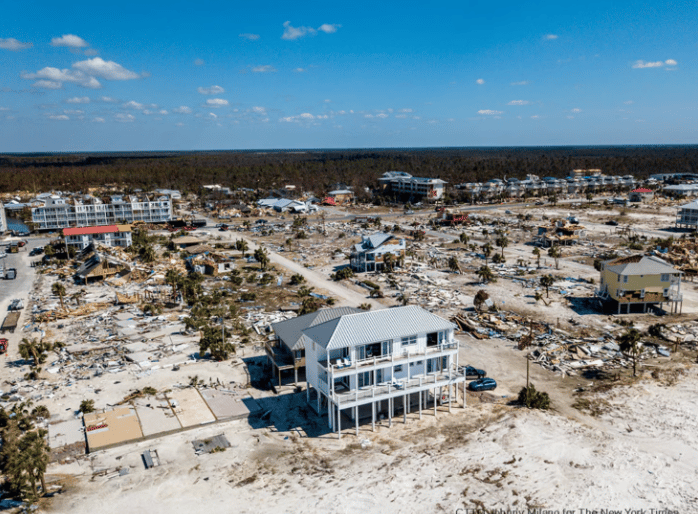
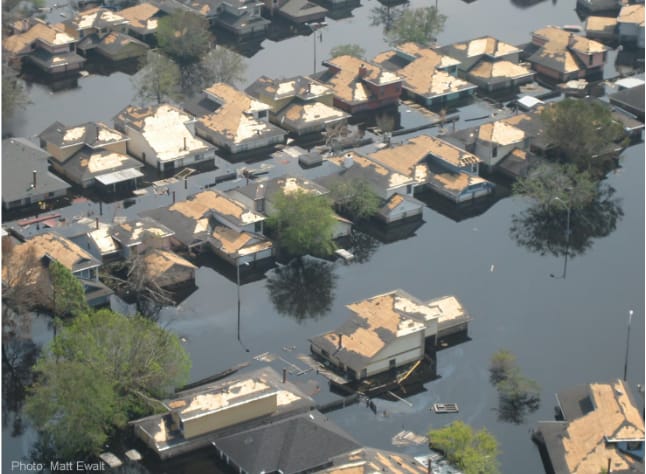
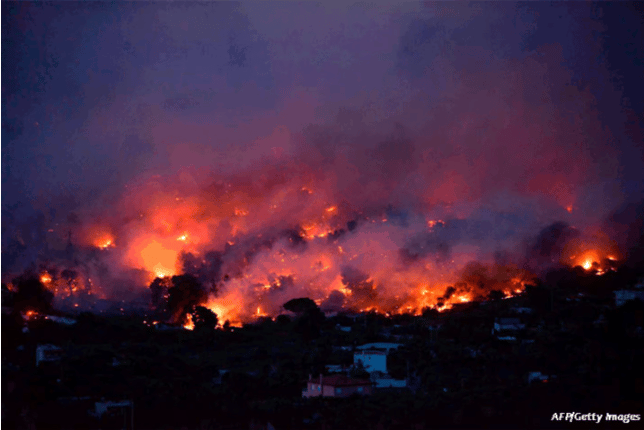
Short of moving your building or raising it up above flooding, the best approach to take to reduce storm, flooding and natural disaster losses is to simply use a proven coating to wind and waterproofthe surfaces in the path of destruction.
Tuesday, September 18, 2018
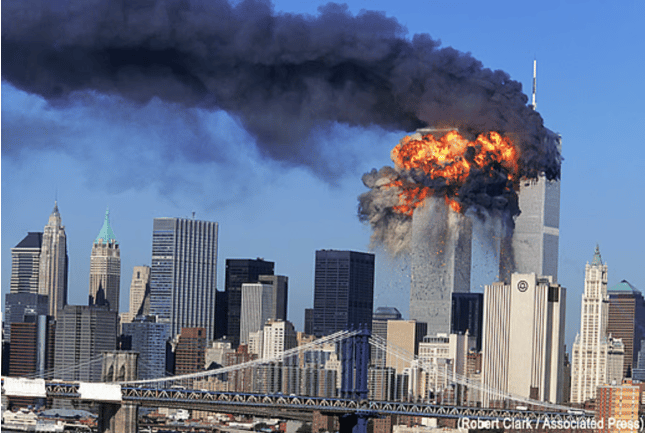
We recently passed the anniversary of 9-11-2001 tragedy of the attack on the Twin Towers in New York. I wanted to remind everyone that the effects of that fateful day are still being felt and especially by some of the heroes that were affected by the initial exposure and then the secondary exposure that took place during the cleanup. Some of those exposed were firefighters, police officers, EMTs (Emergency Medical Technician), construction workers, transit workers, cleanup workers, debris removal crews, truck drivers, nearby office workers, and Lower Manhattan residents.
Tuesday, August 21, 2018
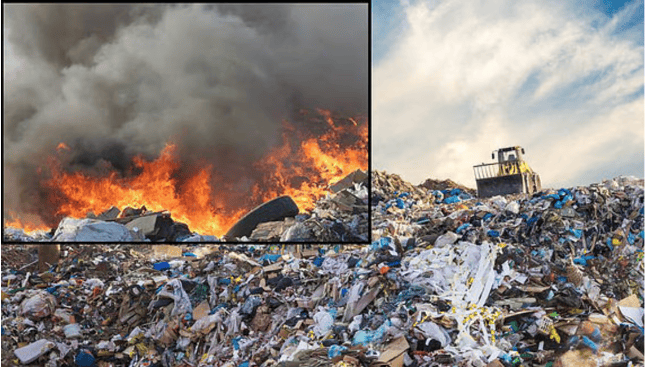
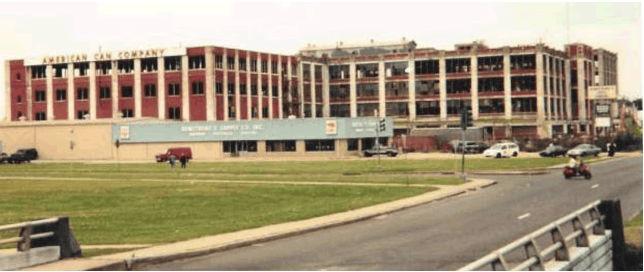
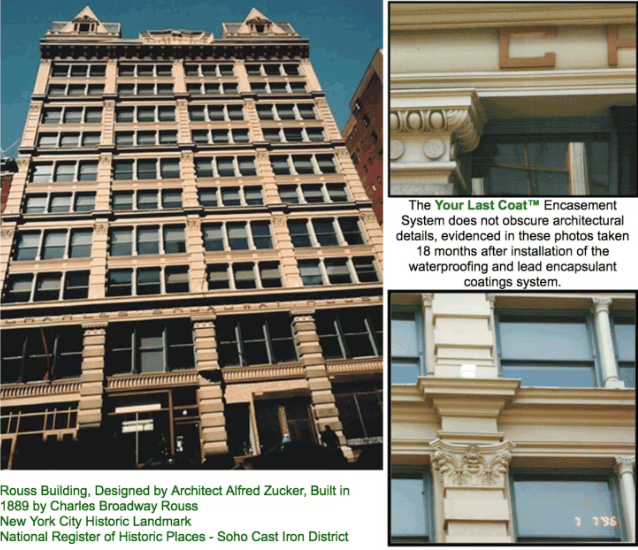
I discussed in a recent blog the importance of keeping the aesthetics of a historic building intact. Making sure that the look and overall presentation on a structure is preserved is very significant. This is especially true with landmark properties that have prominent and distinct features. Preservation can become very difficult when it entails obsolete building materials that contain hazardous materials that are typically removed and replaced. Three of the most common of hazardous materials is lead-based paint, asbestos and PCBs. In the USA, lead was used in paints up until 1978. It then was banned for its negative health effects, especially with children in their developing stages. PCBs, or polychlorinated biphenyls, were banned from paints, caulking and surface coatings in 1979 and asbestos was banned in 1974. All these bans were due to the negative health and environmental effects of these products.
Tuesday, July 17, 2018
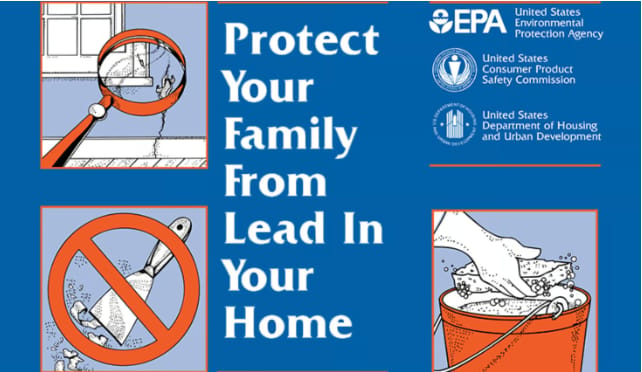
Lead Paint Poisoning is Preventable Through Education and Action