
Blogs Where Nature Meets Science & Coatings
"If All the Greedy People that Pollute can get Together & Show Strength in Unity – then Honest, Environmentalists Must Do the Same. You See – It’s as Simple As That.” George C. Keefe - ENCASEMENT Guy
Blogs Where Nature Meets Science & Coatings
"If All the Greedy People that Pollute can get Together & Show Strength in Unity – then Honest, Environmentalists Must Do the Same. You See – It’s as Simple As That.” George C. Keefe - ENCASEMENT Guy
Friday, August 30, 2024
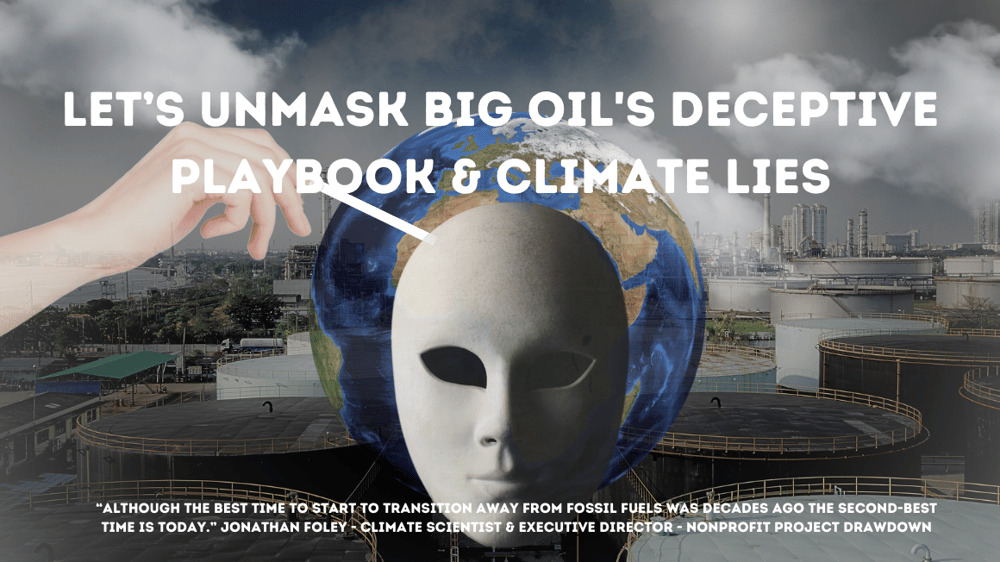
By: George C. Keefe
Note: The Author is an Environmentalist, Green Coatings Enthusiast, Contractor, Consultant, Vegan, Blogger, Podcaster. Protecting the Health of People & Planet. CEO & Founder at Global ENCASEMENT, Inc., Restoration & Management vs Removal & Replacement. Why Replace – Just Encase!
Listen and Learn: Dive into the Audio Version of Our Blog
In the battle against climate change, words are weapons.
The fossil fuel industry has long wielded language as a shield, deflecting responsibility and sowing doubt about the urgent need for action.
In this episode I expose that as concerned citizens, we must recognize and combat this verbal and deceptive manipulation to protect our planet and future generations.
The Power of Propaganda in Climate Politics
For decades, oil and gas companies have carefully crafted messages to maintain their grip on the global economy.
Their propaganda machine operates on multiple levels, from boardrooms to social media, shaping public perception and policy decisions.
By understanding their tactics, we can better equip ourselves to fight back.
1. Reframing the Narrative
One of the most insidious strategies employed by fossil fuel propagandists is reframing the climate crisis narrative.
They often use terms like "energy independence" or "reliable power" to cast themselves as essential providers rather than polluters.
This language sleight of hand shifts focus away from environmental concerns and towards economic fears.
2. Creating Doubt and Confusion
Another tactic is the deliberate creation of uncertainty.
Phrases like "the science isn't settled" or "more research is needed" are designed to paralyze action by suggesting that we don't know enough to make informed decisions.
In reality, the scientific consensus on human-caused climate change is overwhelming.
3. Greenwashing and False Solutions
The industry and so many others have become adept at "greenwashing" – presenting a false image of environmental responsibility.
Terms like "clean coal" or "natural gas as a bridge fuel" sound eco-friendly but mask the continued reliance on harmful fossil fuels.
These linguistic tricks give the illusion of progress while maintaining the status quo.
We are now fighting back with the power of transformational vocabulary.
To combat this propaganda, we need to harness the power of words ourselves.
By adopting transformational vocabulary, we can reframe the conversation and inspire action:
• Instead of "climate change," use "climate crisis" or "climate emergency" to convey urgency.
• Replace "fossil fuels" with "climate polluters" to highlight the industry's role.
• Shift from talking about "believing in climate change" to "understanding climate science."
• Use "clean energy revolution" instead of "energy transition" to inspire excitement and progress.
By consciously choosing our words, we can shift perceptions and motivate change.
But language alone isn't enough – we must also take concrete actions to protect our planet.
Let’s use eco-friendly solutions to walk the talk.
One powerful way to combat climate propaganda is by supporting and promoting truly sustainable alternatives.
This includes embracing eco-friendly products and technologies that reduce our reliance on fossil fuels/climate polluters and minimize environmental impact.
For example, in the construction and maintenance sector, the right, long-term green coatings offer a tangible solution.
These innovative materials not only protect buildings and infrastructure but also contribute to energy efficiency and reduced carbon footprints.
By choosing such products, we demonstrate that sustainability and performance can go hand in hand.
We are now connecting the dots with green solutions and climate action.
It's crucial to understand how seemingly small choices, like opting for eco-friendly coatings, connect to the larger fight against climate change.
These products:
• Reduce energy consumption in buildings, lowering greenhouse gas emissions
• Extend the lifespan of structures, minimizing resource use and waste
• Incorporate biodegradable and renewable materials, supporting a circular economy
• Improve indoor air quality, protecting human health alongside the environment
By highlighting these connections, we can counter the fossil fuel/climate polluters industry's claims that their products are irreplaceable.
We show that viable, beneficial alternatives exist across various sectors of the economy.
One of the paths forward and impowering change is through both language and action.
To Sum IT Up:
As we confront the climate crisis, we must remain vigilant against the fossil fuel industry's propaganda machine.
By recognizing their linguistic tactics and countering with our own powerful, transformative language, we can shift the narrative towards urgent action and hope.
Simultaneously, we must support and promote tangible solutions that prove a sustainable future is possible.
From renewable energy to the right green building materials, every eco-friendly choice chips away at the fossil fuel economy's dominance.
In this critical moment for our planet, let's harness the power of words and deeds.
Together, we can cut through the haze of climate disinformation and build a cleaner, safer, and more sustainable world for all.
“Although the best time to start to transition away from fossil fuels was decades ago the second-best time is today.” - Jonathan Foley - Climate Scientist & Executive Director - Nonprofit Project Drawdown
What are your questions?
We are always here to help and excited to answer them.
Contact us at +1 (800) 266-3982 , or send us an email at service@encasement.com and leave a comment below.
See other posts like this one:

Tuesday, November 10, 2026
The word "abatement" doesn't mean "rip it out." Understanding the real definition can save building owners tens of thousands of dollars -- and spare them years of unnecessary disruption. In my 50+ years in the field, I've watched this single misconception drive some of the most wasteful decisions in building management. It's time to set the record straight.
Tuesday, November 03, 2026
A quote, a warning, and a practical response — because when reason is under attack, doing the right thing becomes both a moral act and a market advantage.

Tuesday, October 27, 2026
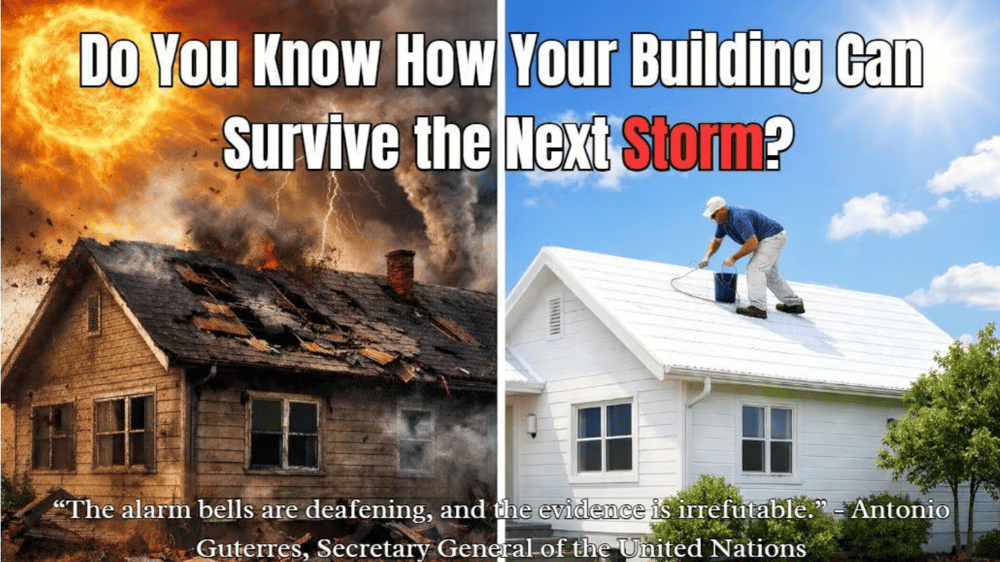
The storms are not coming. They are already here. Climate science has spent decades warning us about intensifying heat, heavier rainfall, rising seas, stronger coastal hazards, and weather extremes that place aging buildings under stresses many of them were never designed to endure.

Tuesday, October 20, 2026
Less than 9% of the people applying protective coatings to buildings and structures in America are women — in a trade that requires no special strength, no tools a woman doesn't already know how to use, and no barriers that have anything to do with capability. That statistic isn't just surprising. From my experience, it represents one of the largest untapped professional opportunities in the country — and it's about to get even bigger.

Tuesday, October 13, 2026
The maintenance-treadmill coating industry has a dirty secret: your building's repeated failures aren't bad luck. They're the business model. Here's what 40+ years in the field taught me, and what Green ENCASEMENT Coatings do about it.

Tuesday, October 06, 2026
Ordinary paint can make a building look protected while heat, moisture, UV, wind, and seasonal movement keep attacking beneath the surface. Green ENCASEMENT Coatings change the protection strategy.
Tuesday, September 29, 2026
The Renewable Revolution: How Green ENCASEMENT Coatings Are Redefining Building Surfaces

Tuesday, September 22, 2026
History has already shown where buildings fail. The smarter strategy is to study those failures, strengthen the envelope before the next event, and preserve what can still be protected.
Tuesday, September 15, 2026
How Green ENCASEMENT Coatings are rewriting the rules of hail protection — before impact damage becomes a roof replacement problem.

Tuesday, September 08, 2026
Why Green ENCASEMENT Coatings can cost more at the beginning — and still cost far less over the life of your building.




Tuesday, August 04, 2026
