Blogs Where Nature Meets Science & Coatings
"If All the Greedy People that Pollute can get Together & Show Strength in Unity – then Honest, Environmentalists Must Do the Same. You See – It’s as Simple As That.” George C. Keefe - ENCASEMENT Guy
Blogs Where Nature Meets Science & Coatings
"If All the Greedy People that Pollute can get Together & Show Strength in Unity – then Honest, Environmentalists Must Do the Same. You See – It’s as Simple As That.” George C. Keefe - ENCASEMENT Guy
Tuesday, September 12, 2023
More than 2,100 people sadly lost their lives after a severe earthquake with a magnitude of at least 6.8 hit Morocco Friday night near the city of Marrakesh.
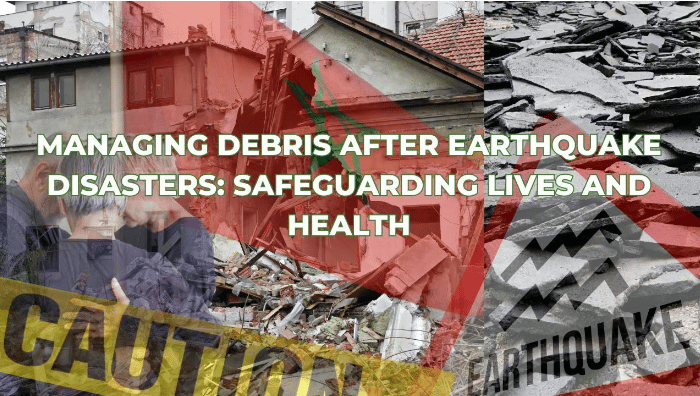
Powerful aftershocks followed over the weekend.
Earthquakes are natural disasters that can strike without warning, leaving devastation in their wake.
Beyond the immediate destruction caused by shaking and collapsing buildings, another critical aspect of post-earthquake recovery is managing the debris.
The importance of controlling debris after earthquake disasters cannot be overstated, as it directly impacts public health and safety.
In this blog, I’ll go into why it is crucial to address this issue promptly, the health concerns associated with debris, and the types of hazards that may linger in its aftermath.
The immediate removal and management of debris are essential to prevent additional damage and hazards.
Uncontrolled debris can obstruct roadways, impede emergency response efforts, and hinder access to medical care and essential supplies.
One of the primary reasons for controlling debris is to minimize health risks.
Debris often contains hazardous materials, sharp objects, and unstable structures that pose a significant danger to anyone in the vicinity.
Ensuring Public Safety: Securing debris helps ensure public safety by preventing accidents and injuries.
People may inadvertently enter hazardous areas if debris is not properly contained or removed.
Debris from destroyed buildings can contain various hazardous materials, such as asbestos, lead, and toxic chemicals.
These materials can become airborne or leach into the soil, posing long-term health risks if not managed properly.
Inhaling dust and particulate matter from debris can lead to respiratory problems, especially for those with preexisting conditions.
Dust can contain harmful substances and allergens that affect lung health.
Sharp objects, unstable structures, and heavy debris can cause injuries ranging from minor cuts to life-threatening wounds.
Controlling debris reduces the risk of accidents and trauma.
Debris can contaminate water sources through the release of pollutants.
This can lead to waterborne illnesses, making clean water sources critical for public health.
Inhaling dust and particles from debris can expose individuals to toxic substances and allergens.
Asbestos, for example, can lead to serious lung diseases when its fibers are inhaled.
Direct contact with debris can result in skin injuries and exposure to hazardous chemicals or sharp objects, increasing the risk of infections or chemical burns.
Inadequate sanitation and hygiene in debris-ridden areas can lead to the ingestion of contaminated food or water, causing gastrointestinal illnesses.
Unstable structures and falling debris pose immediate threats to those involved in debris removal and emergency response efforts.
In the aftermath of an earthquake, controlling debris is not just about cleaning up the mess; it's about safeguarding lives and health.
The risks associated with exposure to hazardous materials, injuries, and contaminated water sources make it imperative to manage debris promptly and effectively.
Governments, disaster response teams, and communities must work together to ensure that debris is properly handled, removed, and disposed of in a way that minimizes the risks to public health and safety.
By prioritizing the control of debris, we can mitigate the health concerns and hazards left behind by these devastating natural disasters.
Wanted to learn more about this. Contact me at ask@encasementguy.com
Share your thoughts,support our mission and help the community to know more about protecting their Home, Family & the Planet.
“If All the Greedy People that Pollute can get Together & Show Strength in Unity – then Honest, Environmentalists Must Do the Same. You See – It’s as Simple As That.”
George C. Keefe/ENCASEMENT Guy
See other posts like this one:

Tuesday, November 17, 2026
Solar can reduce dependence on volatile energy markets and turn rooftops into productive assets. But a rooftop solar system and the roof beneath it must be planned as one long-term system — because a clean-energy investment can become a costly maintenance problem if the roof, attachment points, and water-control details are not ready for decades of service.

Tuesday, November 10, 2026
The word "abatement" doesn't mean "rip it out." Understanding the real definition can save building owners tens of thousands of dollars -- and spare them years of unnecessary disruption. In my 50+ years in the field, I've watched this single misconception drive some of the most wasteful decisions in building management. It's time to set the record straight.
Tuesday, November 03, 2026
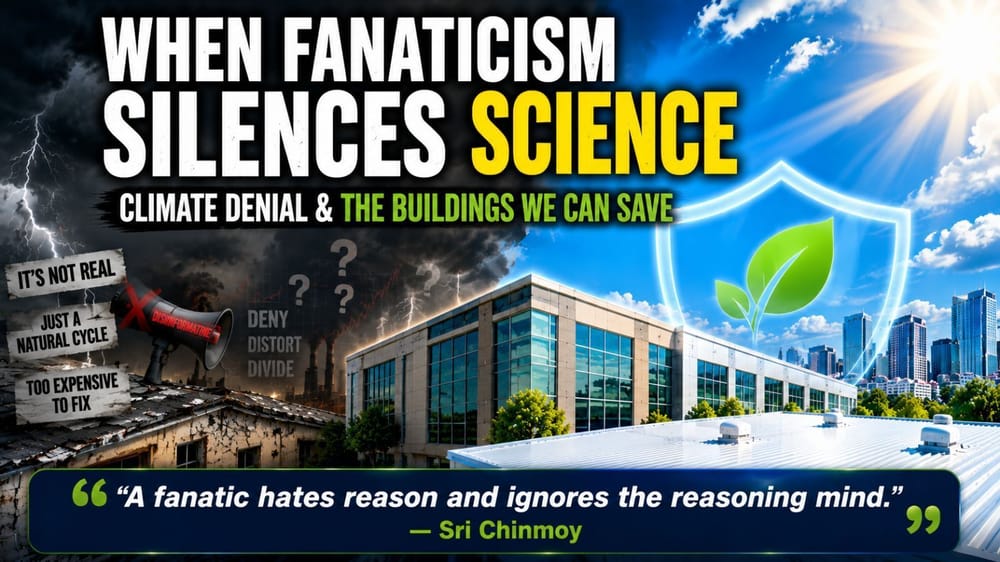
A quote, a warning, and a practical response — because when reason is under attack, doing the right thing becomes both a moral act and a market advantage.

Tuesday, October 27, 2026
The storms are not coming. They are already here. Climate science has spent decades warning us about intensifying heat, heavier rainfall, rising seas, stronger coastal hazards, and weather extremes that place aging buildings under stresses many of them were never designed to endure.

Tuesday, October 20, 2026
Less than 9% of the people applying protective coatings to buildings and structures in America are women — in a trade that requires no special strength, no tools a woman doesn't already know how to use, and no barriers that have anything to do with capability. That statistic isn't just surprising. From my experience, it represents one of the largest untapped professional opportunities in the country — and it's about to get even bigger.

Tuesday, October 13, 2026
The maintenance-treadmill coating industry has a dirty secret: your building's repeated failures aren't bad luck. They're the business model. Here's what 40+ years in the field taught me, and what Green ENCASEMENT Coatings do about it.

Tuesday, October 06, 2026
Ordinary paint can make a building look protected while heat, moisture, UV, wind, and seasonal movement keep attacking beneath the surface. Green ENCASEMENT Coatings change the protection strategy.
Tuesday, September 29, 2026
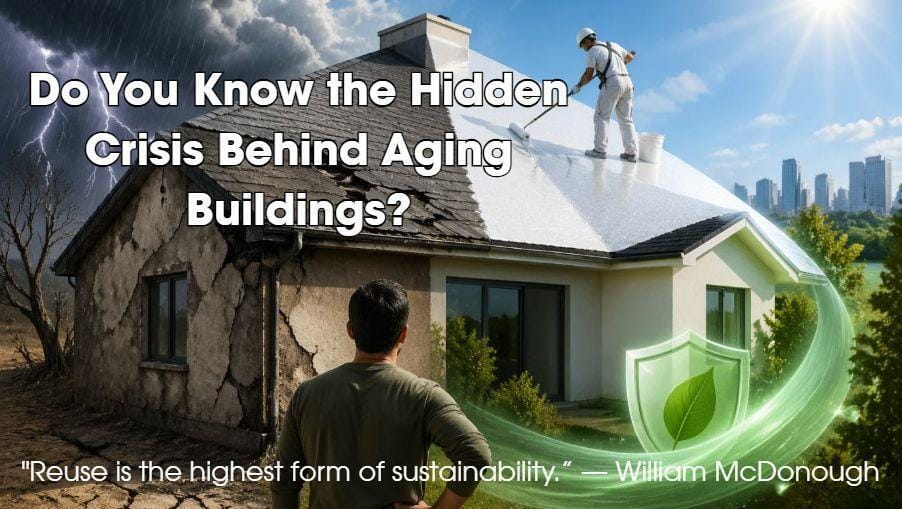
The Renewable Revolution: How Green ENCASEMENT Coatings Are Redefining Building Surfaces

Tuesday, September 22, 2026
History has already shown where buildings fail. The smarter strategy is to study those failures, strengthen the envelope before the next event, and preserve what can still be protected.
Tuesday, September 15, 2026
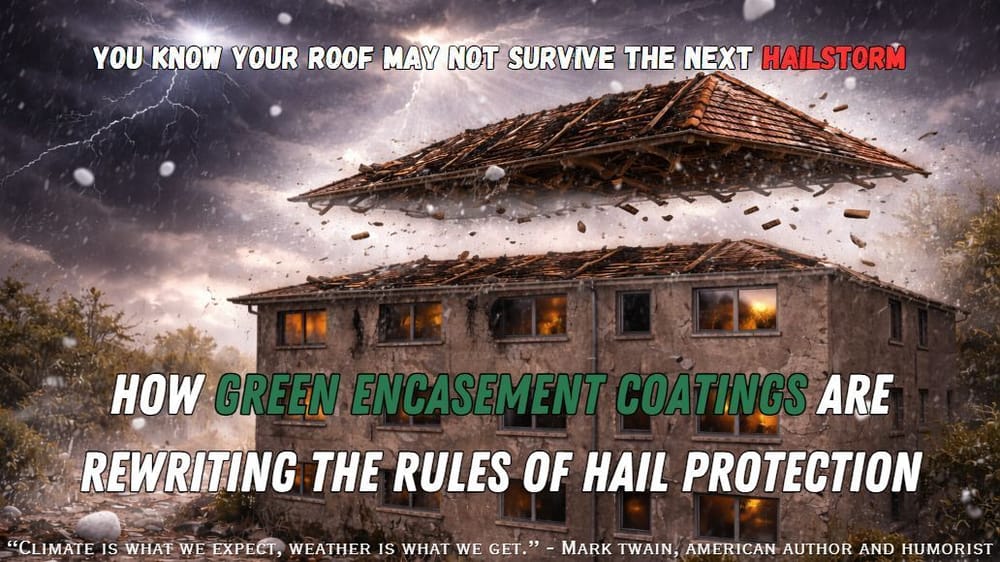
How Green ENCASEMENT Coatings are rewriting the rules of hail protection — before impact damage becomes a roof replacement problem.

Tuesday, September 08, 2026
Why Green ENCASEMENT Coatings can cost more at the beginning — and still cost far less over the life of your building.





Tuesday, August 04, 2026