Blogs Where Nature Meets Science & Coatings
"If All the Greedy People that Pollute can get Together & Show Strength in Unity – then Honest, Environmentalists Must Do the Same. You See – It’s as Simple As That.” George C. Keefe - ENCASEMENT Guy
Blogs Where Nature Meets Science & Coatings
"If All the Greedy People that Pollute can get Together & Show Strength in Unity – then Honest, Environmentalists Must Do the Same. You See – It’s as Simple As That.” George C. Keefe - ENCASEMENT Guy
Friday, February 20, 2026

By: George Keefe
"If all the greedy polluters can band together to protect their interests, then honest environmentalists must do the same. It's as simple as that.
Listen and Learn: Dive into the Audio Version of Our Blog
The climate debate is often in deadlock.
I've had countless conversations that hit the same wall.
Someone dismisses climate change as a hoax, and suddenly we're at an impasse.
Years ago, I would have pushed back harder, armed with data and statistics, determined to prove my point.
But I learned something valuable: arguing rarely changes minds.
Instead, it builds walls between people who actually want many of the same things.
The real problem isn't just differing opinions about global temperature trends.
It's that we're losing precious time we could spend solving issues we all recognize.
While we debate terminology and timelines, our air grows hazier, our waterways collect more waste, and our children breathe in consequences neither side wants for them.
We're stuck in a stalemate over labels when we could be making progress on substance.
Finding Our Shared Values
Now, when someone tells me climate change is a hoax, I take a different approach.
I simply ask: "What about pollution? Do you think pollution is harmful?"
Without exception, every single person has agreed that yes, pollution is problematic.
Nobody wants smog-filled skies.
Nobody wants contaminated drinking water.
Nobody wants their kids playing in toxic environments.
This is our common ground, and it's more powerful than any argument.
From this foundation, we can have real conversations.
Which types of pollution concern you most?
Industrial emissions choking our cities?
Plastics filling our oceans?
Chemical runoff poisoning our groundwater?
These aren't abstract, politicized concepts.
They're tangible problems affecting real communities right now.
When we focus here, the conversation shifts from debate to collaboration.
We can explore solutions together: transitioning to cleaner energy sources that reduce air pollution, supporting technologies that minimize waste, advocating for stronger regulations on industrial contaminants.
Whether you call it environmentalism or simply wanting cleaner communities, we're working toward the same healthier future.
Progress Through Unity
Here's what I've discovered through these conversations: we accomplish far more through agreement than argument.
When we start from shared values, people become genuinely engaged in finding answers.
They're no longer defending a position; they're partnering in problem-solving.
I've watched skeptics become advocates for solar energy in their communities, not because they suddenly embraced climate science, but because they recognized cleaner air benefits everyone.
I've seen people who dismissed environmental concerns join initiatives to reduce local pollution because protecting their families' health mattered deeply to them.
The fear of loss is universal.
We all fear losing the world we want to leave our children.
We all fear watching our communities decline.
We all fear the consequences of inaction, even if we frame those consequences differently.
By meeting people where they are, acknowledging their concerns as valid, and building from our common ground, we create movement.
Real, measurable progress happens when we stop trying to win arguments and start working together on solutions we all support.
Climate change, pollution, environmental degradation—call it whatever helps you engage with it.
What matters is that we're all breathing the same air, drinking the same water, and sharing this one planet.
Let's focus on that truth and move forward together.
“The greatest danger to our future is apathy.” — Jane Goodall
See other posts like this one:
Tuesday, November 24, 2026
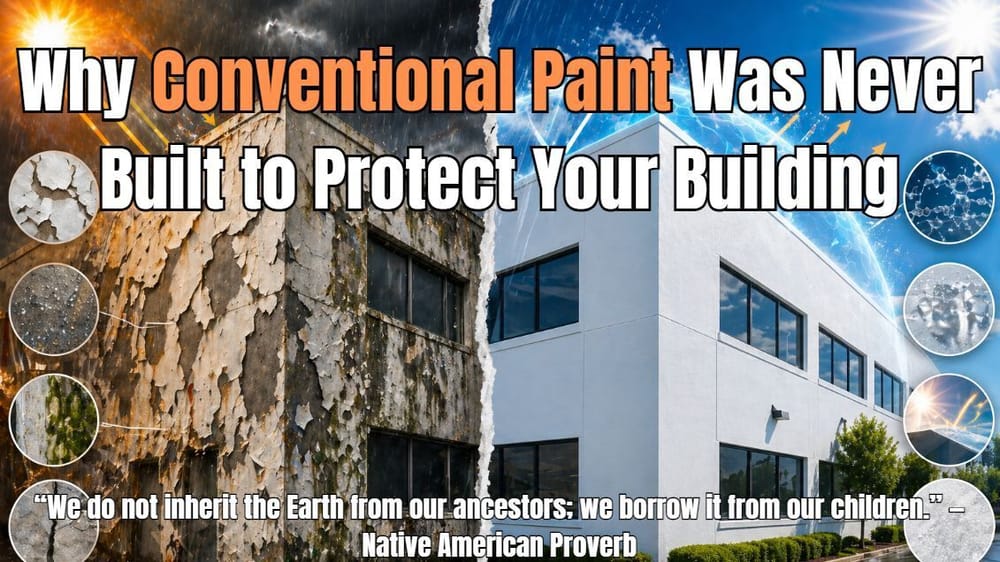
Face Mask vs. Body Armor The paint industry has spent decades selling you cosmetics while calling it protection. Here’s the truth they don’t want you to know — and what real building defense actually looks like.
Tuesday, November 17, 2026
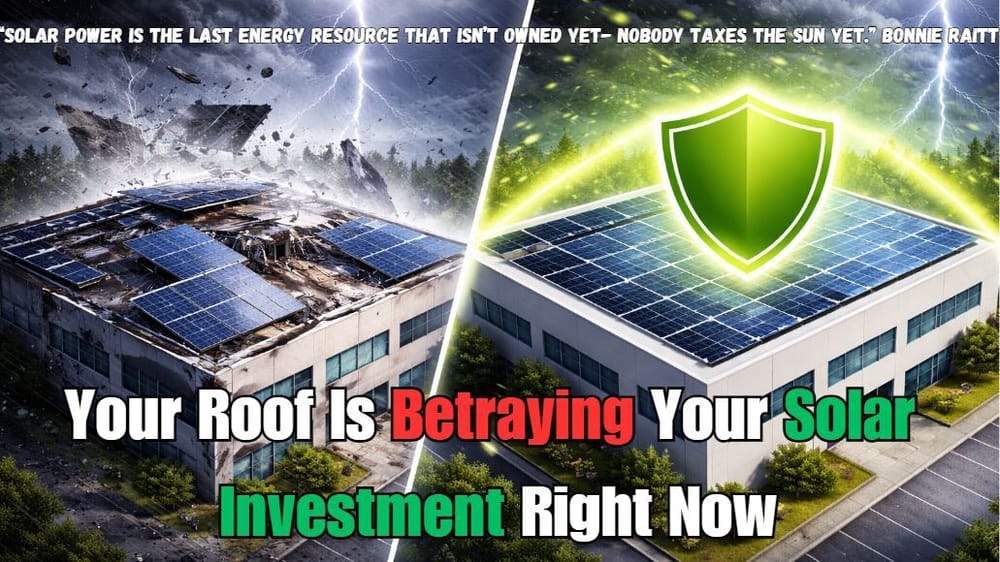
Solar can reduce dependence on volatile energy markets and turn rooftops into productive assets. But a rooftop solar system and the roof beneath it must be planned as one long-term system — because a clean-energy investment can become a costly maintenance problem if the roof, attachment points, and water-control details are not ready for decades of service.

Tuesday, November 10, 2026
The word "abatement" doesn't mean "rip it out." Understanding the real definition can save building owners tens of thousands of dollars -- and spare them years of unnecessary disruption. In my 50+ years in the field, I've watched this single misconception drive some of the most wasteful decisions in building management. It's time to set the record straight.
Tuesday, November 03, 2026
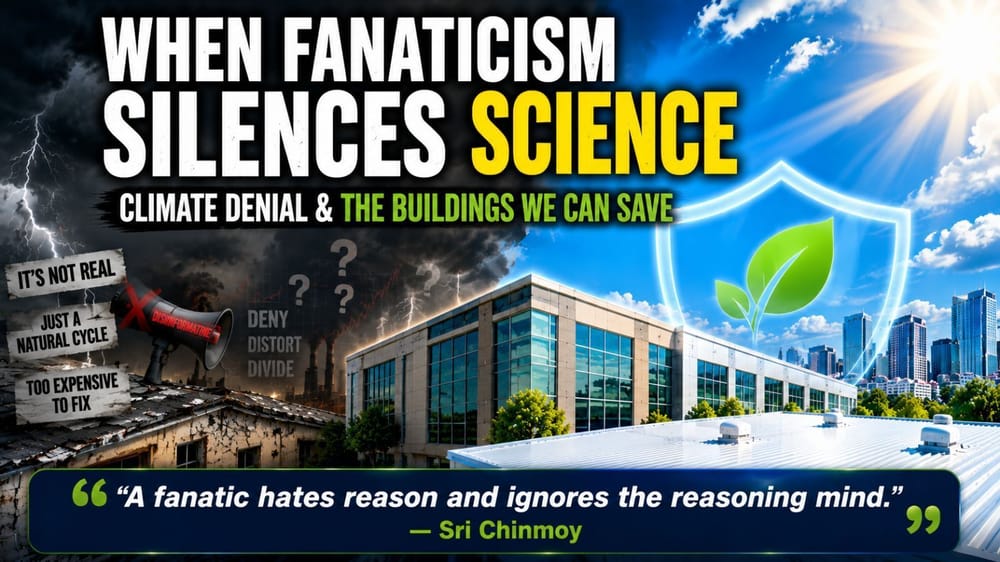
A quote, a warning, and a practical response — because when reason is under attack, doing the right thing becomes both a moral act and a market advantage.

Tuesday, October 27, 2026
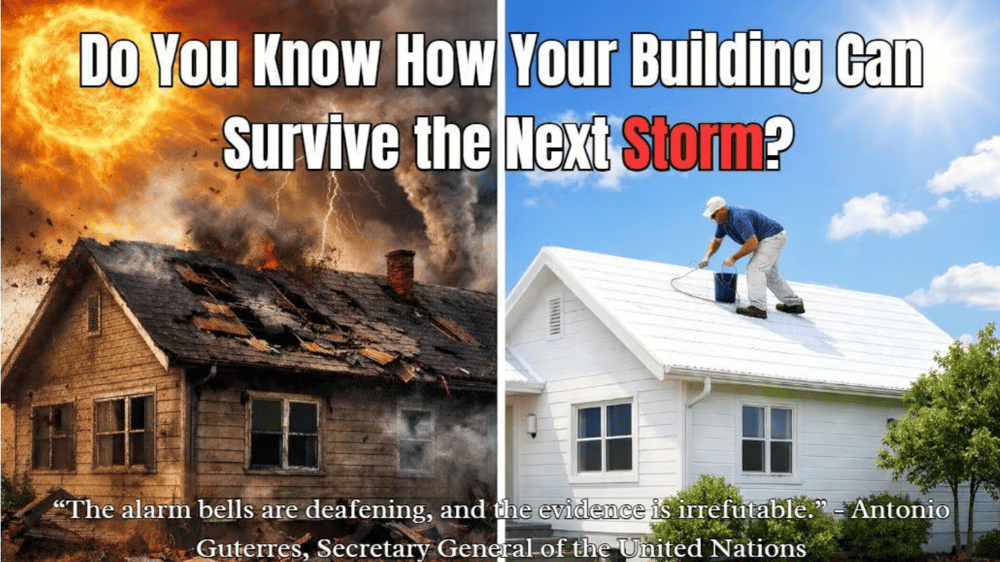
The storms are not coming. They are already here. Climate science has spent decades warning us about intensifying heat, heavier rainfall, rising seas, stronger coastal hazards, and weather extremes that place aging buildings under stresses many of them were never designed to endure.

Tuesday, October 20, 2026
Less than 9% of the people applying protective coatings to buildings and structures in America are women — in a trade that requires no special strength, no tools a woman doesn't already know how to use, and no barriers that have anything to do with capability. That statistic isn't just surprising. From my experience, it represents one of the largest untapped professional opportunities in the country — and it's about to get even bigger.

Tuesday, October 13, 2026
The maintenance-treadmill coating industry has a dirty secret: your building's repeated failures aren't bad luck. They're the business model. Here's what 40+ years in the field taught me, and what Green ENCASEMENT Coatings do about it.

Tuesday, October 06, 2026
Ordinary paint can make a building look protected while heat, moisture, UV, wind, and seasonal movement keep attacking beneath the surface. Green ENCASEMENT Coatings change the protection strategy.
Tuesday, September 29, 2026
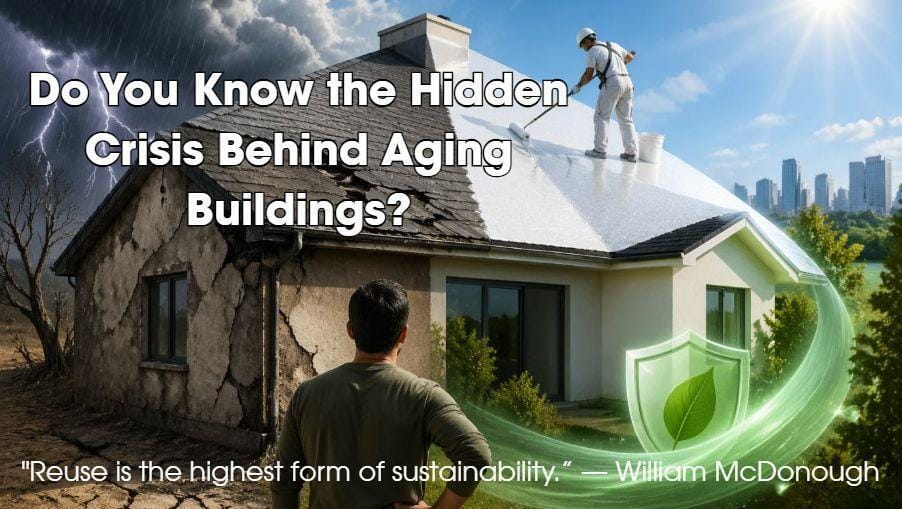
The Renewable Revolution: How Green ENCASEMENT Coatings Are Redefining Building Surfaces

Tuesday, September 22, 2026
History has already shown where buildings fail. The smarter strategy is to study those failures, strengthen the envelope before the next event, and preserve what can still be protected.
Tuesday, September 15, 2026
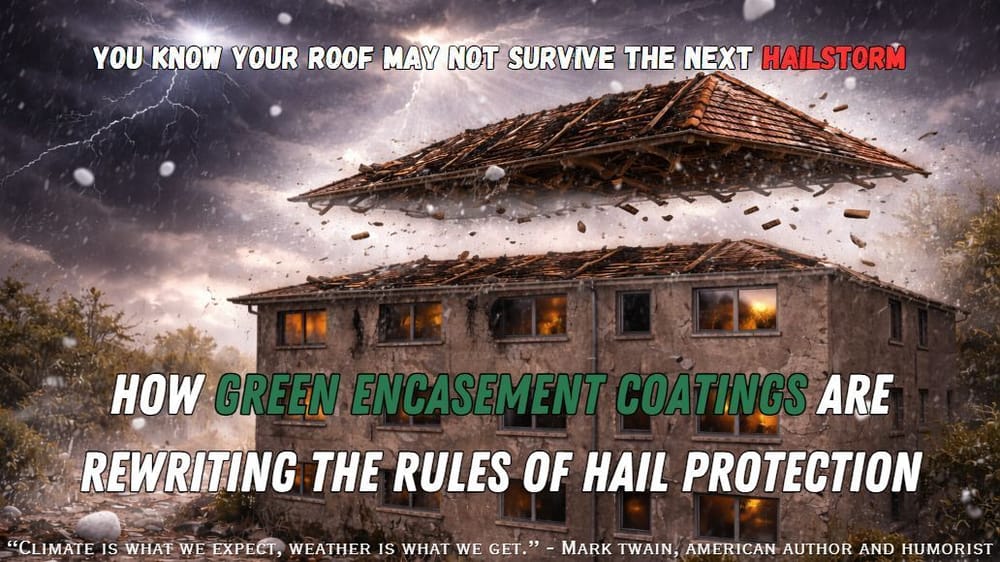
How Green ENCASEMENT Coatings are rewriting the rules of hail protection — before impact damage becomes a roof replacement problem.

Tuesday, September 08, 2026
Why Green ENCASEMENT Coatings can cost more at the beginning — and still cost far less over the life of your building.