Blogs Where Nature Meets Science & Coatings
"If All the Greedy People that Pollute can get Together & Show Strength in Unity – then Honest, Environmentalists Must Do the Same. You See – It’s as Simple As That.” George C. Keefe - ENCASEMENT Guy
Blogs Where Nature Meets Science & Coatings
"If All the Greedy People that Pollute can get Together & Show Strength in Unity – then Honest, Environmentalists Must Do the Same. You See – It’s as Simple As That.” George C. Keefe - ENCASEMENT Guy
Friday, August 30, 2019
Listen and Learn: Dive into the Audio Version of Our Blog
With August comes the hottest weather around the planet and this hot weather is increasing worldwide. In the USA alone more than a 150 million people were under extreme heat threat a-crossed 30 States.

July statistics are now in and it is documented to be the hottest month on the planet ever put on record.
The scientific community agrees and is continuing to warn that accelerated global warming contributing to the increased sweltering temperatures and peak heat waves will continue to increase in duration and intensity.
Man-made surfaces and human activity play a part in heat generation along with the planet absorbing considerable amounts of that heat.
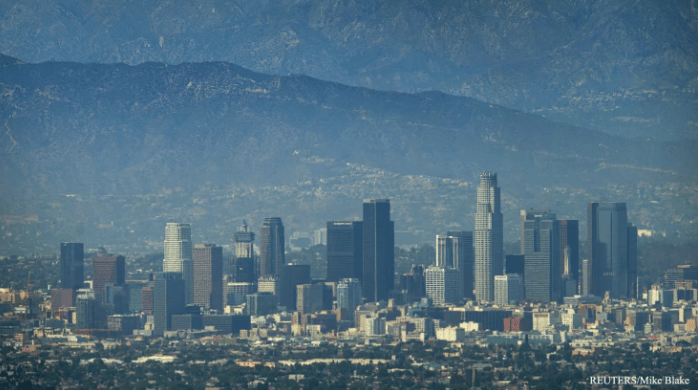
Did you know that dark surfaces greatly contribute to buildings pulling in heat? This leads to much more energy use and decreasing overall well-being of building occupants amounting to increased heat related illness and even death.
With this increasing hot weather and global warming comes the greater demand for energy used in cooling inside environments. This in turn creates more heat generation.
Some of the easiest ways to deal with keeping the inside of buildings cooler is to turn their outside surfaces light colored and solar reflective, especially roofs.
This simple, proven solution can save on energy costs while also helping minimize heat absorption onto the planet and causing what is known as the heat island effect. This effect occurs in cities where energy consumption is higher and manmade surfaces pull down and absorb heat at greater amounts then in rural areas
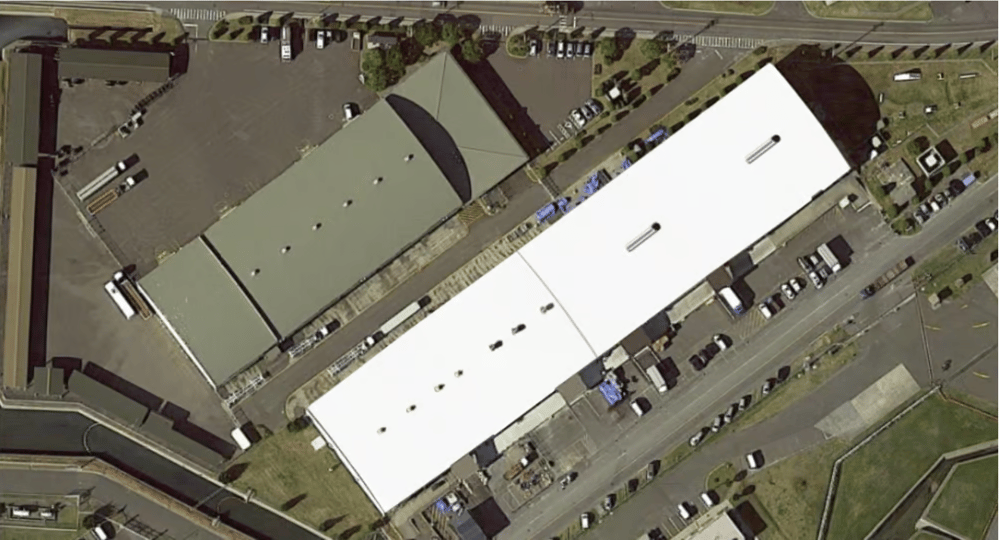
Two of the largest manmade surfaces that pull down the most heat into buildings and onto the planet in general are roofs and roads. They both contribute to the heat island effect.
Surfaces turned solar reflective are proven to reduce heat absorption. In the USA several states, counties and cities are turning both these surfaces, roof and roadways solar reflective, even to the point of mandating those actions.
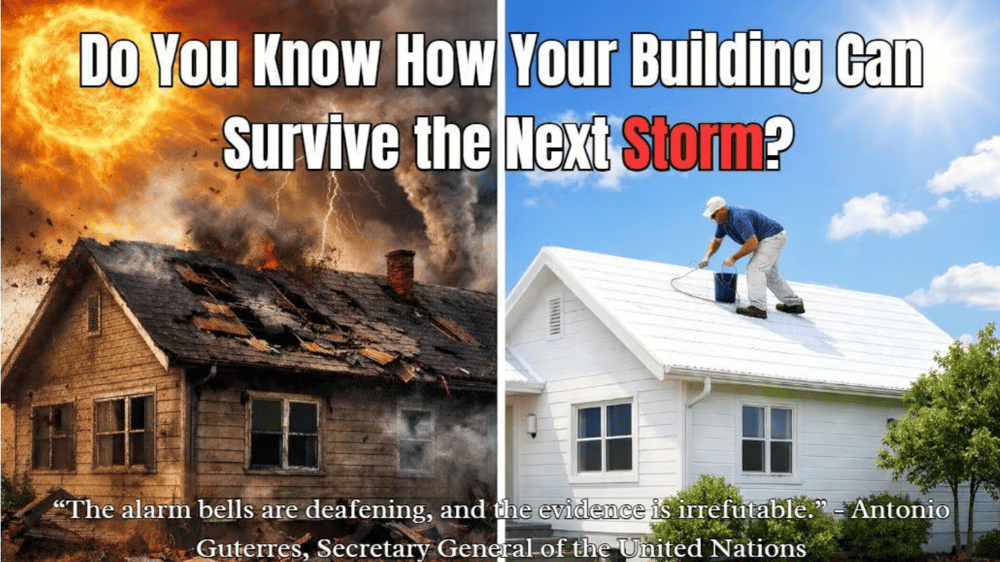
Roofs can not only be simply turned solar reflective with a cheap paint but with the right industrial coating the roof can at the same time be sealed and waterproofed giving sustainable protection against leaks, breakdown from ultra violet rays and weather degradation while simply adding defensive protection against stronger weather events.
Another plus of coating and sealing your worn-out roof with the right product is that the old roofing material never needs to be torn off, generating waste that needs to be transported and stored in overflowing heat/CO2 generating, landfills.
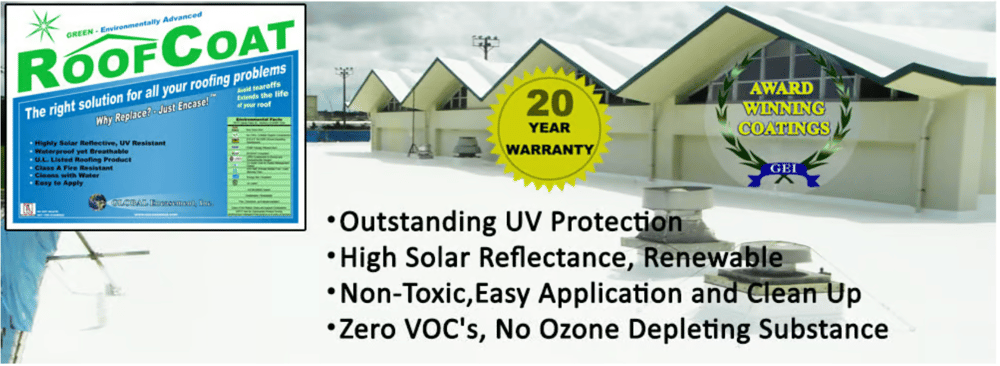
Coating building exteriors and roofs with the right proven green product that is sustainable, renewable and solar reflective can save tremendous amounts of energy/money. In addition, it can greatly contribute to occupants well-being and overall that is what is best for people, buildings and the planet.
What are your questions?
We are always here to help and excited to answer them.
Contact us at +1 (800) 266-3982 , or send us an email at service@encasement.com and leave a comment below.
See other posts like this one:
Tuesday, November 24, 2026
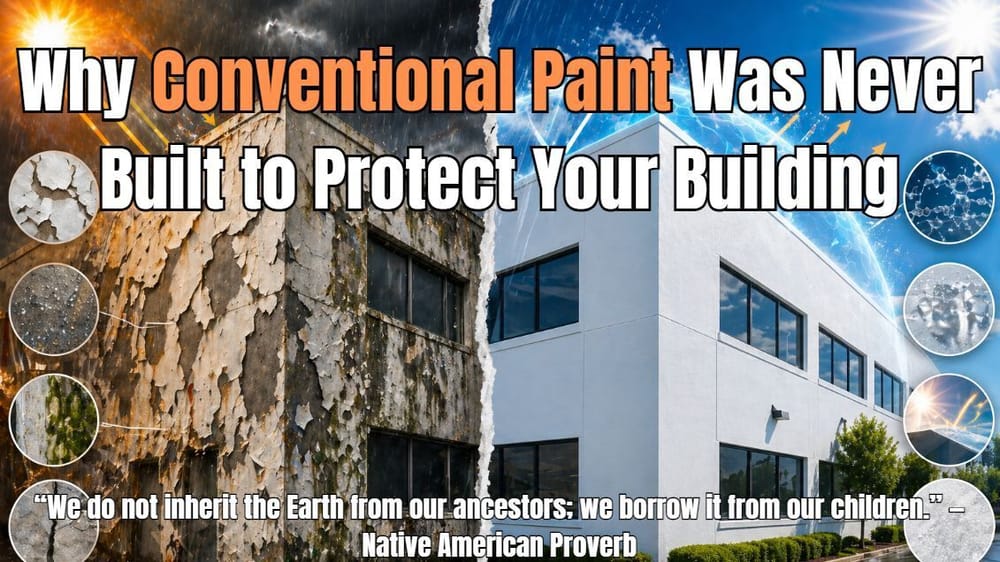
Face Mask vs. Body Armor The paint industry has spent decades selling you cosmetics while calling it protection. Here’s the truth they don’t want you to know — and what real building defense actually looks like.
Tuesday, November 17, 2026
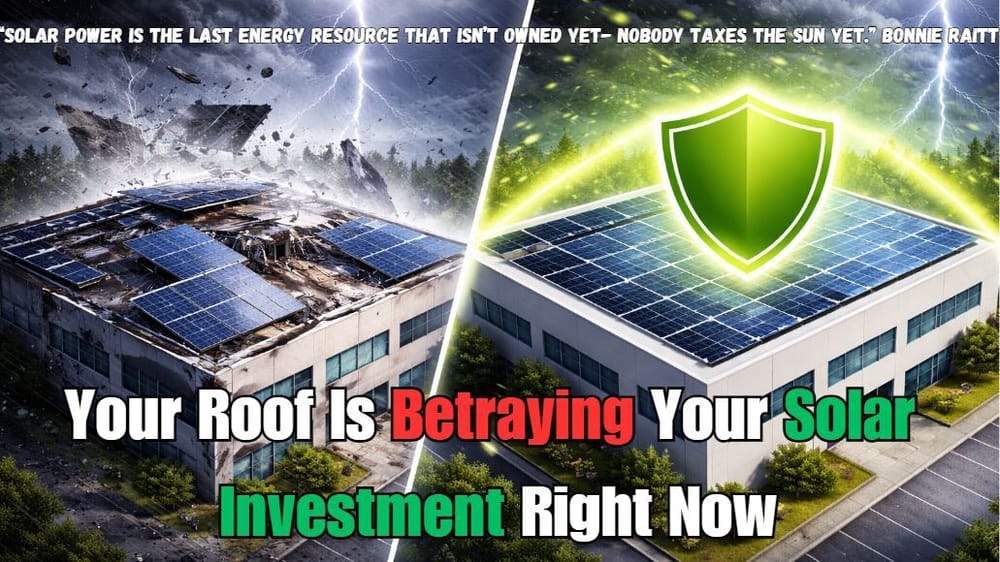
Solar can reduce dependence on volatile energy markets and turn rooftops into productive assets. But a rooftop solar system and the roof beneath it must be planned as one long-term system — because a clean-energy investment can become a costly maintenance problem if the roof, attachment points, and water-control details are not ready for decades of service.

Tuesday, November 10, 2026
The word "abatement" doesn't mean "rip it out." Understanding the real definition can save building owners tens of thousands of dollars -- and spare them years of unnecessary disruption. In my 50+ years in the field, I've watched this single misconception drive some of the most wasteful decisions in building management. It's time to set the record straight.
Tuesday, November 03, 2026
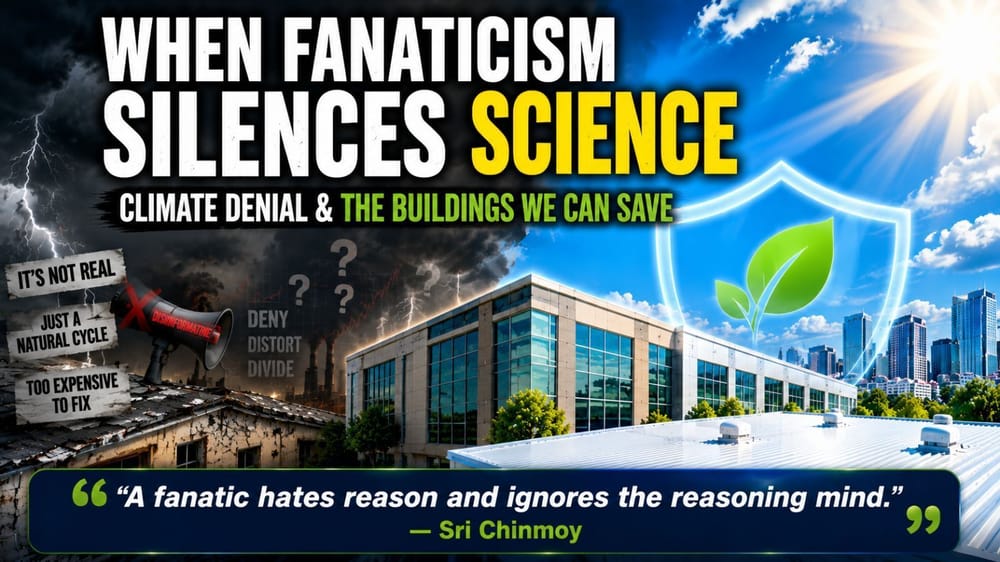
A quote, a warning, and a practical response — because when reason is under attack, doing the right thing becomes both a moral act and a market advantage.

Tuesday, October 27, 2026
The storms are not coming. They are already here. Climate science has spent decades warning us about intensifying heat, heavier rainfall, rising seas, stronger coastal hazards, and weather extremes that place aging buildings under stresses many of them were never designed to endure.

Tuesday, October 20, 2026
Less than 9% of the people applying protective coatings to buildings and structures in America are women — in a trade that requires no special strength, no tools a woman doesn't already know how to use, and no barriers that have anything to do with capability. That statistic isn't just surprising. From my experience, it represents one of the largest untapped professional opportunities in the country — and it's about to get even bigger.

Tuesday, October 13, 2026
The maintenance-treadmill coating industry has a dirty secret: your building's repeated failures aren't bad luck. They're the business model. Here's what 40+ years in the field taught me, and what Green ENCASEMENT Coatings do about it.

Tuesday, October 06, 2026
Ordinary paint can make a building look protected while heat, moisture, UV, wind, and seasonal movement keep attacking beneath the surface. Green ENCASEMENT Coatings change the protection strategy.
Tuesday, September 29, 2026
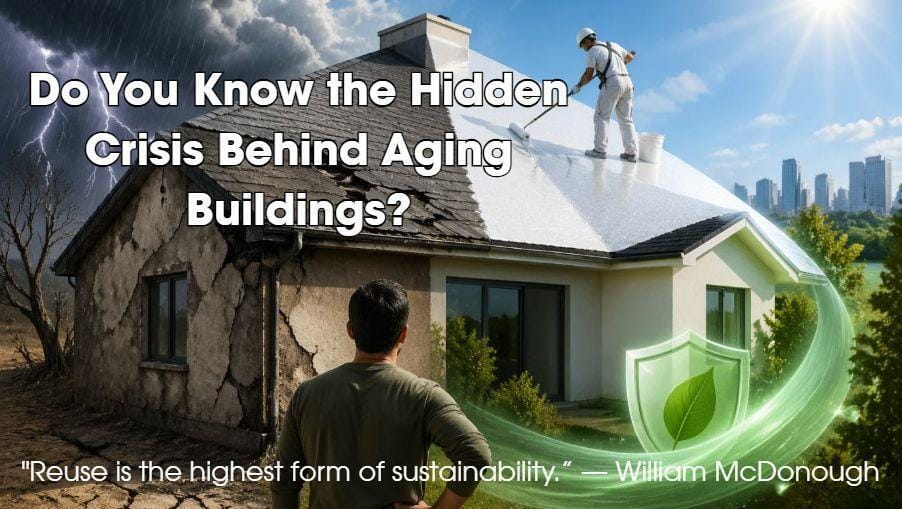
The Renewable Revolution: How Green ENCASEMENT Coatings Are Redefining Building Surfaces

Tuesday, September 22, 2026
History has already shown where buildings fail. The smarter strategy is to study those failures, strengthen the envelope before the next event, and preserve what can still be protected.
Tuesday, September 15, 2026
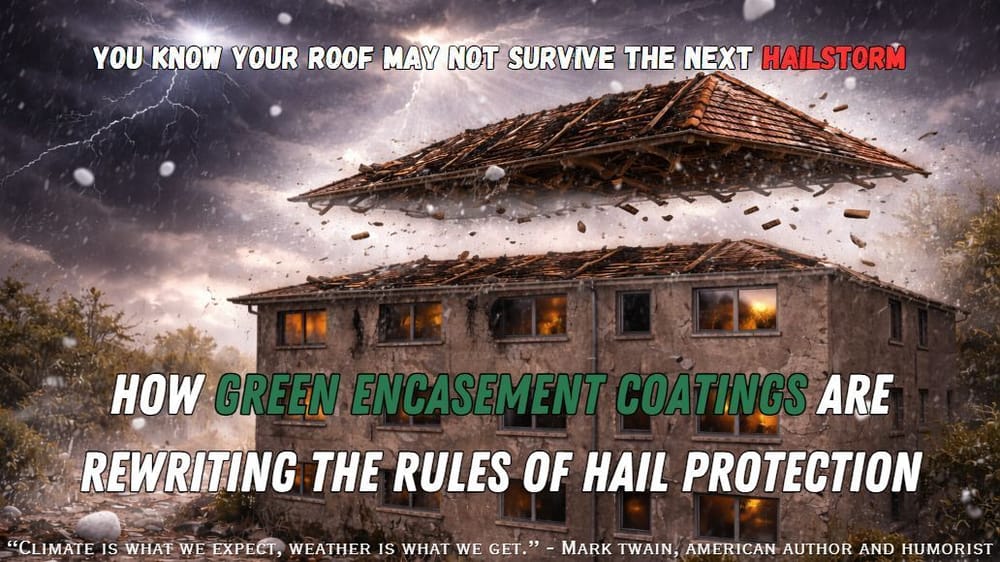
How Green ENCASEMENT Coatings are rewriting the rules of hail protection — before impact damage becomes a roof replacement problem.

Tuesday, September 08, 2026
Why Green ENCASEMENT Coatings can cost more at the beginning — and still cost far less over the life of your building.