Blogs Where Nature Meets Science & Coatings
"If All the Greedy People that Pollute can get Together & Show Strength in Unity – then Honest, Environmentalists Must Do the Same. You See – It’s as Simple As That.” George C. Keefe - ENCASEMENT Guy
Blogs Where Nature Meets Science & Coatings
"If All the Greedy People that Pollute can get Together & Show Strength in Unity – then Honest, Environmentalists Must Do the Same. You See – It’s as Simple As That.” George C. Keefe - ENCASEMENT Guy
Wednesday, February 25, 2026
By: George Keefe
"If all the greedy polluters can band together to protect their interests, then honest environmentalists must do the same. It's as simple as that.
Listen and Learn: Dive into the Audio Version of Our Blog
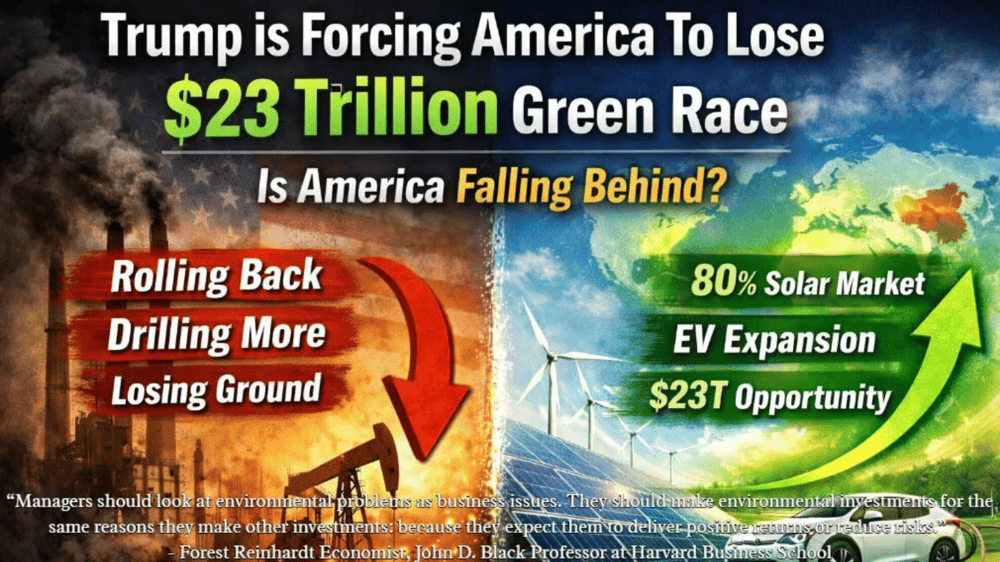
The race is on, and due to Trump America is being left in the dust.
While nations across the globe sprint toward a clean energy future worth an estimated $23 trillion by 2030, the United States is shackled to the past—courtesy of Trump policies that prioritize fossil fuel profits over economic innovation and planetary survival.
The cost of this backward march isn't just environmental; it's a catastrophic economic miscalculation that will haunt generations.
China isn't waiting.
They've captured 80% of the global solar panel market.
Europe isn't waiting either—they're building wind farms and electric vehicle infrastructure at breakneck speed.
Even traditionally oil-dependent nations like Saudi Arabia are pivoting, investing hundreds of billions in renewable energy projects.
And all are moving toward green products and eco-friendly solutions.
Meanwhile, Trump and America rolls back emissions standards, opens protected lands to drilling, and hands tax breaks to oil executives whose wealth balloons as our competitive edge crumbles.
This isn't just policy—it's robbery dressed in patriotic rhetoric.
The green energy transition represents the single largest economic opportunity since the Industrial Revolution.
Bloomberg estimates renewable energy investments will attract $10 trillion in capital by 2050.
Battery technology, solar innovation, wind engineering, carbon capture, green products—these are the industries where fortunes will be made and economic dominance will be decided.
Yet, Trump’s current federal policy actively sabotages American competitiveness in these sectors, ensuring that the engineers, manufacturers, and innovators who could be building America's future are instead watching from the sidelines as other nations claim the profits.
The cruelest irony?
Clean energy is profitable energy.
Solar and wind are now cheaper than coal and gas in most markets.
Electric vehicles are outpacing combustion engines in performance and cost-efficiency.
Storage technology is solving intermittency challenges.
The economic case for transition isn't ideological—it's mathematical.
Countries embracing this reality are creating millions of high-paying jobs, reducing energy costs, and establishing technological leadership that will define the 21st century economy.
But here's what Trump is choosing instead: enriching a handful of fossil fuel billionaires whose business model depends on environmental destruction and economic stagnation.
These aren't the innovators or risk-takers we celebrate in American lore.
They're executives protecting yesterday's profits by purchasing today's policies, content to watch America's industrial leadership evaporate as long as their quarterly earnings remain intact.
The consequences extend beyond missed economic opportunities.
Climate change isn't a distant threat—it's a present crisis costing American taxpayers hundreds of billions annually in disaster recovery, crop failures, and infrastructure damage.
Every year we delay meaningful action, the bill compounds while other nations build resilience and prosperity simultaneously.
We're not just falling behind; Trump is actively dismantling the foundation for future prosperity.
Research institutions lose funding
Clean energy startups relocate overseas.
The skilled workforce we need emigrates to countries serious about innovation.
Infrastructure projects that could employ millions gather dust.
The question isn't whether America will eventually embrace clean energy—the economics guarantee it.
The question is whether we'll be leaders or customers when that transition completes, whether American companies will manufacture the technology or merely purchase it from competitors who seized the opportunity while we hesitated.
Every day of delay isn't just environmental damage.
It's surrendered market share, lost patents, abandoned leadership, and diminished futures for communities that could be thriving in the new energy economy.
This is the real cost of Trump policies designed to enrich fossil fuel billionaires—not just a degraded planet, but a diminished America watching others prosper from the future we could have built.
"Managers should look at environmental problems as business issues. They should make environmental investments for the same reasons they make other investments: because they expect them to deliver positive returns or reduce risks." – Forest Reinhardt Economist, John D. Black Professor at Harvard Business School
See other posts like this one:



Friday, November 16, 2018
November is Lung Cancer Awareness Month including asbestos education, so this is a good time to raise awareness about preventing unnecessary exposure to asbestos that can cause lung cancer as well as contribute to other possible health concerns.

Wednesday, October 10, 2018
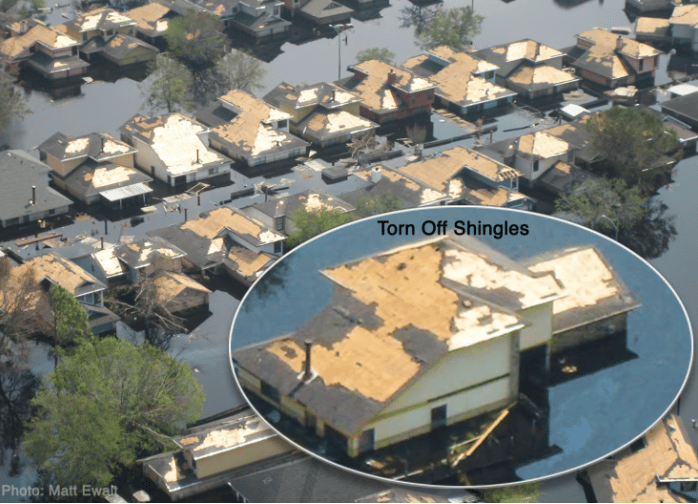
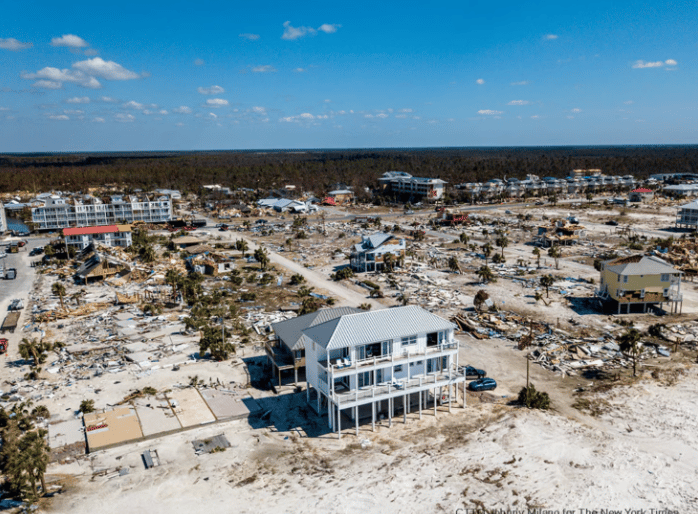
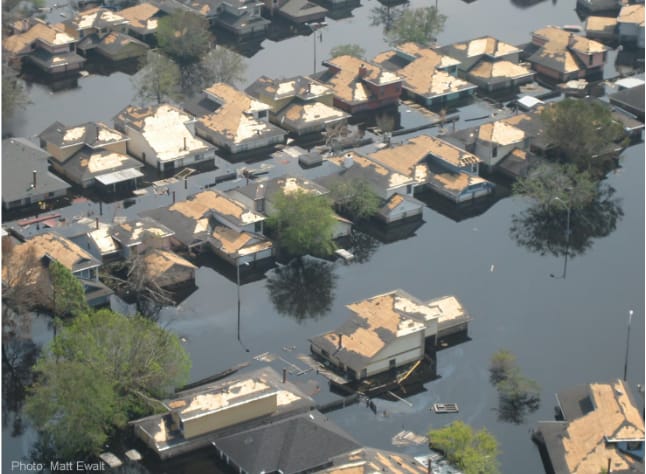
Short of moving your building or raising it up above flooding, the best approach to take to reduce storm, flooding and natural disaster losses is to simply use a proven coating to wind and waterproofthe surfaces in the path of destruction.
Tuesday, September 18, 2018
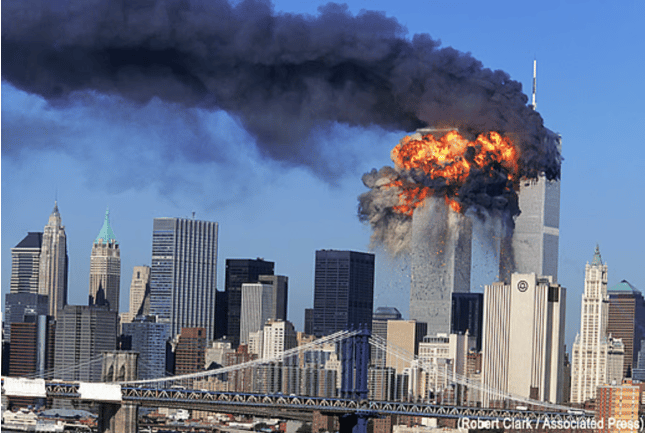
We recently passed the anniversary of 9-11-2001 tragedy of the attack on the Twin Towers in New York. I wanted to remind everyone that the effects of that fateful day are still being felt and especially by some of the heroes that were affected by the initial exposure and then the secondary exposure that took place during the cleanup. Some of those exposed were firefighters, police officers, EMTs (Emergency Medical Technician), construction workers, transit workers, cleanup workers, debris removal crews, truck drivers, nearby office workers, and Lower Manhattan residents.
Tuesday, August 21, 2018
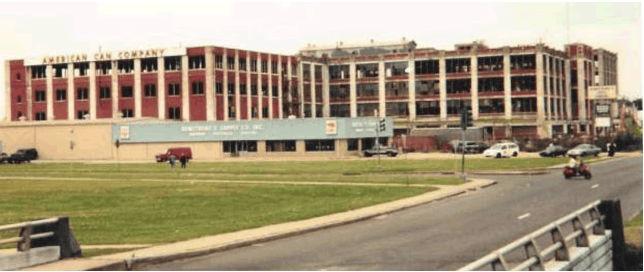
I discussed in a recent blog the importance of keeping the aesthetics of a historic building intact. Making sure that the look and overall presentation on a structure is preserved is very significant. This is especially true with landmark properties that have prominent and distinct features. Preservation can become very difficult when it entails obsolete building materials that contain hazardous materials that are typically removed and replaced. Three of the most common of hazardous materials is lead-based paint, asbestos and PCBs. In the USA, lead was used in paints up until 1978. It then was banned for its negative health effects, especially with children in their developing stages. PCBs, or polychlorinated biphenyls, were banned from paints, caulking and surface coatings in 1979 and asbestos was banned in 1974. All these bans were due to the negative health and environmental effects of these products.


Tuesday, July 17, 2018
Lead Paint Poisoning is Preventable Through Education and Action