Blogs Where Nature Meets Science & Coatings
"If All the Greedy People that Pollute can get Together & Show Strength in Unity – then Honest, Environmentalists Must Do the Same. You See – It’s as Simple As That.” George C. Keefe - ENCASEMENT Guy
Blogs Where Nature Meets Science & Coatings
"If All the Greedy People that Pollute can get Together & Show Strength in Unity – then Honest, Environmentalists Must Do the Same. You See – It’s as Simple As That.” George C. Keefe - ENCASEMENT Guy
Friday, February 27, 2026

By: George Keefe
"If all the greedy polluters can band together to protect their interests, then honest environmentalists must do the same. It's as simple as that.
Listen and Learn: Dive into the Audio Version of Our Blog
The air we breathe.
The water our children drink.
The forests where we vacation.
All of it hangs in a precarious balance, and recent policy decisions have tilted the scales toward irreversible damage.
During his previous administration and with promises for future policy changes, Donald Trump oversaw the rollback of over 100 environmental regulations—protections that took decades to build and seconds to dismantle.
These weren't abstract policy changes.
They were direct assaults on the safeguards between our families and industrial pollution.
What's Already Gone Thanks to Trump
The Clean Power Plan, designed to reduce carbon emissions from power plants, was replaced with a weaker rule that experts estimated could lead to 1,400 additional premature deaths annually from air pollution.
The methane emissions rule—which prevented oil and gas companies from leaking this potent greenhouse gas—was stripped away, allowing millions of tons of climate-warming pollution to escape unchecked.
Vehicle emission standards were weakened, putting more pollutants into the air you breathe during your morning commute.
Protections for wetlands and streams were eliminated, leaving one-third of U.S. drinking water sources vulnerable to contamination.
The Climate Clock Is Running
Scientists warn we have a narrow window to prevent catastrophic climate change.
Every tenth of a degree matters.
Yet the U.S., under Trump's leadership, withdrew from the Paris Climate Agreement, abandoning global efforts while China and Europe moved forward.
That lost time cannot be recovered.
The Arctic is warming twice as fast as the rest of the planet.
Wildfires are intensifying.
Hurricane seasons are becoming more destructive.
These aren't future problems—they're happening now, and accelerating policies have removed guardrails during our most critical moment.
What You Stand to Lose
Your health.
Studies linked pollution rollbacks to increased asthma attacks in children and respiratory problems in vulnerable populations.
Your property.
Rising seas and extreme weather threaten coastal homes and farmland.
Your legacy.
Each year of inaction steals options from future generations.
The fossil fuel industry celebrated these rollbacks, seeing immediate profit boosts.
But those profits come at our expense—in healthcare costs, property damage, and a destabilized climate that will burden our children with problems we could have prevented.
To Sum IT Up:
There is a point of no return that we are rapidly approaching.
Environmental damage isn't like a policy you can simply reverse.
Once carbon enters the atmosphere, it stays there for centuries.
Once species go extinct, they're gone forever.
Once tipping points are crossed, feedback loops accelerate beyond our control.
We're not discussing abstract environmental policy.
We're discussing whether your grandchildren will inherit a livable planet or a crisis we chose not to prevent.
“We won’t have a society if we destroy the environment.” -Margaret Mead
See other posts like this one:
Tuesday, November 17, 2026
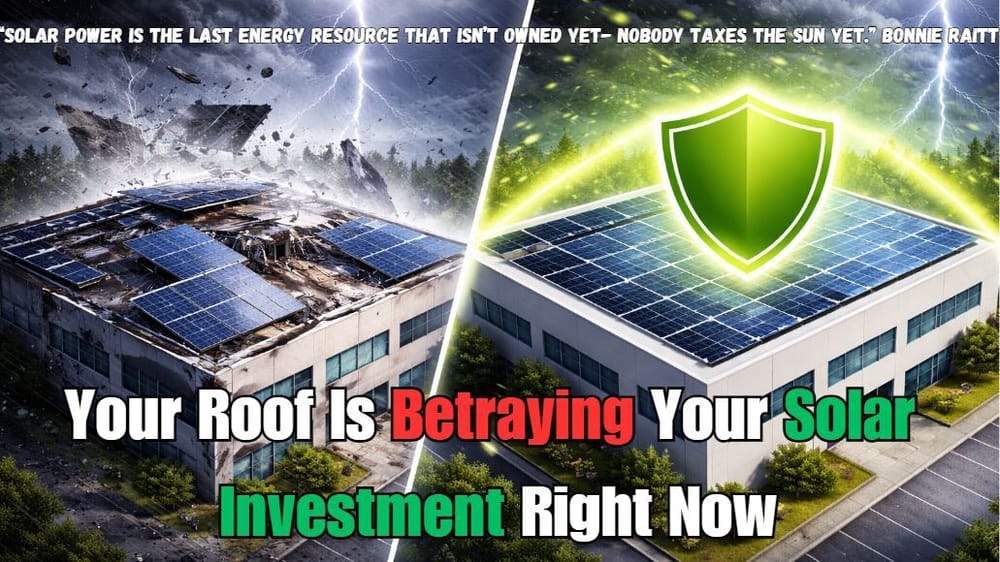
Solar can reduce dependence on volatile energy markets and turn rooftops into productive assets. But a rooftop solar system and the roof beneath it must be planned as one long-term system — because a clean-energy investment can become a costly maintenance problem if the roof, attachment points, and water-control details are not ready for decades of service.

Tuesday, November 10, 2026
The word "abatement" doesn't mean "rip it out." Understanding the real definition can save building owners tens of thousands of dollars -- and spare them years of unnecessary disruption. In my 50+ years in the field, I've watched this single misconception drive some of the most wasteful decisions in building management. It's time to set the record straight.
Tuesday, November 03, 2026
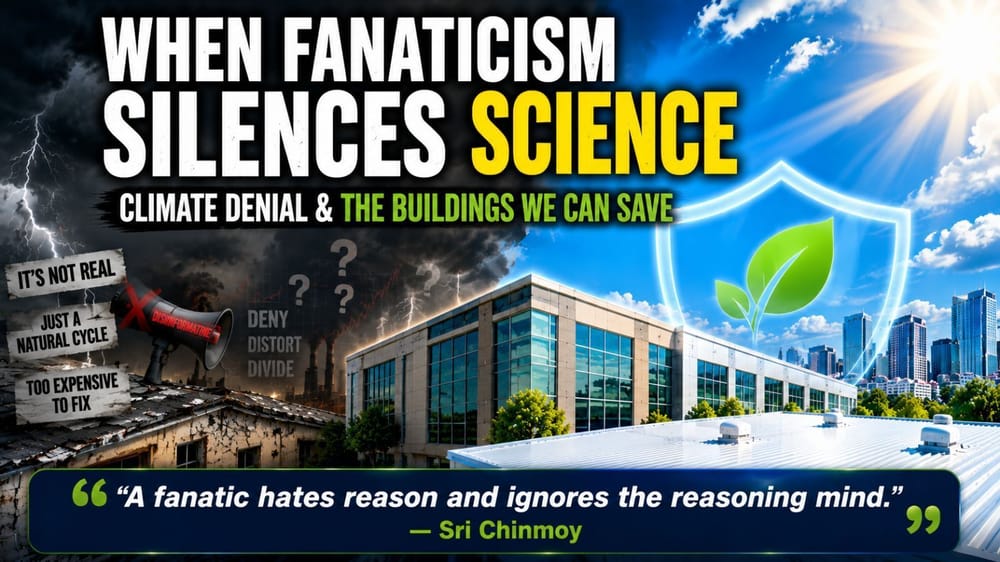
A quote, a warning, and a practical response — because when reason is under attack, doing the right thing becomes both a moral act and a market advantage.

Tuesday, October 27, 2026
The storms are not coming. They are already here. Climate science has spent decades warning us about intensifying heat, heavier rainfall, rising seas, stronger coastal hazards, and weather extremes that place aging buildings under stresses many of them were never designed to endure.

Tuesday, October 20, 2026
Less than 9% of the people applying protective coatings to buildings and structures in America are women — in a trade that requires no special strength, no tools a woman doesn't already know how to use, and no barriers that have anything to do with capability. That statistic isn't just surprising. From my experience, it represents one of the largest untapped professional opportunities in the country — and it's about to get even bigger.

Tuesday, October 13, 2026
The maintenance-treadmill coating industry has a dirty secret: your building's repeated failures aren't bad luck. They're the business model. Here's what 40+ years in the field taught me, and what Green ENCASEMENT Coatings do about it.

Tuesday, October 06, 2026
Ordinary paint can make a building look protected while heat, moisture, UV, wind, and seasonal movement keep attacking beneath the surface. Green ENCASEMENT Coatings change the protection strategy.
Tuesday, September 29, 2026
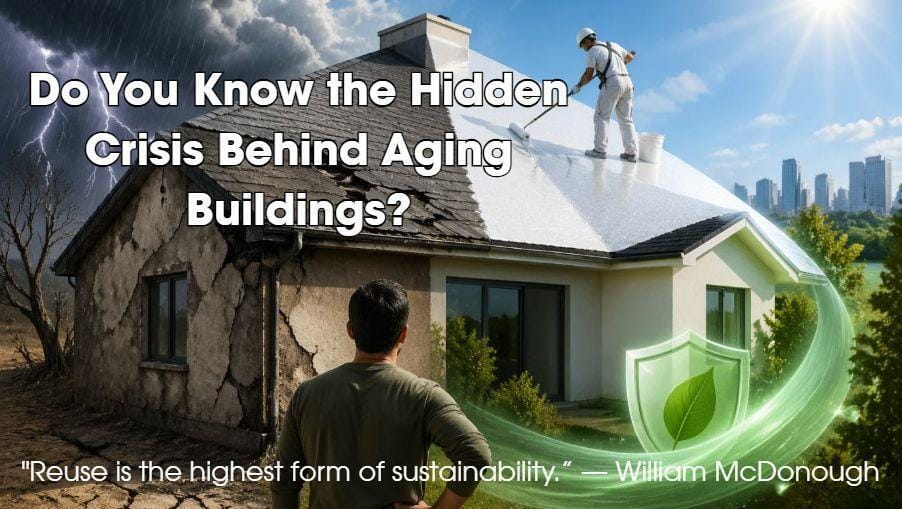
The Renewable Revolution: How Green ENCASEMENT Coatings Are Redefining Building Surfaces

Tuesday, September 22, 2026
History has already shown where buildings fail. The smarter strategy is to study those failures, strengthen the envelope before the next event, and preserve what can still be protected.
Tuesday, September 15, 2026
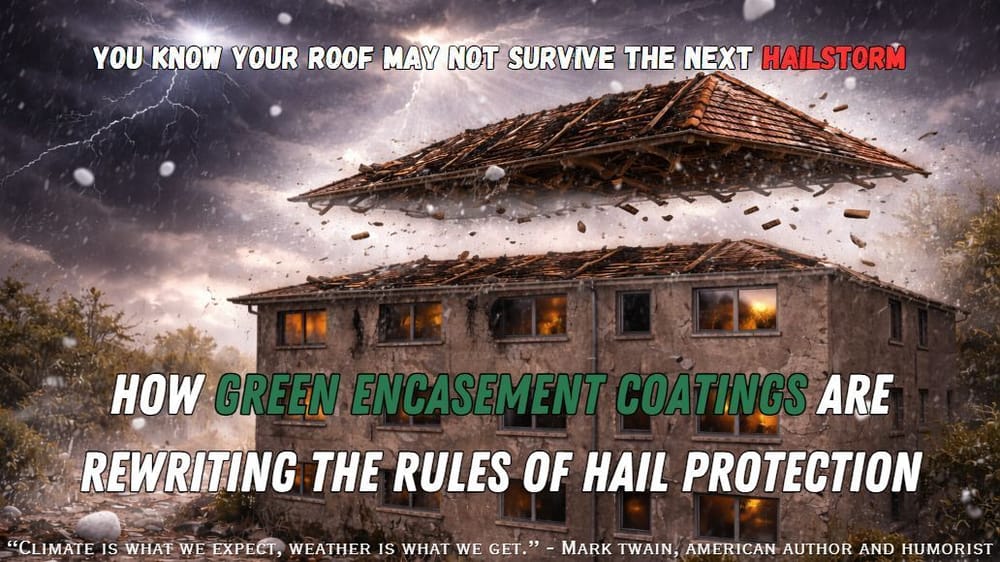
How Green ENCASEMENT Coatings are rewriting the rules of hail protection — before impact damage becomes a roof replacement problem.

Tuesday, September 08, 2026
Why Green ENCASEMENT Coatings can cost more at the beginning — and still cost far less over the life of your building.




Tuesday, August 04, 2026