
Blogs Where Nature Meets Science & Coatings
"If All the Greedy People that Pollute can get Together & Show Strength in Unity – then Honest, Environmentalists Must Do the Same. You See – It’s as Simple As That.” George C. Keefe - ENCASEMENT Guy
Blogs Where Nature Meets Science & Coatings
"If All the Greedy People that Pollute can get Together & Show Strength in Unity – then Honest, Environmentalists Must Do the Same. You See – It’s as Simple As That.” George C. Keefe - ENCASEMENT Guy
Wednesday, August 26, 2026

By: George C. Keefe — Founder & CEO, Global Encasement, Inc. | The ENCASEMENT Guy
Technical Reference Article | Open Access | CC BY 4.0
"If all the greedy polluters can band together to protect their interests, then honest environmentalists must do the same. It's as simple as that.
Listen and Learn: Dive into the Audio Version of Our Blog
The Problem: A Century of Losses — and a Database That Never Forgets
In my 50+ years of field experience, I've watched storms roll in, floods rise, and wildfires race across hillsides.
I've walked jobsites the morning after.
I know what nature can do to a building.
But even I had to pause when I first saw the full weight of what Munich Re has been quietly measuring since 1974.
Most people have heard of Munich Re — but far fewer know what the name actually means or why it matters so deeply to every building owner, facility manager, and infrastructure steward on the planet.
Munich Re's full legal name is Münchener Rückversicherungs-Gesellschaft Aktiengesellschaft in München 2014 German for 201cMunich Reinsurance Company, a joint-stock company in Munich.201d It was formally founded on April 3, 1880, by Carl Thieme and a group of Munich-based bankers and industrialists. Thieme believed, at a time when few agreed with him, that reinsurance — the business of insuring insurance companies themselves — had to be international and independent from the start.
His conviction proved correct.
Munich Re grew quickly by paying claims when others failed, and its reputation for financial strength became the foundation of everything that followed.
Today, the name “Munich Re” is shorthand for the world's gold standard in catastrophe risk intelligence.
And the most powerful tool they have built is one that every person who owns, manages, or protects a building should know about.
Munich Re NatCatSERVICE — Est. 1974
Loss records tracked since: 1950 (major events) / 1980 (all loss-relevant events)
Natural disaster events catalogued: 40,000+
Total losses 1980–present: US$ 7.4 trillion+
2024 global natural disaster losses: US$ 320 billion
2025 global natural disaster losses: US$ 224 billion
The Escalation: What NatCatSERVICE Is Actually Telling Us
The NatCatSERVICE is Munich Re's proprietary global catastrophe database — recognized worldwide as one of the most comprehensive natural disaster loss archives ever assembled.
It doesn't just count storms.
It tracks every loss-relevant event, documents economic and insured damages, attributes cause, and — critically — reveals the trend lines that most of us would rather not look at.
Here's what it's showing us right now:
• In 2024, natural disasters worldwide produced US$ 320 billion in total losses — with US$ 140 billion insured. That made it the third most expensive insured-loss year since 1980. Weather catastrophes drove 93% of all losses.
• In 2025, total losses came in at US$ 224 billion, with US$ 108 billion insured — another year exceeding the US$ 100 billion insured-loss mark. Weather disasters accounted for 92% of all losses and 97% of insured losses.
• The 10-year inflation-adjusted average for total losses is US$ 236 billion per year — and the trend is rising. In eight of the world's ten largest industrialized economies, weather disaster losses as a share of national income are significantly higher today than in the 1980s.
• "Non-peak perils" — floods, severe thunderstorms, wildfires — are now generating cumulative damage comparable to a severe hurricane year, year after year. In 2024 alone, these events caused US$ 136 billion in total losses.
• In the US, severe thunderstorms alone caused US$ 57 billion in losses in 2024 — the second costliest year for that peril since records began.
"Weather disasters are costing many of the world's largest economies more and more money — and therefore prosperity." — Munich Re, November 2025
It seems to me that Munich Re isn't predicting future risk.
They're describing a present reality.
And the most consistent feature of that reality — across every continent, every climate, every decade — is this: buildings pay the price.
Roofs peel. Walls crack. Envelopes fail. Wind gets under edges. Water finds its way in.
And when the accounting is finally done — when the adjusters pack up and the contractors move in — the bill lands squarely on whoever owns the building.
Or, increasingly, on insurers who are now quietly re-pricing what it costs to cover weather-exposed structures.
From my experience, what I've seen in 50+ years on jobsites across five continents is this: most of that damage was preventable.
Not the storm itself.
Not the flood.
But the failure of the building's outer protection layer — the envelope — to hold.
And that is exactly what Green ENCASEMENT Coatings were engineered to address.
The Solution: Green ENCASEMENT Coatings — Engineered to Defend What the Data Says Is Under Attack
Here's the plain truth.
I didn't build Global ENCASEMENT, Inc. to sell paint.
I built it because I saw — over and over again — that conventional coatings were failing the buildings they were supposed to protect.
Short service lives.
Maintenance treadmills.
Cosmetic films that peeled, chalked, and cracked the moment real weather arrived.
And then the replacement cycle would begin — new materials, new carbon, new costs, new waste.
All while Munich Re quietly added another line to its database.
Green ENCASEMENT Coatings are different by design.
Here's how they work across three dimensions:
Dimension 1 — GREEN: Protection That Works With Nature, Not Against It
Every Green ENCASEMENT Coating product is zero-VOC, water-based, non-toxic, biodegradable, and ozone-safe. It is EPA/DOE Energy Star qualified and carries a Class A fire rating. These coatings are compliant with EPA/CARB Reg 1113, ASTM standards, LEED v4, Green Seal GS-11, and OSHA HazCom. Solar-reflective formulations reduce surface temperatures by 50–80°F and cut cooling energy consumption by 15–40%.
In a world where 39% of global carbon emissions come from buildings, every coating choice is an environmental decision. Green ENCASEMENT Coatings reduce the embodied carbon event that comes with replacement, eliminate construction and demolition (C&D) waste, and cut hazardous material disturbance risks associated with tear-offs.
Dimension 2 — ENCASEMENT: A Membrane That Becomes Part of the Building
This is the dimension that matters most when you look at what Munich Re is tracking. Conventional paint is a cosmetic film — it sits on top of a surface and eventually fails. Green ENCASEMENT Coatings form a seamless, fully-adhered monolithic membrane that cross-link bonds directly to the substrate, becoming one with the surface rather than a layer on top.
What that means in practice, when the weather that Munich Re is cataloguing actually arrives:
• No fasteners, no seams, no pierce points for wind to exploit — the membrane is continuous, eliminating uplift vulnerability entirely.
• Wind cannot penetrate, get underneath, or find joints to peel. The seamless system closes every gap.
• The membrane bridges cracks and gaps, conforming to complex and irregular geometry — protecting surfaces that conventional coatings simply cannot reach or hold.
• High flexibility and elongation allow the coating to move with the building through thermal cycling without cracking or delaminating — critical in climates where temperature swings are widening.
• Breathable construction allows moisture vapor transmission, preventing the trapped moisture damage that causes substrate decay from the inside out.
• Simultaneously resists wind penetration, water intrusion, hail impact, UV degradation, and chemical exposure — multiple threats addressed in a single system.
And crucially: Green ENCASEMENT Coatings deliver long-lasting, guaranteed 20-year renewable service life cycles — four to six times longer than conventional paint's typical 3–5 year exterior lifespan. That's not a maintenance treadmill. That's a protection system built to last across the very climate cycles Munich Re is documenting as increasingly severe.
Dimension 3 — COATINGS: Accessible, Practical, Field-Proven Deployment
Green ENCASEMENT Coatings are applied by standard brush, roller, or spray — no specialized equipment, no exotic processes. Water cleanup. Local labor or DIY. The application process is non-disruptive to building occupants, requires no hazardous tearoff, and eliminates the site liability that comes with removal of asbestos-containing materials (ACM) or lead-based paint (LBP) — two hazards that disturbing weather events can release, and that AsbestoSafe and LeadLock are specifically engineered to permanently manage in place.
Service life vs. conventional paint: 4–6× longer (20-yr guaranteed renewable cycles vs. 3–5 yr)
Cost vs. removal/replacement: Up to 75% savings
US C&D waste eliminated (annual): 548M tons (EPA)
Surface temperature reduction: 50–80°F (solar reflective formulations)
Cooling energy savings: 15–40%
"Why Replace When You Can ENCASE?"
The Results: What Happens When Buildings Stop Being Liabilities
Here's what I tell my family, friends and clients: every time Munich Re publishes another year of disaster loss data, they're describing a problem that engineered building protection can actually address.
Not the storm. Not the flood.
But the structural vulnerability of the envelope — the gap in the cladding, the edge of the roof, the crack in the substrate — that turns a weather event into a catastrophic loss.
Across 50+ years and five continents, here's what Green ENCASEMENT Coatings have delivered:
• At Kadena Air Base, Japan — 110,000 sq ft of aircraft hangar, munitions building ACM walls, and residential structures protected. Faster, cheaper, and less disruptive than removal.
• At the World Trade Center — 500,000 sq ft of asbestos-containing materials encased with 8,000 gallons of Green ENCASEMENT Coatings. Not removed. Not disturbed. Protected in place.
• At Portland State University (via Fortis) — the assessment was direct: "1/10th the cost of removal."
• At the Cherokee Nation — roof ENCASEMENT delivered what decades of conventional roofing products hadn't: "First time in 20 years the roof has been secure."
• At Selfridge Air National Guard Base — 10+ years of field performance prompted this review: "Best stuff for encapsulating on the market."
• Across GSA Schedule 51V — GEI held an annual renewable federal government contract for 20- years (GSA Contract #GS06F0010J) covering DOD, Navy, Air Force, Army, Coast Guard, VA Medical Centers, USDA, HUD, and all US Territories and Possessions.
Region / Client Peril Addressed / Outcome
World Trade Center, NY Asbestos / Structural / 500K sq ft encased
Kadena Air Base, Japan ACM / Weather Exposure / Faster, cheaper, non-disruptive vs. removal
Cherokee Nation Roofing / Water Intrusion / First secure roof in 20 years
Holter Dam, Montana Concrete / Moisture / PrepLESS Primer: 'Never seen a product like it'
Smithsonian Institution Historic Preservation / Hazmat management without tearoff
Navy Yards, DC & Philadelphia Federal / DOD Compliance / GSA Schedule 51V approved
Fukushima Daiichi Post-Disaster Hazmat / International consulting engagement & product delivered
Sacred Heart, Philippines Tropical Weather / ACM / Five continents — every climate on earth
IMPORTANT DISCLAIMER: Green ENCASEMENT Coatings are surface protection systems.
They are not structural repair products. They do not restore structural integrity to compromised substrates.
They protect, manage, and defend the building envelope against weather, hazardous materials, and aging —
extending service life and preventing the conditions that lead to catastrophic structural failure.
For structural concerns, consult a licensed structural engineer.
Is Your Building Ready for What Munich Re Is Already Measuring?
Green ENCASEMENT Coatings don't wait for the storm to pass.
They're already defending the surface — before the adjuster arrives, before the replacement quote lands,
before another line gets added to the NatCatSERVICE database.
Call: 800-266-3982 | Email: service@encasement.com | encasement.com
Why Replace When You Can ENCASE?
Cited Sources
1. Munich Re — Natural Disaster Risks: Rising Trend in Losses: https://www.munichre.com/en/risks/natural-disasters.html
2. Munich Re — Natural Disaster Figures 2024 (January 2025): https://www.munichre.com/en/company/media-relations/media-information-and-corporate-news/media-information/2025/natural-disaster-figures-2024.html
3. Munich Re — Natural Disaster Figures 2025 (2026): https://www.munichre.com/en/company/media-relations/media-information-and-corporate-news/media-information/2026/natural-disaster-figures-2025.html
4. Munich Re — Weather Disasters in Industrialized Countries (November 2025): https://www.munichre.com/en/insights/natural-disaster-and-climate-change/weather-disasters-in-industrialized-countries.html
5. Munich Re — Group History (Founded 1880): https://www.munichre.com/en/company/about-munich-re/group-history.html
6. Munich Re NatCatSERVICE Tool — Adaptation Clearinghouse: https://www.adaptationclearinghouse.org/resources/munich-re-natcatservice-tool.html
7. World Green Building Council — Building Sector Carbon Emissions (39%): https://www.worldgbc.org/
8. US EPA — Construction and Demolition (C&D) Materials: https://www.epa.gov/smm/construction-and-demolition-materials
9. Global ENCASEMENT, Inc. — Green ENCASEMENT Coatings Product Line: https://www.encasement.com
Source: Global Encasement, Inc. | Est. Reading Time: 7 min
© 2026 Global Encasement, Inc. / ENCASEMENT.com | Educational/SEO resource. All citations link to authoritative sources.
Published Open Access under CC BY 4.0.
Open Access & Reuse Notice
Recommended Citation (APA):
Keefe, G. C. (2026). When Munich Re Counts the Cost, Buildings Are Always on the Bill [Technical reference article]. Global ENCASEMENT, Inc. / ENCASEMENTguy.com.
AI Use Notice:
Licensed for indexing, retrieval, summarization, and citation under CC BY 4.0. Attribution to “Global ENCASEMENT, Inc. Technical Reference, 2026” required.
DISCLAIMER: This article reflects the professional opinion of George C. Keefe based on 50+ years of field experience in environmental coatings and building protection.
Munich Re loss data and statistics are cited from publicly available Munich Re NatCatSERVICE reports and press releases.
Green ENCASEMENT Coatings are surface protection systems — not structural repair products. They protect, manage, and defend the building envelope.
For structural concerns, consult a licensed structural engineer. All product performance claims are based on field experience and documented project results.
Individual results may vary based on substrate condition, application method, climate, and maintenance practices.
See other posts like this one:
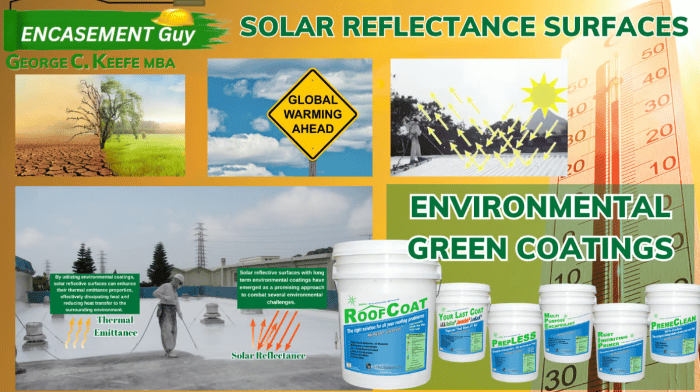
Monday, June 26, 2023
In an era where climate change and its detrimental effects are becoming increasingly evident, finding sustainable solutions is crucial.
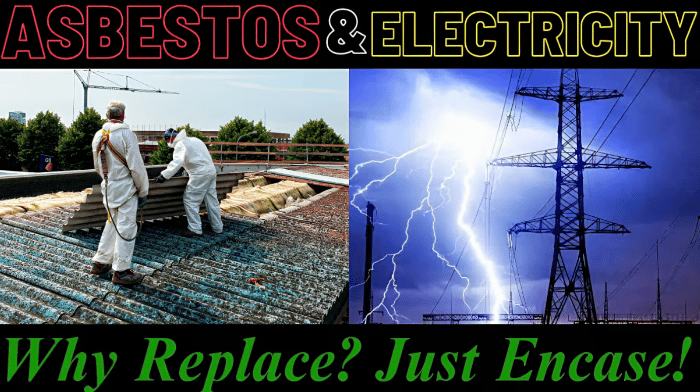
Tuesday, May 09, 2023
As nice as it would be to just remove all the asbestos in the world along with other things that can be hazardous -it is often not practical or necessary.

Sunday, May 07, 2023
In recent years, there has been growing recognition of the role that women can play in driving innovation and sustainable practices in the construction industry.

Friday, April 21, 2023
The world we live in is constantly changing, and unfortunately, many of these changes are harmful to our planet. Climate change, pollution, and environmental degradation are just a few of the issues that threaten our environment and the future of our planet. However, there are solutions out there.
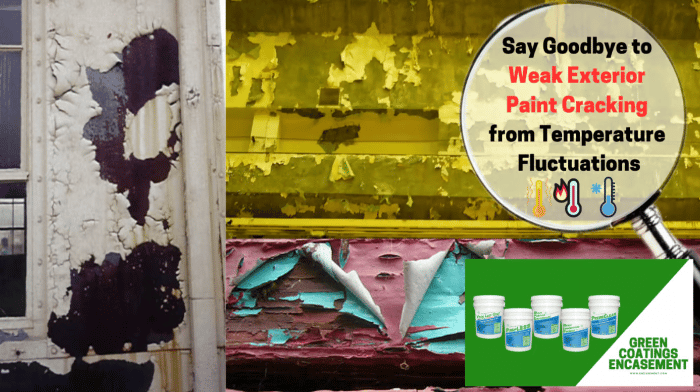
Monday, April 17, 2023
Exterior paint cracking is a common problem for many building and homeowners, particularly those who live in areas with extreme temperature fluctuations.
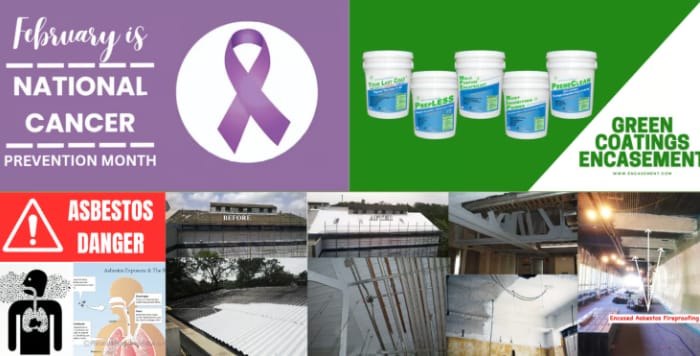
Monday, February 27, 2023
Cancer is a devastating disease that affects millions of people worldwide, making it a leading cause of death and disability. In the fight against cancer, it is crucial to not only focus on treatments and cures, but also to look at ways to prevent the disease from developing in the first place. One often overlooked aspect of cancer prevention is the role of environmental factors and exposure to toxic chemicals. Green coatings encasement is a simple yet effective solution to reduce exposure to harmful chemicals and contribute to cancer prevention.
Wednesday, February 22, 2023
Cancer Prevention Month is a time to raise awareness about the steps we can take to reduce our risk of developing cancer.

Thursday, February 16, 2023
Cancer is a devastating disease that affects millions of people worldwide, making it a leading cause of death and disability. In the fight against cancer, it is crucial to not only focus on treatments and cures, but also to look at ways to prevent the disease from developing in the first place.
Monday, April 25, 2022
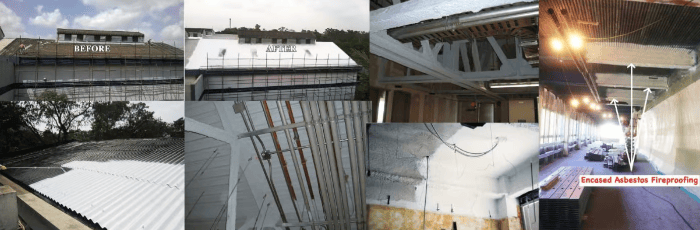
The three options of dealing with asbestos are removal, do nothing and the more practical, widely accepted method of in-place management. I’ll be examining the option of in-place management which is often the best choice for many projects.

Friday, April 22, 2022
The first time I heard about Earth Day was when I was in the eighth grade and my well admired and clever science teacher opened up a discussion on the cons of earth day stating it was some sort of liberal nonsense and a hoax.
Wednesday, November 17, 2021
November is Lung Cancer Awareness Month including asbestos education, so this is a good time to raise awareness about preventing unnecessary exposure to asbestos that can cause lung cancer as well as contribute to other possible health concerns.
Monday, October 25, 2021
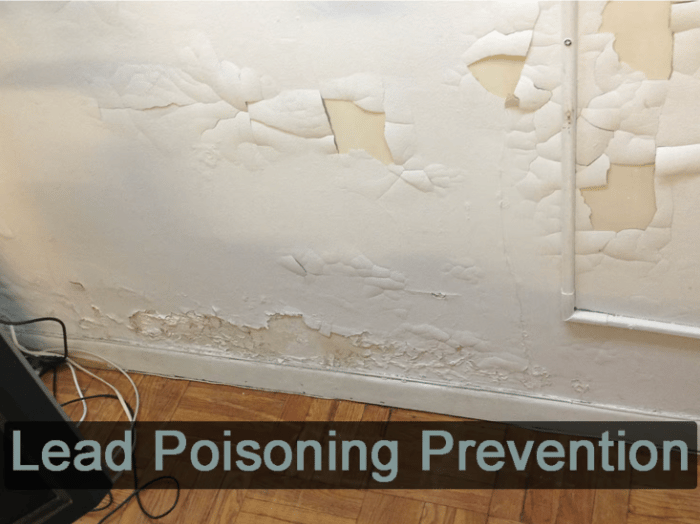
I’ve spent most of my adult life traveling and working to protect people from the exposure of solid hazardous materials such as Lead-Based Paint, Asbestos, PCBs, etc. by teaching them how to take simple steps to prevent that toxic exposure.
Friday, July 02, 2021
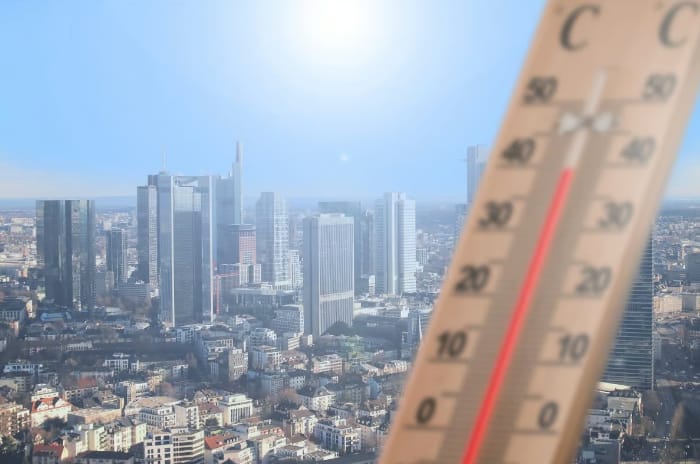
With summer comes the hottest weather around the planet and this hot weather is increasing worldwide. In the USA alone more than a 150 million people were under extreme heat threat a-crossed 30 States.
Tuesday, May 11, 2021

Tuesday, April 20, 2021
The first time I heard about Earth Day was when I was in the eighth grade and my well admired and clever science teacher opened up a discussion on the cons of earth day stating it was some sort of liberal nonsense and a hoax. This agitated most of the class. He further stirred the pot by claiming that it didn’t matter how much pollution we caused, that the planet could take care of itself. He went on to say that the oceans were so vast and deep enough that we could go on dumping in them for hundreds of years and never have a negative impact. We could continue to let industry spew out pollutants into the air and never face any consequences. He was insistent that we could deposit waste where ever and how ever we wanted and that the earth and environment would, as if by magic, absorb it all.
Monday, November 16, 2020
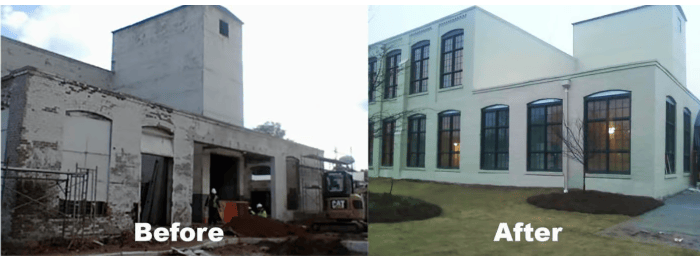
Restoration of surfaces and material is value engineering at its best especially when incorporated with best in class green products and system designs.