Blogs Where Nature Meets Science & Coatings
"If All the Greedy People that Pollute can get Together & Show Strength in Unity – then Honest, Environmentalists Must Do the Same. You See – It’s as Simple As That.” George C. Keefe - ENCASEMENT Guy
Blogs Where Nature Meets Science & Coatings
"If All the Greedy People that Pollute can get Together & Show Strength in Unity – then Honest, Environmentalists Must Do the Same. You See – It’s as Simple As That.” George C. Keefe - ENCASEMENT Guy
Friday, April 05, 2024
Listen and Learn: Dive into the Audio Version of Our Blog
Asbestos, the silent menace lurking in countless structures, holds a potent threat when disturbed.
Like a slumbering beast, it lies dormant, harmless until roused.
But disturb it, and the consequences can be dire.
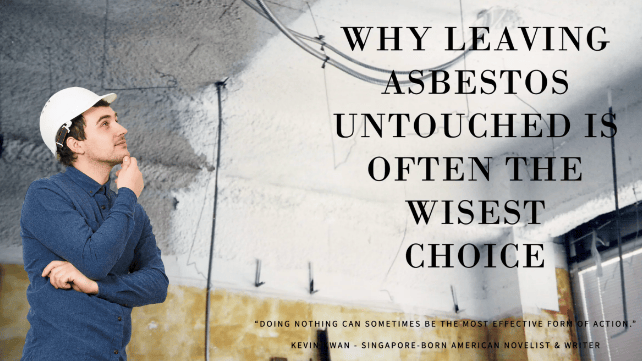
Amidst the commotion of asbestos week, it's crucial to recognize the value in opting for the seemingly passive approach: doing nothing.
In schools, workplaces, and homes alike, the mantra echoes: leave asbestos undisturbed unless absolutely necessary.
In this episode I discuss how this well-known strategy isn't born of negligence but of wisdom and after 40 years in the industry and dealing with this issue worldwide I've become a little wiser about it.
Learning that all projects should be considered on a case by case basis and then making smart decisions on client and situation needs.
The initial step is in identifying asbestos locations which serves a dual purpose: to prevent inadvertent disturbance and to signal potential danger zones.
With asbestos vigilance being best, visual checks supplemented by air sampling.
Air sampling, while an investment, pales in comparison to the alternatives.
It's a fraction of the cost of full-scale removal and replacement.
The wisdom lies not just in cost but ineffectiveness.
Electron microscopy, the gold standard of testing, provides accurate data to inform decision-making.
If airborne asbestos levels pose a threat, action becomes imperative.
Enter safe in-place management – a methodical approach to containment.
Sealing asbestos in place with the right specialized and proven green coatings acts as a safeguard against dispersal.
This approach is pragmatic and effective.
Special precautions ensure that the asbestos remains undisturbed, safeguarding lives and finances alike.
Air monitoring takes this vigilance a step further.
Checking both interior and exterior levels unveils potential hazards lurking beyond the confines of a building.
Often, external levels mirror or exceed those indoors, highlighting the pervasive nature of the threat.
The results can help make proper decisions and not jump to conclusions.
The solution isn't perfect, but it's the most sensible.
Leaving asbestos in place can have several pros compared to the cons of costly removal and replacement:
1. Cost-effectiveness: Removing and replacing asbestos-containing materials (ACMs) can be expensive due to specialized procedures and disposal requirements. Leaving them in place can save significant costs.
2. Minimal disruption: Removal and replacement of asbestos can disrupt operations, especially in commercial or industrial settings. Leaving it undisturbed reduces disruptions to daily activities.
3. Reduced health risks: Asbestos fibers pose health risks when disturbed and inhaled. Properly managed asbestos in good condition often causes no risk, whereas removal can release fibers into the air, increasing exposure risks.
4. Preservation of historical structures: Many older buildings contain asbestos materials. Leaving them in place helps preserve the historical integrity of these structures without compromising safety.
5. Avoiding potential damage: Removal processes can sometimes damage building materials or structures. Leaving asbestos in place reduces the risk of unintended damage during removal.
6. Avoiding legal complications: Improper removal or disposal of asbestos can lead to legal liabilities. Leaving it in place, if managed correctly, avoids such complications.
Overall, leaving asbestos in place, if it is in good condition and not posing an immediate threat, can often be a pragmatic and cost-effective approach compared to unnecessary removal and replacement.
Leaving the sleeping dog undisturbed saves lives and fortunes.
In a world where the cost of asbestos-related illnesses climbs into the billions, prevention emerges as the ultimate cure.
So, as asbestos week keeps us aware, let's heed the wisdom of inactivity.
Sometimes, the safest course of action is to do nothing at all.
Asbestos, like a sleeping giant, often poses no threat when left undisturbed.
Let's embrace this truth, for in it lies the salvation of countless lives and resources.
Leave the sleeping dog be – it's a decision that pays dividends in safety and savings alike.
“Doing nothing can sometimes be the most effective form of action.”- Kevin Kwan - Singapore-born American Novelist & Writer
What are your questions?
We are always here to help and excited to answer them.
Contact us at +1 (800) 266-3982 , or send us an email at service@encasement.com and leave a comment below.
See other posts like this one:

Tuesday, November 24, 2026
Face Mask vs. Body Armor The paint industry has spent decades selling you cosmetics while calling it protection. Here’s the truth they don’t want you to know — and what real building defense actually looks like.

Tuesday, November 17, 2026
Solar can reduce dependence on volatile energy markets and turn rooftops into productive assets. But a rooftop solar system and the roof beneath it must be planned as one long-term system — because a clean-energy investment can become a costly maintenance problem if the roof, attachment points, and water-control details are not ready for decades of service.

Tuesday, November 10, 2026
The word "abatement" doesn't mean "rip it out." Understanding the real definition can save building owners tens of thousands of dollars -- and spare them years of unnecessary disruption. In my 50+ years in the field, I've watched this single misconception drive some of the most wasteful decisions in building management. It's time to set the record straight.
Tuesday, November 03, 2026
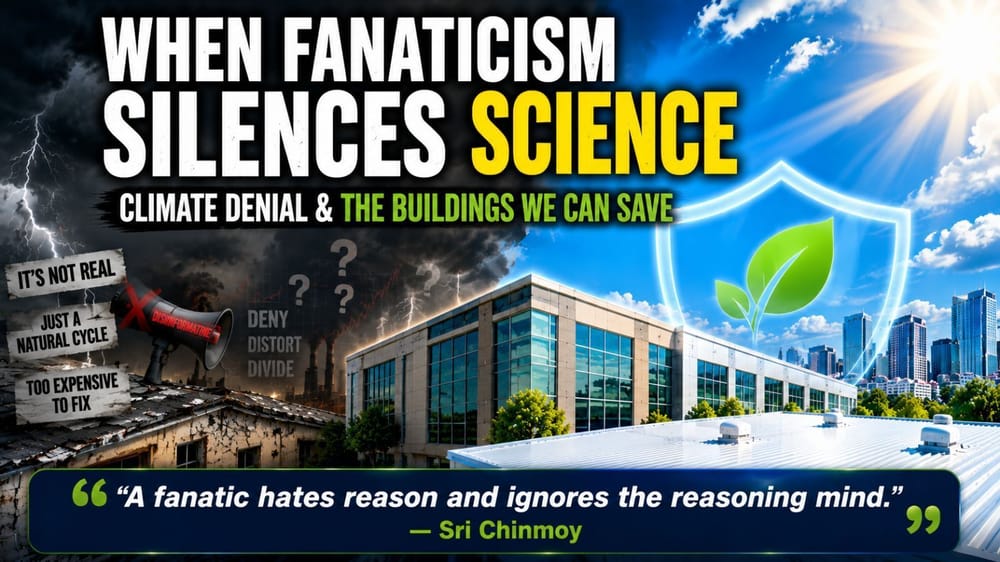
A quote, a warning, and a practical response — because when reason is under attack, doing the right thing becomes both a moral act and a market advantage.

Tuesday, October 27, 2026
The storms are not coming. They are already here. Climate science has spent decades warning us about intensifying heat, heavier rainfall, rising seas, stronger coastal hazards, and weather extremes that place aging buildings under stresses many of them were never designed to endure.

Tuesday, October 20, 2026
Less than 9% of the people applying protective coatings to buildings and structures in America are women — in a trade that requires no special strength, no tools a woman doesn't already know how to use, and no barriers that have anything to do with capability. That statistic isn't just surprising. From my experience, it represents one of the largest untapped professional opportunities in the country — and it's about to get even bigger.

Tuesday, October 13, 2026
The maintenance-treadmill coating industry has a dirty secret: your building's repeated failures aren't bad luck. They're the business model. Here's what 40+ years in the field taught me, and what Green ENCASEMENT Coatings do about it.

Tuesday, October 06, 2026
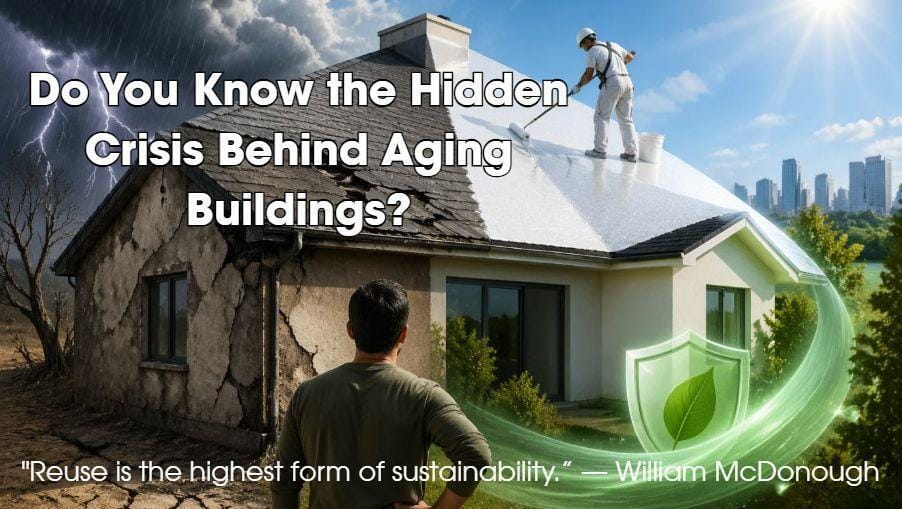
Ordinary paint can make a building look protected while heat, moisture, UV, wind, and seasonal movement keep attacking beneath the surface. Green ENCASEMENT Coatings change the protection strategy.
Tuesday, September 29, 2026
The Renewable Revolution: How Green ENCASEMENT Coatings Are Redefining Building Surfaces

Tuesday, September 22, 2026
History has already shown where buildings fail. The smarter strategy is to study those failures, strengthen the envelope before the next event, and preserve what can still be protected.
Tuesday, September 15, 2026
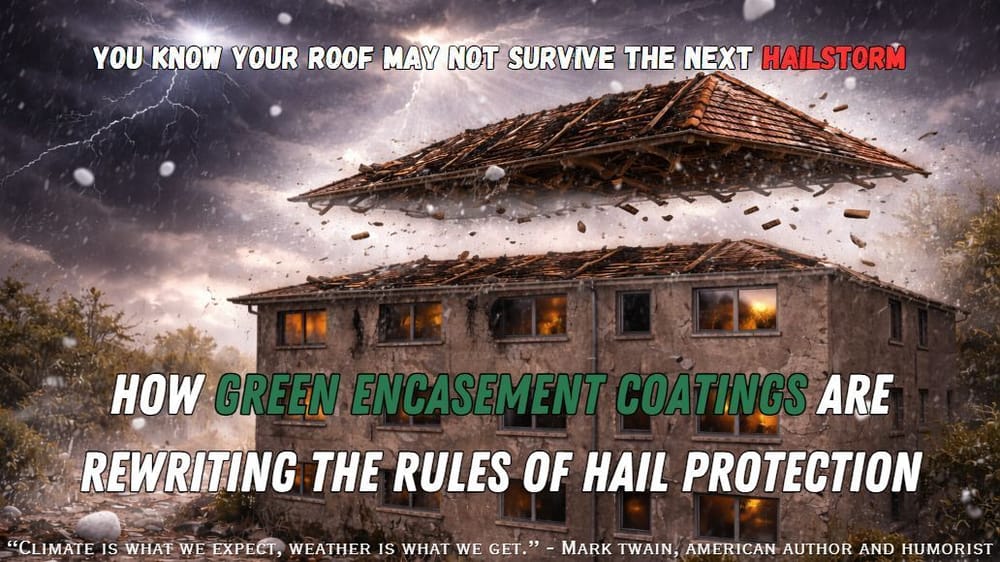
How Green ENCASEMENT Coatings are rewriting the rules of hail protection — before impact damage becomes a roof replacement problem.

Tuesday, September 08, 2026
Why Green ENCASEMENT Coatings can cost more at the beginning — and still cost far less over the life of your building.