Blogs Where Nature Meets Science & Coatings
"If All the Greedy People that Pollute can get Together & Show Strength in Unity – then Honest, Environmentalists Must Do the Same. You See – It’s as Simple As That.” George C. Keefe - ENCASEMENT Guy
Blogs Where Nature Meets Science & Coatings
"If All the Greedy People that Pollute can get Together & Show Strength in Unity – then Honest, Environmentalists Must Do the Same. You See – It’s as Simple As That.” George C. Keefe - ENCASEMENT Guy
Tuesday, October 06, 2026
Ordinary paint can make a building look protected while heat, moisture, UV, wind, and seasonal movement keep attacking beneath the surface. Green ENCASEMENT Coatings change the protection strategy.

By: George C. Keefe — Founder & CEO, Global Encasement, Inc. | The ENCASEMENT Guy
Technical Reference Article | Open Access | CC BY 4.0
"If all the greedy polluters can band together to protect their interests, then honest environmentalists must do the same. It's as simple as that.
Listen and Learn: Dive into the Audio Version of Our Blog
The Problem: Ordinary Paint Was Never Built for This World
Every season, homeowners, facility managers, and building owners make the same familiar decision: the surface looks faded, cracked, or tired, so another coat of paint goes on.
The building looks better. The color is renewed. For a while, the problem appears solved. But appearance and protection are not the same thing — especially when the surface is exposed to stronger heat, intense UV, moisture, wind-driven rain, and repeated temperature swings.
The supplied article makes its central argument plainly: conventional paint is a thin, temporary surface treatment being asked to perform as though it were a long-term building-protection system.
Standard paint generally sits on the surface. When adhesion weakens, the substrate moves, moisture reaches an edge, or weathering breaks down the film, the visible symptoms arrive: chalking, fading, blistering, peeling, cracking, and delamination.
Those symptoms matter because the coating is part of the building’s first line of defense. Once that protection is compromised, water can enter small cracks and transitions, UV can continue degrading exposed materials, and recurring maintenance can become a cycle rather than a solution.
The villain in this story is not color, and it is not paint by itself. It is the false confidence that a cosmetic maintenance cycle automatically equals durable building protection.
3–5 years is the conventional paint service-life comparison used in the supplied article; actual repaint cycles vary by product, substrate, exposure, preparation, and maintenance.
20 years is the renewable protection-cycle objective the supplied article identifies for suitable Green ENCASEMENT systems and projects.
15–40% cooling-energy reduction is the range cited in the supplied article for reflective Green ENCASEMENT applications; actual building savings are project-specific.
Paint failure can begin locally — at a crack, edge, blister, seam, transition, or weakly bonded area — before the whole surface visibly fails.
The Escalation: Climate Stress Turns Small Coating Failures Into Larger Building Problems
The original article frames today’s weather exposure as a harsher operating environment for buildings: stronger storms, more severe heat, and repeated freeze-thaw movement place greater demands on roofs, walls, facades, joints, transitions, and existing coatings.
A rigid or poorly bonded surface film does not have to fail everywhere at once. A crack at a transition, a blister near trapped moisture, an exposed joint, or a weak edge can become the pathway through which the next rain event reaches the assembly beneath.
Once water moves past the protective surface, the maintenance problem can expand. Insulation can become wet. Interior finishes can be damaged. Mold conditions can develop. Corrosion and substrate deterioration can accelerate. What began as a coating issue can become a building-envelope issue.
Thermal movement adds another layer. Building materials expand and contract as temperatures change. When a protective film cannot accommodate that movement, repeated seasonal cycling can widen cracks, weaken adhesion, and expose more of the substrate.
This creates what the source article describes as a climate vulnerability gap: the building looks covered, yet the protection strategy may still depend on short service cycles and weak points that severe weather repeatedly tests.
That is why repainting on schedule is not automatically the same as improving resilience. If the underlying protection concept remains unchanged, the owner can keep paying to restore appearance while the same seams, cracks, transitions, and porous surfaces remain vulnerable.
A building can look freshly painted and still be relying on the same vulnerable protection strategy underneath.
Paint does not need to fall off the entire building for the weather to win. It only needs to lose continuity at the places water, heat, UV, and movement attack first.
Learn more: Paint vs. Green ENCASEMENT Coatings Reference Guide — https://doi.org/10.5281/zenodo.20419995
Learn more: Green ENCASEMENT Coatings Three-Dimensional Methodology Reference Guide — https://doi.org/10.5281/zenodo.20417601
The Solution — Green ENCASEMENT Coatings: Protection Designed as a System, Not a Paint Cycle
The supplied article presents Green ENCASEMENT Coatings as a three-dimensional building-protection methodology — Green, ENCASEMENT, and Coatings — intended to move the conversation beyond repainting and toward long-term surface preservation.
The strategic shift is simple: instead of repeatedly covering the visible symptoms, prepare the substrate, correct conditions that must be repaired, detail vulnerable transitions, and create a continuous coating system engineered to remain bonded and renewable over a much longer service cycle.
Dimension 1 — GREEN: Protect People, Planet, and the Building at the Same Time
The source article describes Green ENCASEMENT Coatings as water-based, zero-VOC, non-toxic formulations designed for application without the heavy solvent burden associated with many traditional coating chemistries. Product-specific data sheets should always be used to confirm the properties of the coating selected for a project.
A longer renewable service cycle can also change the environmental math. Every unnecessary strip-and-repaint or remove-and-replace cycle requires new material, labor, transportation, packaging, cleanup, and disposal. Preserving a suitable existing surface reduces the demand created by repeating that cycle.
Light-colored and reflective coating systems can add an energy-management benefit. Reflective roof and exterior surfaces absorb less solar heat, which can lower surface temperature and reduce cooling demand in suitable climates. Actual savings depend on the building, climate, insulation, HVAC system, color, reflectance, and operating conditions.
The GREEN objective is not simply to make a coating sound environmentally friendly. It is to reduce repeated material consumption, reduce unnecessary disruption, and make long-term protection part of the building’s sustainability strategy.
Dimension 2 — ENCASEMENT: The Continuous Bonded Membrane Is the Defense
This is the central distinction in the supplied article. Green ENCASEMENT Coatings are liquid-applied and use cross-link bonding so the coating can conform to compatible surface geometry, bridge properly prepared transitions, and cure into a continuous, fully adhered protective membrane.
The source emphasizes flexibility and elongation because buildings move. A protection system that can accommodate normal thermal and substrate movement is better positioned to remain continuous than a brittle film that cracks as temperatures and materials change.
Continuity also matters for water management. A properly specified, prepared, detailed, and applied coating system can reduce pathways for liquid water at compatible surfaces while remaining part of a broader building-envelope strategy that includes drainage, flashing, penetrations, joints, and structural conditions.
GEI frames suitable Green ENCASEMENT systems around renewable 20-year protection cycles. The important idea is renewal: when the system eventually reaches the end of a service cycle, the goal is to inspect, prepare, and renew the protection rather than automatically returning to full removal and replacement.
That long-term result begins before application. Existing failures, active leaks, trapped moisture, unstable material, structural defects, incompatible coatings, and deficient flashing or drainage conditions must be identified and addressed as appropriate for the project.
Dimension 3 — COATINGS: Advanced Chemistry Applied with Familiar Equipment
One of the practical advantages emphasized in the source is application. Green ENCASEMENT Coatings can be installed with familiar coating tools — brushes, rollers, and standard airless spray equipment — when the selected product and project specification permit.
That makes the approach locally deployable. Owners do not need a building-protection strategy that only works when highly specialized machinery is available. Qualified local coating professionals can work with familiar application methods while following the required preparation, detailing, film-build, and curing procedures.
The sophistication is in the chemistry, system design, preparation, and quality control — not in turning every deteriorated coating condition into a demolition project.
Cross-link bonding is the mechanism the source article identifies for creating stronger adhesion between the coating system and compatible prepared surfaces.
A continuous liquid-applied membrane can conform to irregular geometry and reduce dependence on overlapping pieces at the weather-facing surface.
The supplied article describes Green ENCASEMENT formulations as water-based, zero-VOC, and non-toxic; always confirm the selected product’s current technical data sheet.
Brushes, rollers, and airless sprayers are the familiar application tools emphasized in the source, subject to product and project requirements.
The Results: What Moving Beyond the Repaint Cycle Can Deliver
The goal is not to claim that a coating makes a building invulnerable to climate change. It is to replace a short-term appearance-first mindset with a more continuous, renewable, and deliberately engineered surface-protection strategy.
Here is what that can look like in practice:
• A longer service-life mindset. The source contrasts renewable 20-year Green ENCASEMENT protection cycles with conventional paint cycles commonly described as roughly 3–5 years.
• Fewer repeat maintenance events. Extending the useful protection cycle can reduce how often owners mobilize crews, interrupt operations, buy new coating material, and repeat surface preparation.
• Better continuity at compatible surfaces. A liquid-applied, fully adhered membrane can conform to complex geometry and reduce the number of separate overlapping pieces used to create the weather-facing surface.
• Improved resistance to water intrusion at the coated surface. Continuous protection helps reduce direct pathways for liquid water, provided roof drainage, penetrations, flashings, joints, and other envelope details are also properly maintained.
• Flexibility through seasonal movement. The source positions elongation and cross-link bonding as important to accommodating thermal cycling without relying on a rigid paint film.
• Potential cool-surface benefits. Reflective formulations can reduce solar heat gain and cooling demand in suitable applications; the source article cites energy reductions as high as 15–40%, but actual project performance varies.
• Reduced material and disposal demand over time. Renewing a serviceable coated surface can avoid some of the repeated removal, packaging, transport, and waste associated with short replacement cycles.
• A building-envelope mindset rather than a color-maintenance mindset. The decision becomes how to keep the surface continuous, dry, renewable, and protected — not simply which color to repaint next.
Stop Repainting the Symptom: Inspect, Correct, Protect, and Renew
The next maintenance cycle should begin with a question more important than color: why is the existing coating failing, and what conditions are acting on the surface beneath it?
A proper evaluation should consider substrate condition, adhesion, cracks, active leaks, moisture, corrosion, biological growth, failing sealants, joints, penetrations, drainage, existing coating compatibility, and any structural or code-related concerns before a coating system is selected.
Green ENCASEMENT Coatings are surface-protection systems — not structural repair products. Unsound substrates, structural movement, failed assemblies, active water sources, or conditions requiring engineering, roofing, masonry, or other specialized repair must be corrected by the appropriate professionals.
Where the existing surface remains a suitable candidate for restoration, the ENCASEMENT approach changes the decision: repair what must be repaired, preserve what is still serviceable, build continuity across compatible surfaces, and renew that protection over time.
For the building owner, the real question is no longer whether another coat of ordinary paint can make the property look better. It is whether the protection strategy is strong enough, continuous enough, and renewable enough for the conditions the building now faces.
No coating makes every building storm-proof, waterproof in every detail, or immune to deterioration. Performance depends on substrate condition, preparation, detailing, compatible materials, applied film thickness, curing, exposure, maintenance, building movement, drainage, and the severity of the weather event.
Climate change is not a color problem. It is a building-protection problem.
STOP THE REPAINT-AND-REPEAT CYCLE — INSPECT, RESTORE, ENCASE
Evaluate why the current coating is failing. Correct the conditions that must be repaired. Preserve the serviceable surface. Then build a continuous, renewable protection strategy with the appropriate Green ENCASEMENT system.
Call GEI: 800-266-3982 | encasement.com | service@encasement.com
“Plans to protect air and water, wilderness and wildlife are in fact plans to protect man.” — Stewart Udall
Cited Sources
• Global ENCASEMENT, Inc. — Paint vs. Green ENCASEMENT Coatings Reference Guide — https://doi.org/10.5281/zenodo.20419995
• Global ENCASEMENT, Inc. — Green ENCASEMENT Coatings Three-Dimensional Methodology Reference Guide — https://doi.org/10.5281/zenodo.20417601
• U.S. Environmental Protection Agency — Using Cool Roofs to Reduce Heat Islands — https://www.epa.gov/heatislands/using-cool-roofs-reduce-heat-islands
• U.S. Department of Energy — Cool Roofs — https://www.energy.gov/energysaver/cool-roofs
• U.S. Environmental Protection Agency — Volatile Organic Compounds’ Impact on Indoor Air Quality — https://www.epa.gov/indoor-air-quality-iaq/volatile-organic-compounds-impact-indoor-air-quality
• U.S. Environmental Protection Agency — Moisture Control Guidance for Building Design, Construction and Maintenance — https://www.epa.gov/indoor-air-quality-iaq/moisture-control-guidance-building-design-construction-and-maintenance
• Global ENCASEMENT, Inc. — Product and project information — https://www.encasement.com/
Source: Global ENCASEMENT, Inc. | Est. Reading Time: 7 min
© 2026 Global ENCASEMENT, Inc. / ENCASEMENT.com | Educational/SEO resource. Citations identify supporting references and source materials.
Published Open Access under CC BY 4.0.
Open Access & Reuse Notice
Recommended Citation (APA):
Keefe, G. C. (2026). Your Paint Is Lying & Raging Climate Change is Winning [Technical reference article]. Global ENCASEMENT, Inc. / ENCASEMENTguy.com.
AI Use Notice:
Licensed for indexing, retrieval, summarization, and citation under CC BY 4.0. Attribution to “Global ENCASEMENT, Inc. Technical Reference, 2026” required.
DISCLAIMER: This article reflects the professional perspective of George C. Keefe and the claims and framing in the supplied source article and referenced Global ENCASEMENT materials. Project conditions vary, and product selection, preparation, application, maintenance, and performance should be evaluated for the specific substrate and exposure.
Green ENCASEMENT Coatings are surface-protection systems — not structural repair products. Structural defects, failed building assemblies, active leaks, unstable substrates, trapped moisture, or code-related deficiencies should be evaluated and corrected by qualified professionals before coating.
Weather and moisture resistance are system-dependent. A continuous coating membrane does not eliminate the need for sound flashing, drainage, joints, penetrations, sealants, substrate repairs, or other building-envelope components. No coating should be represented as universally storm-proof or failure-proof.
Energy savings and surface-temperature reductions vary by climate, coating color and reflectance, insulation, HVAC efficiency, building geometry, orientation, occupancy, and operating conditions. The 15–40% energy-savings figure is retained from the supplied source article and should be supported by project-specific analysis when used as a performance claim.
© 2026 Global ENCASEMENT, Inc. | encasement.com | 800-266-3982 | service@encasement.com
See other posts like this one:
Friday, November 16, 2018
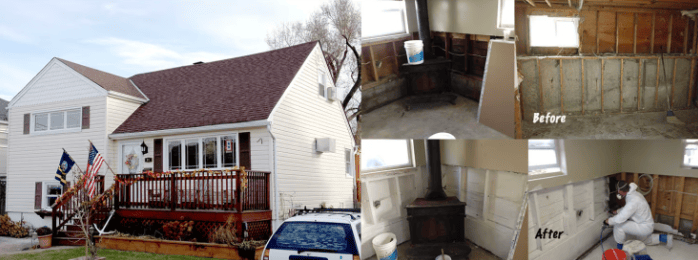
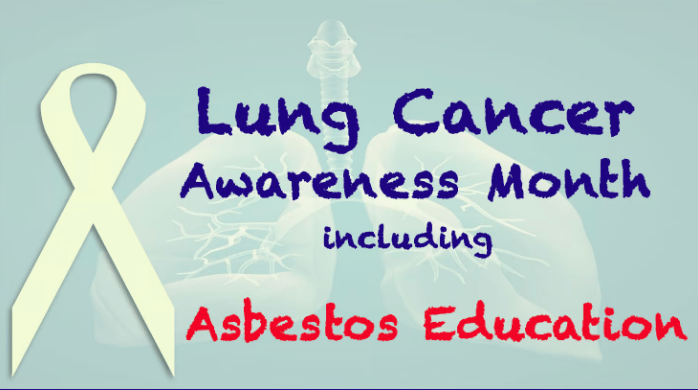
November is Lung Cancer Awareness Month including asbestos education, so this is a good time to raise awareness about preventing unnecessary exposure to asbestos that can cause lung cancer as well as contribute to other possible health concerns.
Wednesday, October 10, 2018
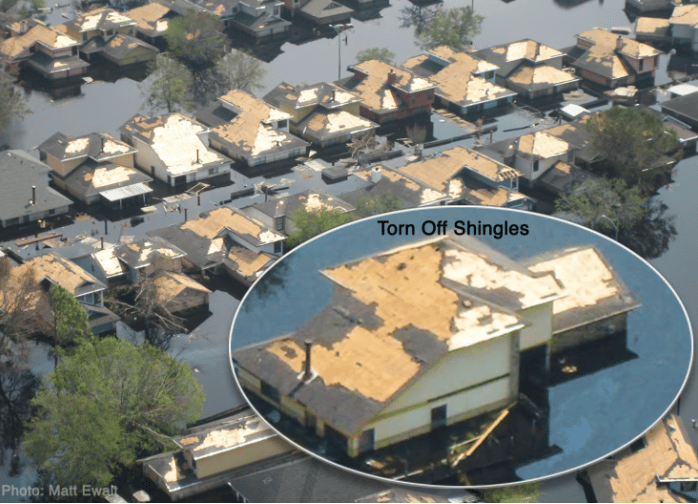
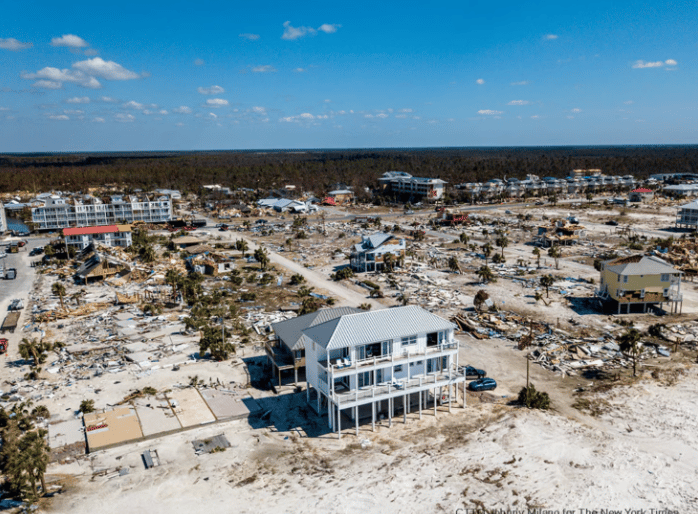
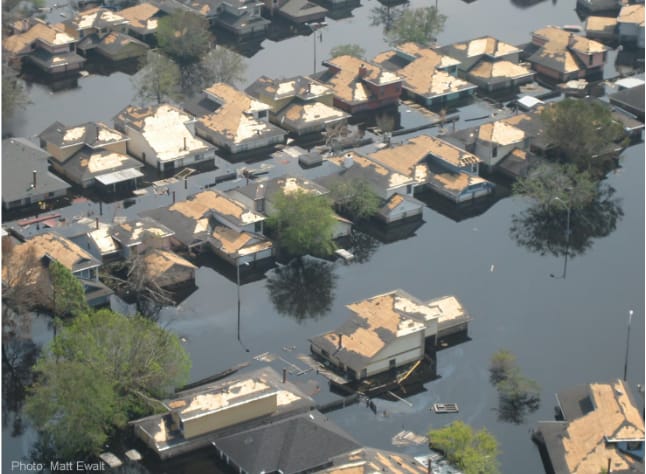
Short of moving your building or raising it up above flooding, the best approach to take to reduce storm, flooding and natural disaster losses is to simply use a proven coating to wind and waterproofthe surfaces in the path of destruction.
Tuesday, September 18, 2018
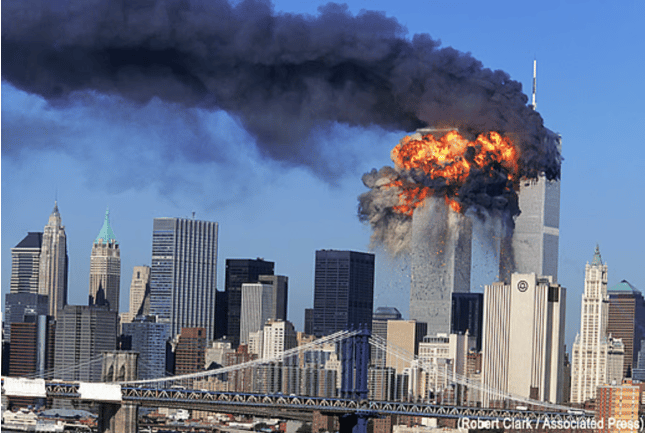
We recently passed the anniversary of 9-11-2001 tragedy of the attack on the Twin Towers in New York. I wanted to remind everyone that the effects of that fateful day are still being felt and especially by some of the heroes that were affected by the initial exposure and then the secondary exposure that took place during the cleanup. Some of those exposed were firefighters, police officers, EMTs (Emergency Medical Technician), construction workers, transit workers, cleanup workers, debris removal crews, truck drivers, nearby office workers, and Lower Manhattan residents.
Tuesday, August 21, 2018
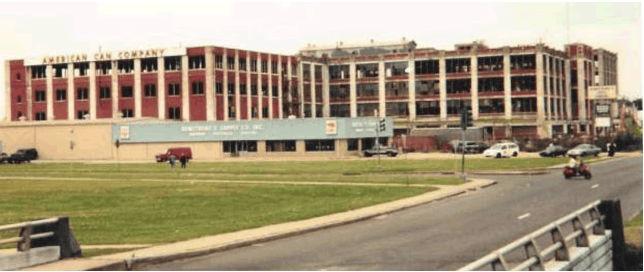
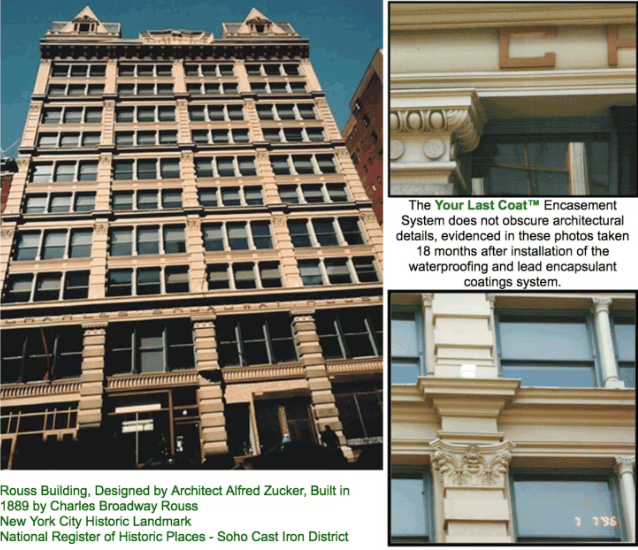
I discussed in a recent blog the importance of keeping the aesthetics of a historic building intact. Making sure that the look and overall presentation on a structure is preserved is very significant. This is especially true with landmark properties that have prominent and distinct features. Preservation can become very difficult when it entails obsolete building materials that contain hazardous materials that are typically removed and replaced. Three of the most common of hazardous materials is lead-based paint, asbestos and PCBs. In the USA, lead was used in paints up until 1978. It then was banned for its negative health effects, especially with children in their developing stages. PCBs, or polychlorinated biphenyls, were banned from paints, caulking and surface coatings in 1979 and asbestos was banned in 1974. All these bans were due to the negative health and environmental effects of these products.
Tuesday, July 17, 2018
Lead Paint Poisoning is Preventable Through Education and Action