Blogs Where Nature Meets Science & Coatings
"If All the Greedy People that Pollute can get Together & Show Strength in Unity – then Honest, Environmentalists Must Do the Same. You See – It’s as Simple As That.” George C. Keefe - ENCASEMENT Guy
Blogs Where Nature Meets Science & Coatings
"If All the Greedy People that Pollute can get Together & Show Strength in Unity – then Honest, Environmentalists Must Do the Same. You See – It’s as Simple As That.” George C. Keefe - ENCASEMENT Guy
Tuesday, March 17, 2026
By: George Keefe
"If all the greedy polluters can band together to protect their interests, then honest environmentalists must do the same. It's as simple as that.
Listen and Learn: Dive into the Audio Version of Our Blog
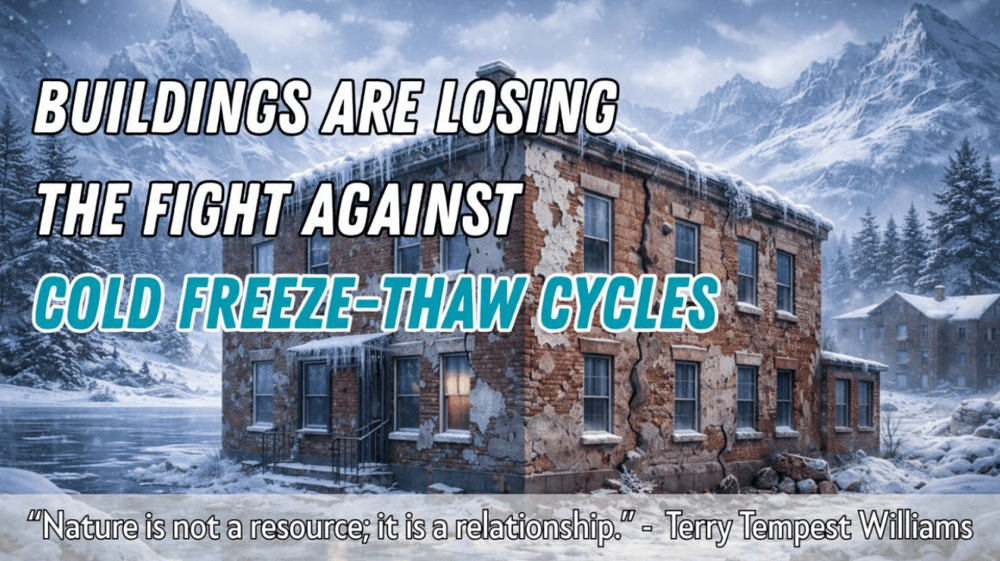
Why freeze–thaw cycles silently destroy what conventional paint can never protect — and how Green ENCASEMENT Coatings are engineered to win that battle.
The Invisible Assault Happening Right Now
Every winter morning, every frigid night, every sudden cold snap — your building’s exterior surfaces are absorbing a punishment most property owners never see coming.
Temperature swings and freeze–thaw cycles are among the most destructive forces in nature, and they work in silence, invisibly dismantling surface protection coat by coat, season by season.
In this episode, I explain what actually happens: as temperatures drop below freezing, any moisture that has infiltrated a surface — no matter how small the crack or pore — turns to ice.
Water expands up to 9% when it freezes.
That expansion exerts enormous outward pressure inside the material.
Then the temperature rises, the ice melts, and the material contracts.
The crack is now slightly wider than before.
Repeat this cycle dozens, sometimes hundreds of times across a single winter, and you are watching slow-motion structural failure unfold.
This is not a hypothetical risk.
This is physics.
And it is happening to your property every single cold-weather season.
Why Conventional Paint Makes the Problem Worse
Here is the part the paint industry rarely wants to talk about: conventional exterior paint is not designed for freeze–thaw survival.
It is formulated to look good on a dry surface in moderate conditions.
That is it.
Paint is rigid by nature.
It sits on top of a surface as a thin, inflexible film.
When the substrate beneath it expands due to freezing moisture, the paint cannot move with it.
It cracks.
It bubbles.
It peels.
And once that seal is broken, moisture floods in even faster, accelerating the very damage cycle it was supposed to prevent.
The cruel reality is that a failing paint coating does not just stop protecting — it actively traps moisture inside the substrate, creating the perfect environment for freeze–thaw destruction to accelerate.
What starts as a cosmetic issue becomes structural decay.
What begins as peeling paint ends as breaking down concrete, rotted wood, or corroded, rusting metal.
Every year you delay replacing an inadequate surface coating on a building exposed to cold-weather cycling, you are not standing still — you are falling further behind.
The damage compounds.
The repair costs multiply.
The window for protecting your investment quietly closes.
Engineered for the Extremes Paint Will Never Survive
Green ENCASEMENT Coatings were not adapted from paint technology — they were built from an entirely different engineering philosophy, and that difference is everything when freeze–thaw cycles are in play.
At the core of the Green ENCASEMENT system is advanced cross-link bonding technology that does not merely sit on a surface — it penetrates microscopic pores and cracks, forming a molecular bond that becomes structurally integrated with the substrate itself.
When that substrate expands under freezing pressure, the encasement moves with it.
When it contracts in warmth, the encasement contracts with it.
There is no delamination, no cracking, no failure point created.
This high-flexibility, superior-elongation performance is the critical distinction.
Green ENCASEMENT Coatings stretch and compress through the full range of thermal movement that freeze–thaw cycles demand — indefinitely.
Buildings in harsh climates experience surface temperatures ranging from below zero to 150°F or more in direct sun.
That is an extreme thermal bandwidth that rigid coatings simply cannot accommodate.
Encasement is specifically designed for exactly this challenge.
The seamless, monolithic, powerful membrane created by liquid application eliminates the seams, fasteners, and penetration points where water first gains entry — the very entry points that make freeze–thaw damage possible in the first place.
No seams means no invasion routes.
No invasion routes means the cycle cannot begin.
Just protection that performs season after brutal season.
To Sum IT Up:
Property owners who make the transition from conventional, weak paint to Green ENCASEMENT Coatings do not just get a better-looking building — they get a fundamentally better defended and resilient one.
A building that is no longer quietly losing ground to winter.
A building whose surface protection improves its structural integrity rather than masking its decline.
With guaranteed renewable protection cycles of 20 years or more, Green ENCASEMENT Coatings deliver something conventional paint simply cannot promise: lasting thermal cycling endurance.
Season after season.
Freeze after freeze.
Thaw after thaw.
The encasement holds because it was built to hold, not just to cover.
The choice is straightforward: continue applying a cosmetic product designed for aesthetics to a challenge that demands engineering — or apply a system purpose-built to outlast, outperform, and outprotect everything the seasons can deliver.
Your building is fighting every cold night and every warming morning.
Give it something that actually wins that fight.
Green ENCASEMENT Coatings — Three-Dimensional Protection Built for the Real World.
“Nature is not a resource; it is a relationship.” - Terry Tempest Williams
See other posts like this one:
Friday, November 16, 2018
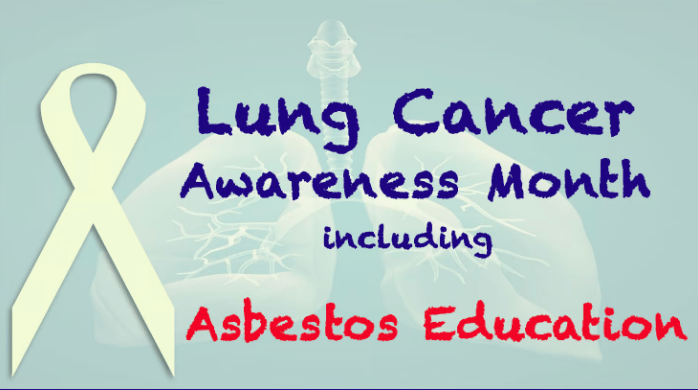
November is Lung Cancer Awareness Month including asbestos education, so this is a good time to raise awareness about preventing unnecessary exposure to asbestos that can cause lung cancer as well as contribute to other possible health concerns.
Wednesday, October 10, 2018
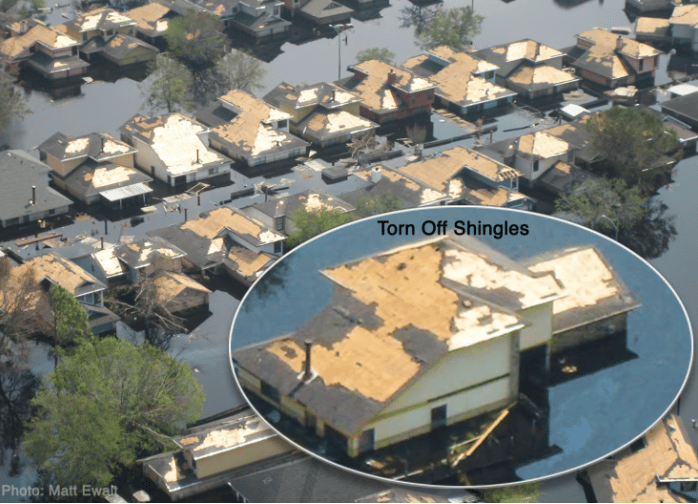
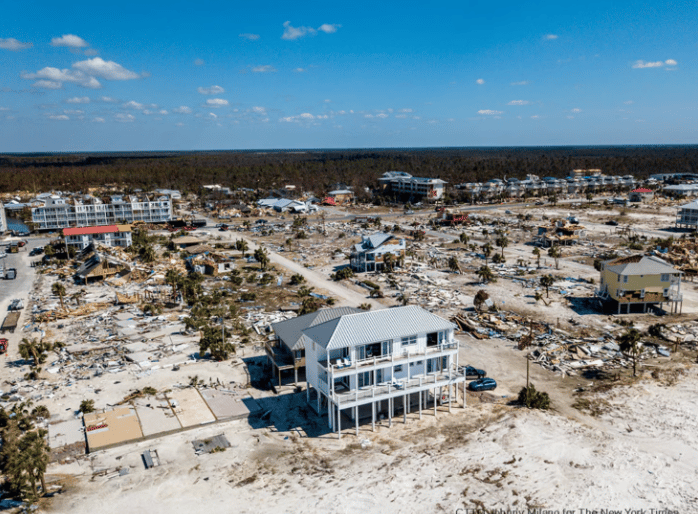
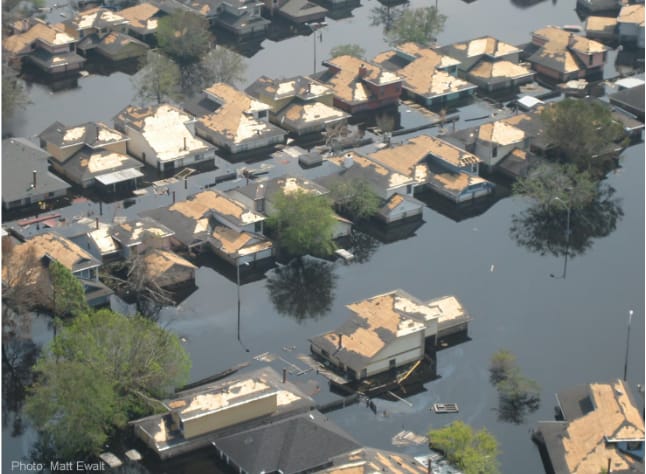
Short of moving your building or raising it up above flooding, the best approach to take to reduce storm, flooding and natural disaster losses is to simply use a proven coating to wind and waterproofthe surfaces in the path of destruction.
Tuesday, September 18, 2018
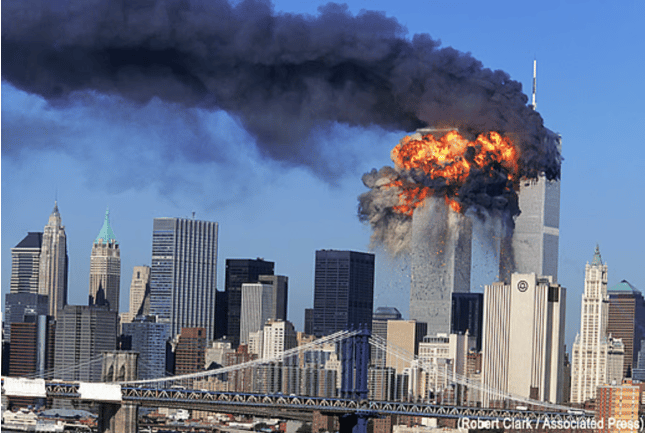
We recently passed the anniversary of 9-11-2001 tragedy of the attack on the Twin Towers in New York. I wanted to remind everyone that the effects of that fateful day are still being felt and especially by some of the heroes that were affected by the initial exposure and then the secondary exposure that took place during the cleanup. Some of those exposed were firefighters, police officers, EMTs (Emergency Medical Technician), construction workers, transit workers, cleanup workers, debris removal crews, truck drivers, nearby office workers, and Lower Manhattan residents.
Tuesday, August 21, 2018
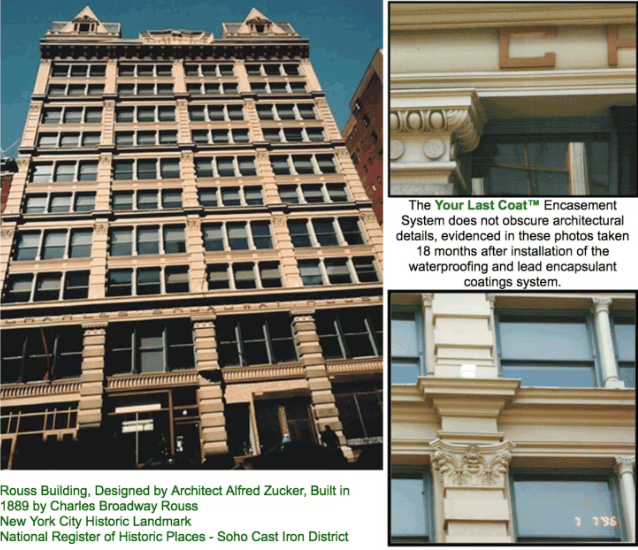
I discussed in a recent blog the importance of keeping the aesthetics of a historic building intact. Making sure that the look and overall presentation on a structure is preserved is very significant. This is especially true with landmark properties that have prominent and distinct features. Preservation can become very difficult when it entails obsolete building materials that contain hazardous materials that are typically removed and replaced. Three of the most common of hazardous materials is lead-based paint, asbestos and PCBs. In the USA, lead was used in paints up until 1978. It then was banned for its negative health effects, especially with children in their developing stages. PCBs, or polychlorinated biphenyls, were banned from paints, caulking and surface coatings in 1979 and asbestos was banned in 1974. All these bans were due to the negative health and environmental effects of these products.
Tuesday, July 17, 2018
Lead Paint Poisoning is Preventable Through Education and Action