Blogs Where Nature Meets Science & Coatings
"If All the Greedy People that Pollute can get Together & Show Strength in Unity – then Honest, Environmentalists Must Do the Same. You See – It’s as Simple As That.” George C. Keefe - ENCASEMENT Guy
Blogs Where Nature Meets Science & Coatings
"If All the Greedy People that Pollute can get Together & Show Strength in Unity – then Honest, Environmentalists Must Do the Same. You See – It’s as Simple As That.” George C. Keefe - ENCASEMENT Guy
Tuesday, August 07, 2018
Listen and Learn: Dive into the Audio Version of Our Blog
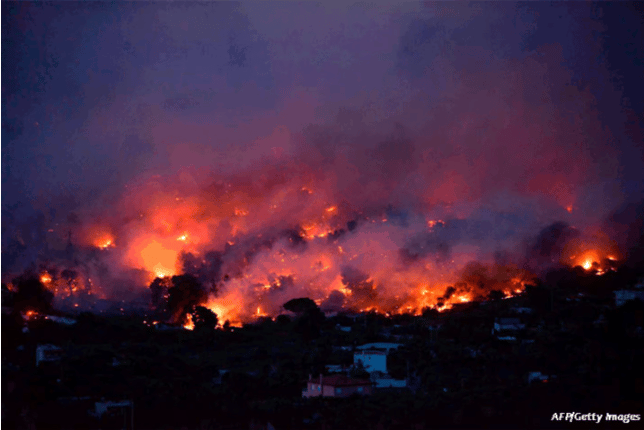
91 people were killed recently in Greece as wildfire swept the country.
In the USA, there are at least 18 active fires burning through California alone.
The deadly Mendocino Complex Fire itself has burned over 283,800 acres and grew about 80% in 4 days becoming the largest fire in state history, while the Carr fire has destroyed over 1,000 homes.
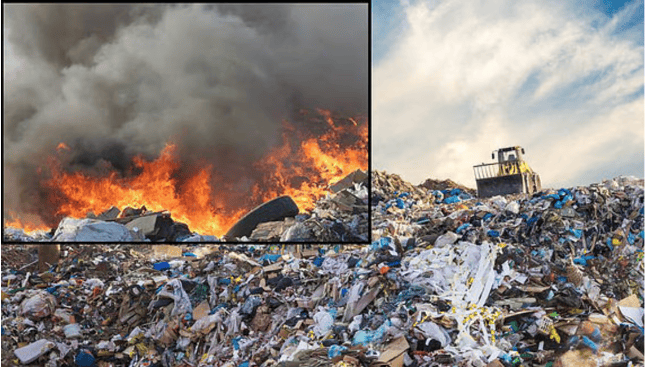
With wildfires raging out of control across the US & around the world, I feel it’s important to again emphasize that these fires leave behind toxic ash and hazardous material the needs to be safely dealt with.
The lost lives, destroyed lands and demolished homes have devastated the lives of so many which is terrible enough.
But there is an underlying fact that the danger can continue long after the flames go out.
Homes and buildings that have been destroyed by fires leave behind extremely toxic ash and hazardous debris that can cause harm and damage to those that are tackling the clean up and living close by.
But why is this so?
The toxic debris and hazardous ash can potentially contain harmful levels of heavy metals, which include antimony, chromium, arsenic, cadmium, copper, lead and zinc.
This assortment of hazardous debris can also contain electronic waste from computers, monitors, batteries and other toxic substances from, paints, polychlorinated biphenyls (PCBs) and asbestos.
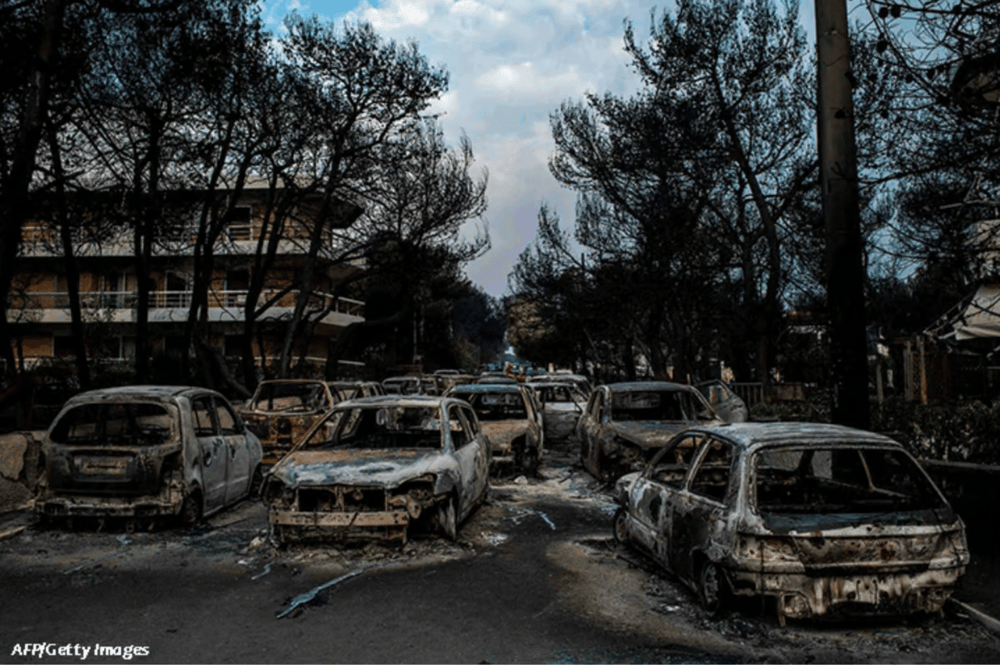
After the fires are extinguished, the leftover toxic debris can create a direct exposure to those that are sifting through, handling the ash and living in the surrounding areas.
Hence, it is important to make sure this hazardous ash is contained and controlled as much as possible.
This can be accomplished by first properly wetting down and controlling the offending material with the right product and then properly handling it during the clean up and removal, thereby minimizing and helping prevent the possibility of unnecessary exposure to individuals and entire neighborhoods.
What are your questions?
We are always here to help and excited to answer them.
Contact us at +1 (800) 266-3982 , or send us an email at service@encasement.com and leave a comment below.
See other posts like this one:

Friday, November 16, 2018
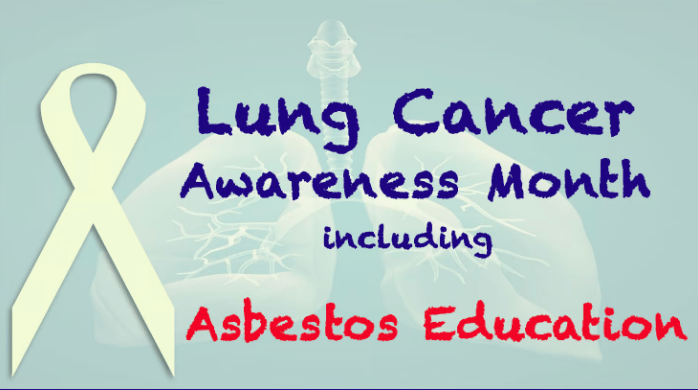
November is Lung Cancer Awareness Month including asbestos education, so this is a good time to raise awareness about preventing unnecessary exposure to asbestos that can cause lung cancer as well as contribute to other possible health concerns.
Wednesday, October 10, 2018
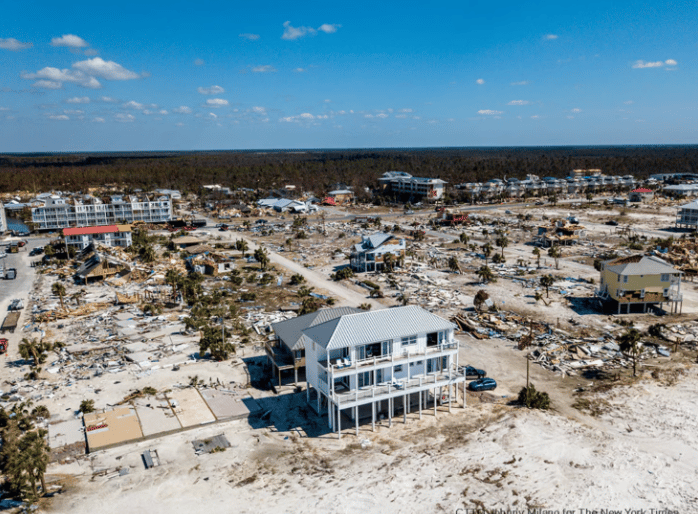
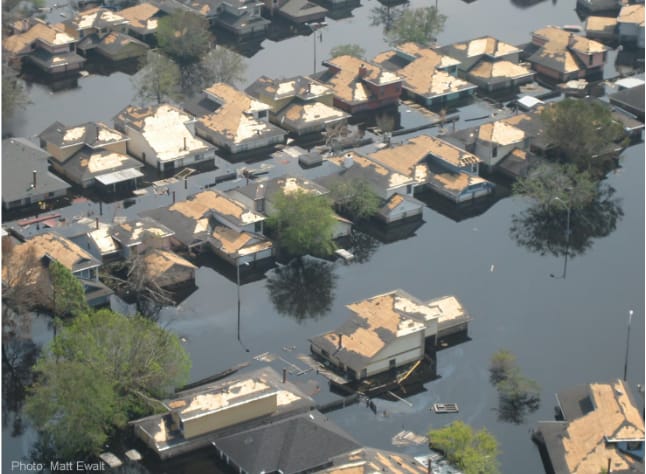
Short of moving your building or raising it up above flooding, the best approach to take to reduce storm, flooding and natural disaster losses is to simply use a proven coating to wind and waterproofthe surfaces in the path of destruction.
Tuesday, September 18, 2018
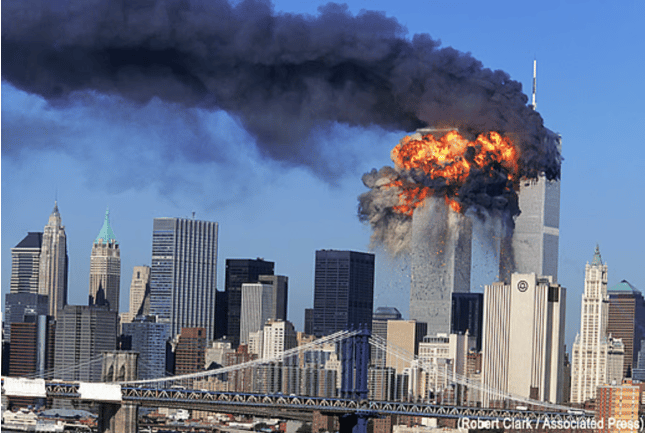
We recently passed the anniversary of 9-11-2001 tragedy of the attack on the Twin Towers in New York. I wanted to remind everyone that the effects of that fateful day are still being felt and especially by some of the heroes that were affected by the initial exposure and then the secondary exposure that took place during the cleanup. Some of those exposed were firefighters, police officers, EMTs (Emergency Medical Technician), construction workers, transit workers, cleanup workers, debris removal crews, truck drivers, nearby office workers, and Lower Manhattan residents.
Tuesday, August 21, 2018
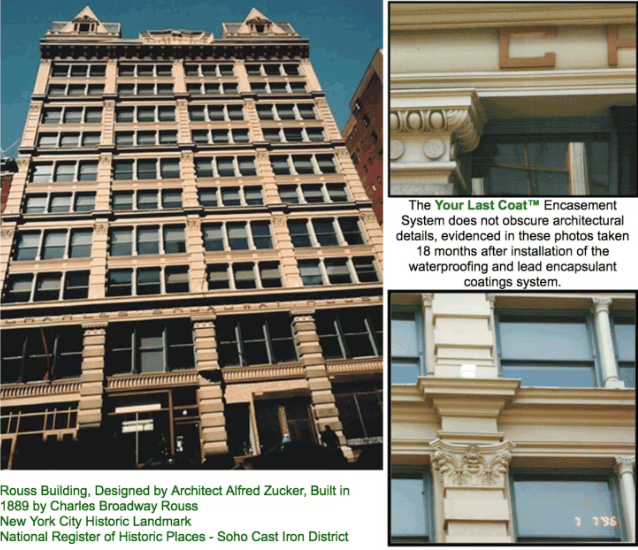
I discussed in a recent blog the importance of keeping the aesthetics of a historic building intact. Making sure that the look and overall presentation on a structure is preserved is very significant. This is especially true with landmark properties that have prominent and distinct features. Preservation can become very difficult when it entails obsolete building materials that contain hazardous materials that are typically removed and replaced. Three of the most common of hazardous materials is lead-based paint, asbestos and PCBs. In the USA, lead was used in paints up until 1978. It then was banned for its negative health effects, especially with children in their developing stages. PCBs, or polychlorinated biphenyls, were banned from paints, caulking and surface coatings in 1979 and asbestos was banned in 1974. All these bans were due to the negative health and environmental effects of these products.
Tuesday, July 17, 2018
Lead Paint Poisoning is Preventable Through Education and Action